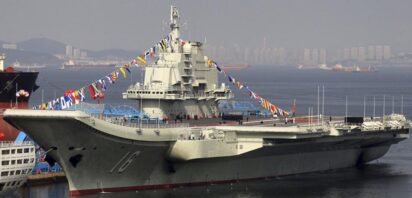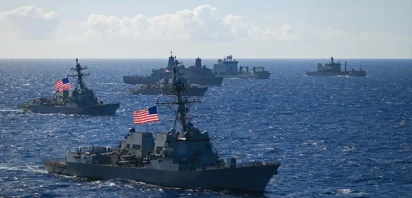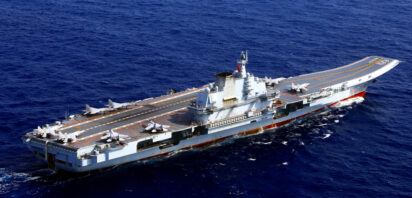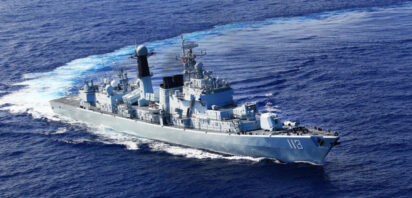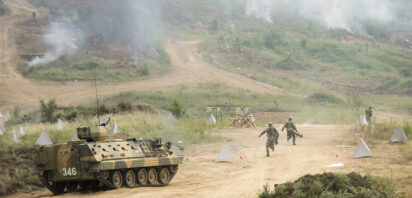
The US Navy (USN) is currently confronting two major challenges: quantity and cost. Beijing has the largest navy in East Asia; according to an April 2025 Congress report, China has surpassed the US in naval strength in terms of battle force ships over the past decade. The Department of Defense (DoD) reports that China’s navy, with more than 370 units, is the largest in the world and is expected to reach some 395 ships by 2030. In comparison, the USN possessed some 295 battle force ships as of September 2024. The World Directory of Modern Military Warships (WDMMW) estimates that the USN has ‘232 units in its active naval inventory,’ though it maintains superiority in terms of tonnage, capability, and operating experience. Various reports show a projected decrease in the number of US Navy battle force ships by 2030.
A comparison of the two navies’ current numbers and their respective production capacities has become a matter of serious concern for US military officials and policymakers. Despite investing billions of dollars into its shipbuilding programs, the U.S. is consistently over budget and bogged down by major delays, with construction estimates for some ships reaching as much as three years. The U.S. is thus facing the problem of losing its dominance at sea and has become a laggard when it comes to building warships. Washington’s focus on the Indo-Pacific and growing desire to counter China’s military modernisation exacerbates these interrelated problems.
The US Government Accountability Office’s (GAO) February 2025 report highlights two key challenges that Washington faces in meeting the USN’s shipbuilding objectives going forward:
- Shipyards do not have the physical space required to deliver the volume of ships desired by the US Navy and in the time that it wants them. Relatedly, US shipyards are suffering from ageing infrastructure that impacts the pace of construction.
- Ship manufacturers are facing a considerable deficit in human resources, meaning they do not have the necessary workers to fulfil the US Navy’s construction demands and needs. Companies are grappling with finding skilled workers and retaining them.
In order to catch up with China, the United States would have to build and commission a large number of combat ships in a very short period of time. Yet the above two construction bottlenecks are related to another key challenge: cost. While the taxpayer’s cost of warship restoration, repair and upgrading has risen into the billions, the cost of new, larger fighting assets like aircraft carriers is significant.
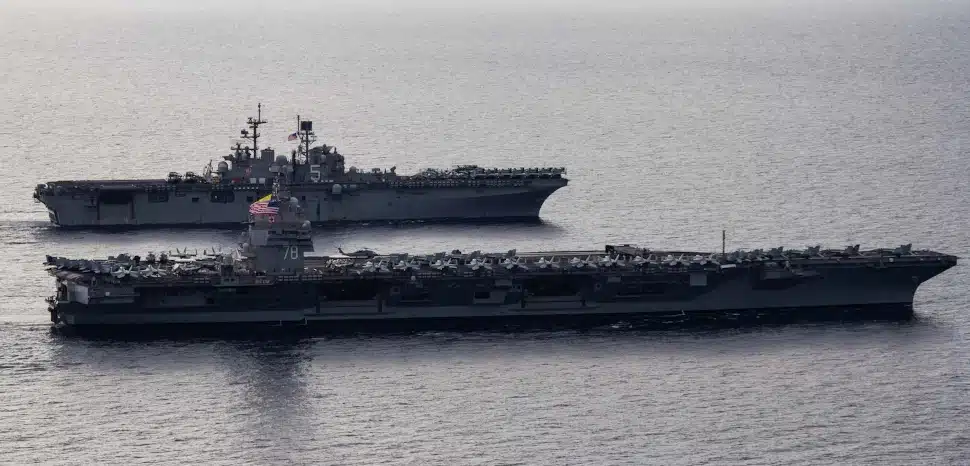
Gerald R. Ford-class nuclear-powered supercarriers, which were announced in 2007 and include four ships, cost more than $13 billion each. This total does not account for the cost growth of each ship over the course of their construction. The USS Gerald R. Ford (CVN-78), which was finally put to sea in 2017, took more than a decade to build. The ship received certification as a US warship capable of combat deployment in April 2023, following weeks of training. The aircraft carrier’s first full-length deployment occurred in May 2023 and lasted for a total of eight months. Previously, it struggled to complete basic qualifications and faced criticism for its faulty systems.
An aircraft carrier requires numerous harbour and sea trials prior to service commissioning. The CVN-78 was laid down in November 2009 and finally launched in October 2013. It was not until July 2017 that the ship was finally commissioned. The vessel also required the incorporation of newer technology because there were advances in systems over the course of the construction process. While there is some contrast among the construction times for large ships like the CVN-78 and other aircraft carriers across different countries, the durations are relatively uniform. Russia laid down the Admiral Kuznetsov in April 1982, launched it in December 1985, and commissioned it in January 1991, a process that took a total of nine years. China laid down Shandong 17 in March 2015, launched it in April 2017, and commissioned it in December 2019, a period spanning 4.5 years. The UK laid down HMS Queen Elizabeth in July 2009, launched it in July 2014, and commissioned it in December 2017, a period of eight years. The process of laying down and commissioning France’s Charles de Gaulle took 12 years.
In general, the US Navy has been unable to build warships on schedule and within budget. Moreover, private companies have done little to alleviate the problem. In a 2019 article for Roll Call, John M. Donelly wrote that ‘Contrary to the Navy’s own policy, and despite spending nearly $16 billion on average in each of the last 30 years on new warships, most US combat vessels are delivered from private shipbuilders with flaws significant enough to impair the vessels’ ability to perform missions or to keep crews safe, according to recent audits conducted for Congress’. He said that ‘For the US Navy, buying warships that are defective, unfinished or both has become the norm.’
The Congressionally mandated report called ‘Battle Force Ship Assessment and Requirement’ mentioned the need for 381 ships, representing an increase from the 2022 report’s target of 373. At the current construction process and spending rate, the U.S. is struggling to keep pace with key competitors, foremost China. These challenges—production durations, costs, the unreliability of private companies based on past experiences, and competitive imperatives related to other (including rising) powers—raise serious questions about how the U.S. can meet its growing needs. This is where small tech startups can help with and address production gaps and spending obstacles.
The Role of Small Tech Startups
Officials in the U.S. are reportedly contemplating outsourcing the production of warships to foreign shipyards to keep construction costs and schedules in check. The US government and military might also benefit from the abundance of small technology enterprises already functioning within the country. The US military has already worked with firms like Anduril, Palantir, Castelion, Shield AI, Skydio, Hadrian, and Shift. This increased engagement with venture capital-backed weapons and military firms is intended to keep up with—and more significantly, outrun—other states in extending and modernizing their own military systems and weapons. The main goal is to ensure that US military capabilities do not fall behind competitor states. Because of the time involved in building and commissioning large warships, one area in which the US military has demonstrated a need for rapid advancement is the deployment of autonomous systems in large numbers to address perceived threats from adversaries in the air, land, sea, and cyber domains. In this sense, smaller and more agile ships that are fit for various roles could potentially offset the constraints of building massive warships.
A key to mobilizing smaller tech startups is the subscription-based model they operate on, meaning the companies will assume the costs of research and development (R&D) instead of the military. This scenario could mark an important point in weapons procurement arrangements. The model mutually benefits the companies themselves and the US government and military for two reasons: first, it is cost-effective for the government; second, the model instills a greater degree of autonomy in the venture capitalists’ hands. There is also the potential to mitigate the shortcuts that companies have been known to make in their production programs that have resulted in the delivery of deficient or faulty military instruments and machinery. Saronic Technologies is a company that works with the US Navy and provides naval and maritime forces with intelligent Autonomous Surface Vessels (ASVs). Saronic Technologies combines emerging hardware, software, and AI to contribute to maritime security and domain awareness.
Erin Pace, PR Director at Saronic Technologies, writes that it ‘can be given a mission, alone or as part of a collaborative swarm, and execute with minimal human interaction to deter or counter adversarial threats at a range of 1,000 nautical miles’ and with a maximum speed of 35 knots. By comparison, US nuclear-powered carriers, which have the fastest speeds and exceed their official top speed, 33 knots, are similar. Although not reaching the firepower capabilities of a US Navy carrier, the Corsair USV has a payload capacity of 1,000 lbs, but there are other factors to consider. Considering the projectile type, warhead size, target design, defences, targeting accuracy, hit probability, and impact area, the payload could potentially sink an aircraft carrier. The Corsair, however, was not designed as a carrier-killer. Its value lies elsewhere in arguably more important long-term transformative areas that would enable it to be an integral part of the USN’s future vision to have a hybrid autonomous/human-operated fleet and one that is AI-enabled. This broader strategic value arguably harmonizes with current US production capabilities,along with demands on the US Navy to cover multiple theaters of operational command, and the need to keep costs low.
Needs and Scale of an AI-enabled Hybrid Fleet
The US Navy and US government’s partnerships with small-tech startups show potential for meeting another crucial area. In its 2021 Science & Technology Strategy for Intelligent Autonomous Systems development and integration with the existing USN, the Department of the Navy highlighted the National Security Commission’s assertion that ‘America is not prepared to defend or compete in the AI era.’ Although the U.S. has maintained global dominance in the Navy, Marine Corps, and Joint Forces since the Second World War, the convergence of threats and technology poses a considerable risk to this status.. The strategy emphasizes that the ‘interconnected and rapidly accelerating shifts in threats and technology are the underlying forces necessitating the Department of the Navy’s (DoN) to fundamentally redesign the journey from Science and Technology (S&T) to adoption of warfighting capability.’
When considering the importance of units like the Corsair, which are designed to be interoperable, fully autonomous, and deliverable in large numbers, these systems supplement the DoN’s demand for AIS (the convergence of autonomy, unmanned systems, UxS, and AI). The strategy’s trifecta reflects recent battlefield occurrences and combat outcomes in which smaller asymmetric forces have dominated larger assets that were previously thought to be superior in several dimensions of power. A few recent cases demonstrate this.
The brief 44-day conflict between Azerbaijan and Armenia resulted in Armenia’s defeat. The Azerbaijani military pinpointed adversarial targets using UAS instruments and then struck them with lingering munitions. The military potential of integrating AI systems was clear. Later, the ongoing Ukraine war demonstrated that the early advent of so-called kamikaze and do-it-yourself (DIY) first-person-view (FPV) drones was effective. The Ukrainian Switchblade 600 and Russian Lancet-3 are notable examples of this. The spread of loitering munitions and their connection to other assets have resulted in unexpected power-balance shifts. This does not imply that a revolution in military relations has occurred, but it does speak to the increasing importance of once massive and powerful militaries, such as the U.S., transitioning to more nimble and smaller, AI-based and AI-enabling force profiles.
The Black Sea theater of warfare—what might have seemed like an unlikely domain of significance in a war involving a country with virtually no fleet to speak of— offers another intriguing case that Chinese military strategists have observed. The Black Sea theater has upended traditional assumptions about naval power. The confluence of AI and drone warfare in this region compelled Russia to withdraw its warships from Sevastopol to Novorossiysk. In relation to Russia’s military experiences against Ukraine in the Black Sea, it was shown that there is no longer impunity for a country with a large and powerful fleet to operate along a coastline without being dangerously interdicted by the adversary. However, even if Ukraine had a fleet, its operational needs and geographical coverage would differ drastically from those of the US Navy. Given the USN’s current financial constraints and production challenges, the USN cannot afford to lose large and expensive warships that require billions of dollars and years to produce to small, uncrewed systems that cost only a few million dollars to construct.
AI Integration and Scale: Private-sector Start-ups for Power
As AI becomes further embedded in military operations—migrating from surveillance to assistance in targeting—smaller startups and private sector companies should not be discounted as potentially integral parts of the adaptation processes by states, specifically the U.S., in response to the changing nature or character of conflict across domains and competitor states like China that are able to produce larger volumes of ships, help alleviate production demands, and offset the astronomical costs involved in keeping pace with competitors or adversaries.
Small-tech startups and companies working in the military and AI domains can potentially bridge the divide between the US Navy’s current and self-described state and DoN’s desired IAS advantages. It is, at least from the perspective of the USN, which clearly seeks to retain its power and dominant maritime position, important for Washington to accelerate the deployment of USVs alongside US surface combatants and in large numbers. Saronic, according to Dino Mavrookas, the company’s co-founder and chief executive officer, is currently building five prototypes. The company recently stated that its ability to build hundreds of new vessels will increase exponentially to thousands. Mavrookas highlighted the importance of scale in redefining US maritime superiority and power, emphasizing the need for thousands of platforms. As US shipbuilding capabilities have already fallen behind China, ‘The only way we close that gap is through attritable, cost-effective, easily-produced-at-scale autonomous systems.’
China has more ships and missiles than the United States, and production and recruitment are still rising. However, the U.S. might theoretically offset this disparity with a larger fleet of smaller, AI-powered warships, including unmanned assets, that can be designed and produced within the U.S. While not poised to fundamentally reshape military doctrine, reconfigure military institutions, or revolutionize warfare, the integration of technologies developed by smaller, more innovative startups is an important part of the broader evolution of essential multi-domain capabilities as well as supporting the attrition side of military power dynamics.
The views expressed in this article belong to the authors alone and do not necessarily reflect those of Geopoliticalmonitor.com.