Geopolitics Weekly is a new series that contextualizes emerging geopolitical trends around the world, distilling the cacophony of global events into one easy reader. It lands in the inbox of our subscribers every week. This edition has been made available to all Geopolitical Monitor readers.
North America
Canada Wobbles on Its F-35 Purchase
What Happened
Amid mounting trade tensions and threats of annexation by its southern neighbor, the Canadian government is reportedly considering a pivot away from its F-35 order (again). The purchase falls under the umbrella of the Joint Strike Fighter (JSF) program, a US-led initiative to replace its aging fleet of F-18s while distributing research and production costs across NATO and other US allies for scale advantages. US defense giant Lockheed Martin is the developer, and the project has often been the target of criticism over delays and ballooning costs. Canada has been an official participant since 1997.
Why It Matters
Canada has had an on-again, off-again relationship with the F-35 and this isn’t the first time Ottawa has wavered on the program. One sticking point is that the F-35 is a single engine platform, making it unsuited for operations over large territorial expanses, particularly in the Arctic, which is increasingly being prioritized in Ottawa’s strategic calculus. Getting out of the contract won’t be easy, however, as Ottawa has already paid for the first 16 aircraft, with 72 yet to come. The $13 billion order was the largest ever for the RCAF when it was announced in 2023.
Other Considerations
- Fallout from President Trump’s Foreign Policy: Trump’s aggressive posture toward longstanding US allies has put a spotlight on certain uneven technical dependencies in the JSF initiative. Purchasers would be reliant on Lockheed Martin for parts and maintenance, like many other procurement programs, but software is also an issue, with navigation systems being fed by US-sourced data. The paranoia is such that rumors of a remote ‘kill switch’ are even swirling (check out this great piece for a deeper dive on whether the concerns are merited).
- Or Maybe Not: With the rapid rise of drone warfare in contemporary conflict, purchasers may simply be looking for the exits on an expensive platform that could soon be rendered obsolete on the battlefield.
- Canada Isn’t the Only One with Doubts on the F-35: Portugal recently poured cold water on its own F-35 purchase, citing unpredictability in Washington as a reason. But unlike Canada, Portugal has yet to sign anything definitive on its order.
Europe
Slow Progress on a Russia-Ukraine Ceasefire Proposal
What Happened
Ceasefire talks have drawn renewed attention to diplomatic efforts to end the Ukraine war. Here’s a breakdown of the key developments:
- US-Ukraine Ceasefire Proposal: In talks held in Jeddah, Saudi Arabia, the U.S. and Ukraine agreed on a 30-day interim ceasefire. The idea is to create a temporary pause in hostilities, allowing humanitarian aid to flow and setting the stage for further negotiations. Notably, the ceasefire covers missile, drone, and bombing attacks across the Black Sea and the entire front line. The U.S. has also agreed to resume military aid and intelligence sharing with Ukraine.
- Putin’s Response: Russian President Vladimir Putin expressed willingness to support the ceasefire, provided certain conditions were met, namely: 1) The ceasefire must lead to lasting peace and address the root causes of the conflict; 2) Ukrainian troops in Russia’s Kursk region must either withdraw peacefully or surrender; 3) Clarification is needed on whether Ukraine will use the 30-day period for forced mobilization; and 4) Western military assistance to Ukraine should be halted during the ceasefire period.
- Zelenskyy’s Reaction: President Volodymyr Zelenskyy dismissed Putin’s conditions, calling them manipulative and a clear attempt to undermine the ceasefire process.
- US Mediation: Steve Witkoff, met with Putin in Moscow, and Trump remains cautiously hopeful about ending the war. At the same time, he has warned Russia that more sanctions could be on the table if peace efforts stall.
- Upcoming Talks: Trump and Putin are set to hold a direct conversation on Tuesday, which could play a major role in shaping what happens next.
Why It Matters
- Potential for Peace: A ceasefire could be a starting point for more serious negotiations that address long-term security issues.
- Geopolitical Implications: The proposal tests the negotiating positions of key players. It also reflects broader geopolitical maneuvering, particularly concerning NATO’s role in the conflict and its aftermath. Europe’s role remains an open question, both in terms of the negotiating process and any resulting guarantees. European leaders have been moving toward greater strategic autonomy as President Trump makes it increasingly clear that US interests lie elsewhere; however, some have argued that the EU is severely limited in what it can hope to achieve, particularly in the near-term.
The Kursk Offensive Draws to a Close
What Happened
The situation in the Kursk region has taken a dramatic turn, with major battlefield shifts on the battlefield:
- Ukrainian Withdrawal: Ukrainian forces have been pushed back, now holding only about 30 square miles near the border, down from 500 square miles at the peak. This marks a significant strategic retreat.
- Russia Retakes Sudzha: The town of Sudzha, a key Ukrainian-occupied settlement in Kursk, is now back under Russian control. The Russian government has framed this as a major victory.
Why It Matters
- Symbolic Blow: Ukraine’s Kursk offensive last year was a powerful statement, marking the first time Ukrainian forces entered Russian territory. Losing ground now is a blow to that symbolic victory.
- Strategic Consequences: By retreating from Kursk, Ukraine is shifting its focus to defending other key areas, like Donbas. This reshuffling will shape the next phase of the war.
- Global Implications: Russia’s ability to retake lost ground raises concerns about Ukraine’s long-term military strategy, particularly given uncertainty surrounding Western military aid.
- Negotiation Leverage: Losing territory weakens Ukraine’s bargaining position in peace talks, making it harder to negotiate from a position of strength.
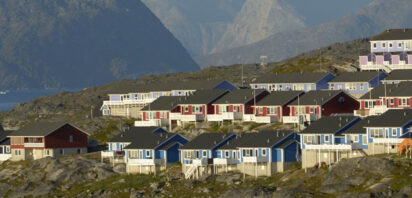
Geopolitical Ripples Effects from Greenland’s Elections
What Happened
Greenland’s elections on March 11, 2025, brought a surprising shake-up in the country’s political scene:
- Demokraatit Victory: The center-right Democrats won 30% of the vote, securing 10 seats in parliament. This is a significant shift, breaking the long-standing dominance of left-leaning parties.
- Coalition Changes: The ruling coalition suffered heavy losses, and Greenland’s parliament will now have to adjust to a new political reality. The shift could be attributed to growing dissatisfaction with economic policies and governance.
- The Independence Debate: All major parties support independence from Denmark, but they differ on how quickly it should happen. The Democrats favor a slower approach, arguing that Greenland needs to build a stronger economy first.
- The Trump Factor: The election was partly shaped by US interest in Greenland, owing to its resources and strategic position in the Arctic. Trump’s advances continues to be met with resistance, as the new government has reaffirmed Greenland’s stance against external control.
Why It Matters
- Independence Still on the Menu: While full independence isn’t happening overnight, Greenland’s leadership is still pushing for it in the long run.
- A New Economic Strategy: The new government aims to diversify the economy beyond traditional industries like fishing, exploring sectors such as mining and renewable energy, creating potential opportunities for US investment and influence.
- Global Attention: Greenland’s location and resources make it a key player in Arctic geopolitics. The election results will impact Greenland’s relationships with Denmark, the United States, and other global powers.
Middle East
Violence Poses a Challenge to New Syria Government
What Happened
Two notable developments occurred in Syria recently:
- Reports of Massacres in Latakia Offensive: A government offensive took place in northwestern Syria – the ancestral homeland of the Alawite community that heavily backed the Assad regime. According to media reports, as many as one thousand people were killed in a series of revenge attacks. There is a religious dimension to the violence: Alawites are a Shiite minority in an otherwise majority Sunni state.
- Syrian Democratic Forces (SDF) Reach a Deal with Damascus: The mostly Kurdish SDF came to terms with the new government in Damascus, reportedly at the urging of the United States. The deal broadly envisions the merging of SDF political and military structures into the Syrian state, though, critically, details on how this process will actually play out remain scant. This is an important consideration, as we’ve seen quite recently how a failed process of integrating the paramilitary Rapid Support Forces into the national army helped to trigger a still-ongoing civil war in Sudan.
Why It Matters
The combined fates of Latakia and the SDF will go far in determining the future viability of the Syrian state, at least under its colonial-era borders. Syria presides over a highly diverse population, and decades of authoritarian rule and de facto autonomy for the Kurds complicate the reconciliation process.
So far, Interim president Ahmad al-Sharaa, leader of the Hayat Tahrir al-Sham (HTS) group that ended the Syrian civil war in November 2024, seems acutely aware of what’s at stake. President Al-Sharaa has taken a hard line on reprisals against Assad supporters, instead stressing the common cause ahead of rebuilding the country. But the state’s authority remains weak, especially outside the HTS heartland, and soldiers on the ground are more inclined to focus on revenge than rebuilding, as recent events in Latakia illustrate.
Other Considerations
- Syria-SDF Deal Thickens Plot of Turkey-Kurd Relations. The SDF’s position looked untenable when the Turkey-backed HTS took over Syria. However, sudden peace overtures from the PKK have shuffled the deck in the Turkish-Kurdish conflict. We may be witnessing the emergence of an entirely new normal in the region.
- Syria-SDF Deal Lets Washington Off the Hook. US backing of the SDF has long been a diplomatically fraught venture that complicated Washington’s relations with Ankara. The SDF-Damascus and PKK-Ankara peace processes could ultimately pave the way for a respectable withdrawal of the approximately 2,000 US troops who remain stationed in Syria.
Africa
SADC Peacekeepers Withdraw as DRC Conflict Escalates
What Happened
On March 13, the Southern African Development Community (SADC) announced the end of its peacekeeping mission in the Democratic Republic of Congo (DRC), marking a significant shift in the region’s security landscape:
- End of the SAMIDRC Mission: The peacekeeping force, deployed in 2023 to help combat armed groups in eastern DRC, particularly the M23 rebels, faced mounting challenges in executing its mandate, notably surging violence and heavy losses. Since January 2025, at least 20 peacekeepers from South Africa, Tanzania, and Malawi have been killed in clashes with M23 rebels. The rebels have now gained control over key cities such as Goma and Bukavu.
- Political and Diplomatic Shift: SADC leaders decided to end the mission, citing a need for a new approach that prioritizes diplomacy over military intervention. They also urged international organizations like the UN and African Union to increase humanitarian aid efforts.
Why It Matters
- Security Concerns: The withdrawal leaves a power vacuum, raising fears that M23 rebels and other armed groups will exploit the situation to expand their control, worsening instability.
- Humanitarian Crisis: The fighting has already displaced millions, and the lack of peacekeeping forces could lead to further suffering, particularly as supply routes remain blocked.
- Regional Stability: The DRC conflict has a regional dimension, with neighboring countries like Rwanda and Uganda (partially) backing the M23, and Burundi poised to respond if the situation gets out of hand. One recent contributor warned that this is a major war in-the-making.
- Global Peacekeeping in Retreat: The SADC withdrawal highlights the limitations of regional military interventions and raises questions about the effectiveness of international peacekeeping missions going forward.
Asia
Taiwan Responds to China’s Hybrid Warfare
What Happened
Taiwan President Lai Ching-te has introduced a series of national security measures in response to deepening subversion and military encroachment by Beijing.
In the words of President Lai: “China has been taking advantage of democratic Taiwan’s freedom, diversity, and openness to recruit gangs, the media, commentators, political parties, and even active-duty and retired members of the armed forces and police to carry out actions to divide, destroy, and subvert us from within.”
In officially classifying China a “foreign hostile force,” the Taiwanese authorities gain access to legal countermeasures under the Anti-Infiltration Act of 2019. Notably, this will entail a reactivation of military courts that can try cases on subversion – a controversial step in a country with a long and troubled history regarding Martial Law.
Why It Matters
This is the latest indication that the cross-Strait status quo is fraying as China tightens the vice on multiple fronts. Militarily, Beijing is conducting sorties in ever great number and proximity to Taiwan’s islands, and is ramping up hybrid warfare operations as well, notably severing an underseas cable off the coast of Keelung in January. Cases of subversion, sometimes involving high-ranking members of the military, are now a common feature of the Taiwanese news cycle. This is the context in which President Lai decided to act. Yet in responding to Beijing’s subversion – and ramping up Taiwan’s military preparedness (see below) – Lai inevitably increases the risks of cross-Strait escalation. Beijing may be content to play it slow so long as Taiwanese society remains an easy target. But it could be an entirely different strategic calculation should Taiwan start to prepare in earnest.
Other Considerations
- Taiwan to Increase Defense Spending to 3%: President Lai is taking a more aggressive stance on the military front as well, pledging to increase Taiwan’s defense spending from 2.45 to 3% of GDP in 2025. The announcement comes as opposition parties in the legislature continue to slash the government’s spending plans, and it falls well short of the eye-watering 10% recently suggested by President Trump’s incoming undersecretary of defense for policy.