- After years of empty rhetoric, European states are scrambling to bolster Europe’s strategic autonomy in the face of Washington’s strategic retreat.
- Interoperability remains a major issue due to the byzantine standards regimes that exist across EU militaries.
- Another issue is an ongoing lack of consolidation across the European defense industry.
The goal of strategic autonomy has rapidly shifted from hypothetical proposal to urgent necessity in Europe. The return of large-scale warfare on the continent, coupled with growing uncertainty over the reliability of the United States as a security guarantor, has compelled EU member states to substantially increase their defense budgets, increasing from €182 billion in 2014 to €326 billion in 2024.
The shift marks a historic turning point as Europe seeks to reduce its post-WWII strategic dependency on Washington. For its part, the United States has signaled a desire to reorient its strategic focus toward the Indo-Pacific, in part due to mounting Chinese pressure on Taiwan. These shifting geopolitics are essentially forcing the EU to assume greater responsibility for its own security.
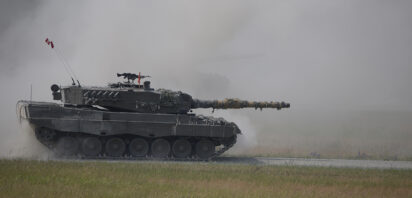
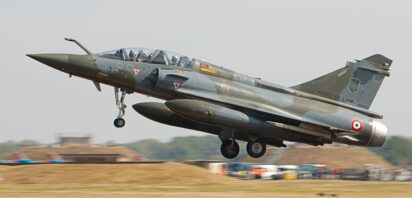
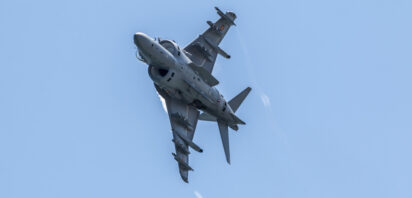
Yet actually achieving strategic autonomy is easier said than done, as the European defense industry continues to grapple with the consequences of decades of underinvestment. Moreover, as highlighted by the European Defense Agency (EDA), a significant portion of European defense expenditure is still going toward off-the-shelf equipment sourced from outside the EU. According to SIPRI, between 2020 and 2024 European NATO members imported 64% of their weapons from Washington. To achieve true strategic autonomy, this trend must be reversed, prioritizing domestic production and innovation within the European defense industry.
US disengagement and changing threat perceptions at home represent an opportunity for Europe to put the false starts of the recent past behind it and move toward tangible re-armament. This article examines how this process may unfold, highlighting the European defense giants that stand to benefit that most.
The ReArm Europe Initiative
European leaders met in London on March 2 to draft a peace plan aimed at ending the Ukraine war. Following the summit, in response to the urgent need to bolster the European defense industry, European Commission President Ursula von der Leyen introduced the “ReArm Europe” initiative. The Plan seeks to address the immediate necessity of supporting Ukraine while also ensuring that Europe assumes greater responsibility for its own long-term security. It is designed to mobilize approximately €800 billion over the next four years, marking a significant step toward strengthening the continent’s defense capabilities.
Notably, the European Commission suggested activating the Stability and Growth Pact’s escape clause, thereby allowing member states to increase defense expenditures without breaching EU fiscal rules, substantially boosting defense investments. Additionally, a €150 billion loan will be provided to help EU members invest in critical military technologies, including air and missile defense systems, artillery, drones, and cyber defense. In seeking to actively facilitate joint procurement, the approach aims to enhance interoperability among European armed forces and foster a more coordinated posture.
There is a growing consensus at the highest levels that the current 1.9% of GDP defense expenditure is inadequate for the task at hand. As UK Prime Minister Keir Starmer stated, Europe is at a historic crossroads. The urgency of the moment demands a reduced dependency on the United States and substantial domestic investments to achieve strategic autonomy. After the pledges made by Von der Leyen, the European defense industry saw a massive surge. Shares of major companies saw significant gains: Italy’s Leonardo rose by 16%, Britain’s BAE Systems and France’s Thales each saw an increase of over 14%, and Germany’s Rheinmetall also advanced by 13.7%.