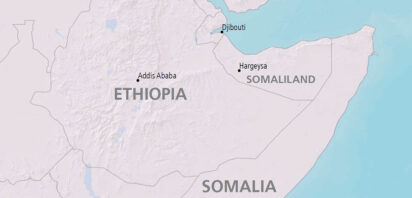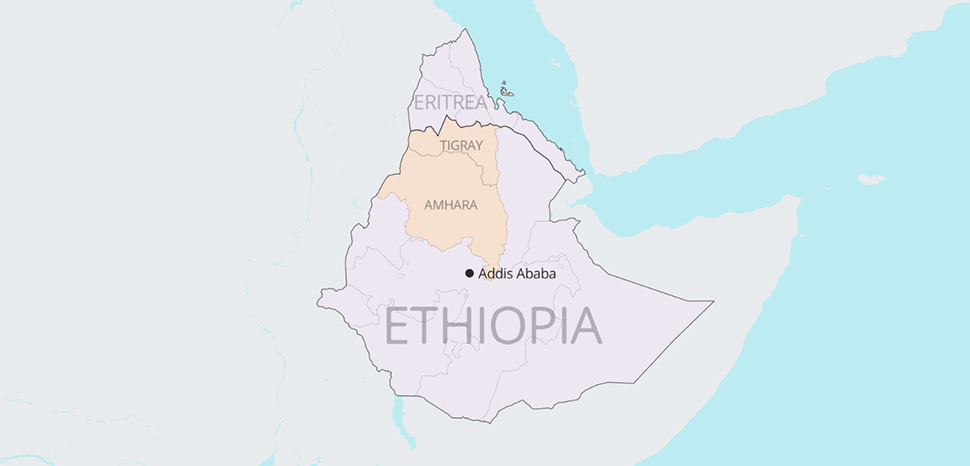
Ethiopia has launched a major military offensive in Tigray according to unconfirmed reports from rebels in the northern region.
The operation, which is said to involve air and ground attacks across a broad front, comes just two years removed from Prime Minister Abiy Ahmed winning the Nobel Peace Prize for efforts to foster peaceful reconciliation among Ethiopia’s diverse peoples and achieve a long-term peace with neighboring Eritrea. The interim has not been kind to Abiy’s reputation as a peacemaker: Tigray has been wracked by intense fighting, ‘clear war crimes,’ and forced migration, some of which was perpetrated by Ethiopia’s erstwhile enemy, Eritrea.
Background
Viewed over the long-term, the Tigray conflict stems from longstanding frictions between Ethiopia’s ethnic groups, namely the Amhara and the Tigray. These tensions are a result of the country’s colonial legacy, whereby the minority Tigray wielded disproportionate political power over larger ethnic blocs such as the Amhara and Oromo. The outbreak of fighting in 2020 can be viewed as these long-simmering tensions finally boiling over: Prime Minister Abiy Ahmed (an Oromo) attempted to assert central authority over the powerful Tigray People’s Liberation Front (TPLF) which, realizing that its influence over national politics was on the wane, instead pushed its home region toward formal sovereignty, triggering an eventual military response from Addis Ababa.
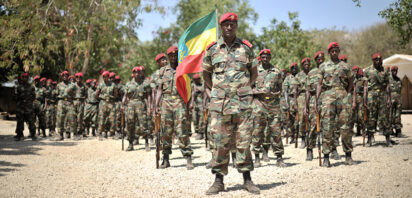
The resulting war shocked all those involved in its ferocity and longevity. Early on it appeared as though the better equipped and well-funded Ethiopian National Defense Force (ENDF) would quickly prevail; Prime Minister Abiy even declared military operations “completed” in November 2020 with the looming fall of Makelle, the capital of Tigray. However, a string of high-profile human rights violations (notably the massacre of hundreds of civilians in Axum by Eritrean troops) and resulting pressure from the international community forced Prime Minister Abiy to withdraw ENDF troops from Tigray. By June 2020, the US begins to sanction members of the Ethiopian government and TPLF, and President Biden calls for a ceasefire to end ‘large-scale human rights abuses’ in Tigray. The regional capital passes back to TPLF control by the end of the month, facilitated by a unilateral ceasefire declared by Addis Ababa.
Since then, TPLF and its allies have been pushing outward from Tigray and into the southwest of the neighboring Amhara region, resulting in over half a million displaced people. The current offensive began with intensive bombardments of the TPLF’s Amhara positions over the past few days, with the presumed objective of driving the TPLF back into Tigray.
Analysis
This new military offensive is part of a final push by Prime Minister Abiy to end the Tigray conflict – a brief punitive mission that has spiraled into calamity, threatening the future of the Ethiopian state itself.