As a large and populated country with a fast-growing economy, Ethiopia plays an important role in the geopolitics of the Horn of Africa. Two recent moves clearly signal its willingness to further increase its regional influence: first, the unprecedented offer to accept a negotiated settlement on the longstanding dispute with neighboring Eritrea; second, its declared intention to develop a Navy in spite of its status as a landlocked state. Taken together, this newly assertive foreign policy will not be an easy path, because Ethiopia’s ambitions will be tempered by domestic challenges and the difficult neighborhood it finds itself in.
Background
Ethiopia is navigating a delicate moment. Its economy is growing fast, with a projected growth rate of 8.5% this year, one of the best in Africa. It is gradually opening its markets and reforming its governance system to attract foreign investments and build new infrastructure. Yet the country Is still held back by enormous social problems. Millions remain trapped in poverty, and revenue inequality is stark. Moreover, its society is fragmented into numerous ethnic groups, and the relations between them are often strained due to an inequal distribution of wealth and political power. Finally, Ethiopia is very exposed to the deleterious effects of climate change, and this will have serious negative impacts on the country’s food security, employment, and its sanitary situation. This combination of destabilizing factors was explored further in one of my previous articles: Ethiopia, a Geopolitical Time Bomb in the Making.
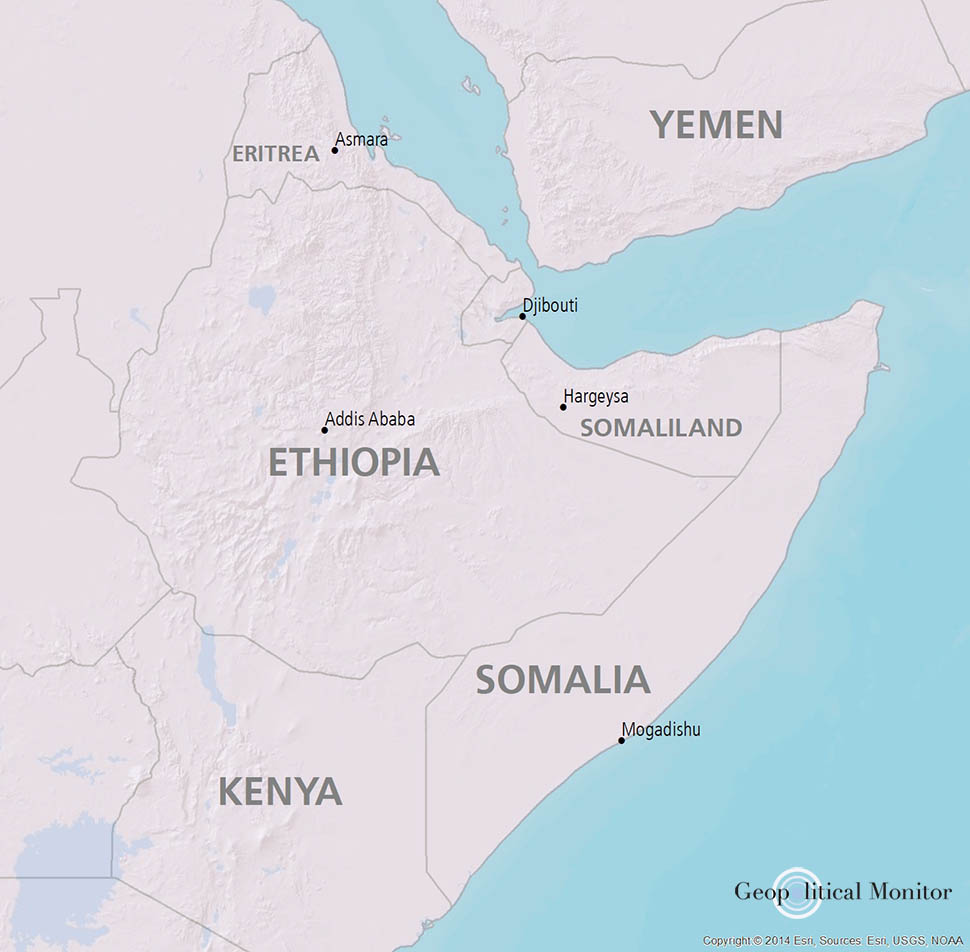
Additionally, the country has to deal with an uneasy situation in its immediate neighborhood. To the south, Kenya is a state that enjoys relative degree of stability and economic prosperity; but the situation is different elsewhere. To the west, Ethiopia borders Sudan and South Sudan, vast and poor countries ravaged by a longstanding violent conflict. Eastwards, there is war-torn Somalia, the archetypical example of a failed state that has been carved up by secessionist groups, terrorist outfits, and warlords. Finally, to the north lie Djibouti and Eritrea. The latter was once part of Ethiopia before seceding in 1993. Its declaration of independence sparked two years of deadly war from 1998-2000, a war that ultimately resulted in victory for Ethiopia. However, in 2002 a ruling by a dedicated body (the Eritrea-Ethiopia Boundary Commission, EEBC) demanded Addis Ababa withdraw its forces from the disputed territories it had occupied during the conflict.
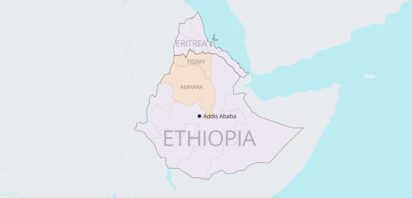
Ethiopia had always refused to comply the ruling, continuing to station troops in the areas in question. But the situation apparently changed a few weeks ago, when the new Ethiopian government led by Prime Minister Abiy Ahmed unexpectedly declared that he is ready to accept the 2002 ruling to finally resolve the dispute with Eritrea. There may be many reasons behind this surprising move, but the main objective is to normalize relations with Ethiopia’s northern neighbor. This is not simply motivated by a desire for peace. Rather it appears to be a calculated diplomatic move responding to a precise strategic logic: rapprochement with Eritrea will grant Ethiopia access to the sea, to its trade routes and resources. The strategy also plays into Addis Ababa’s desire to build a Navy and become a naval power in the Horn of Africa.