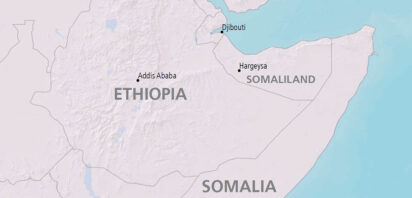
Ethiopia may soon find itself at a social and geopolitical turning point. Its population is expanding at a remarkable rate of 2.85%, and already amounts to over 100 million people (64% of which are under 24). The country experienced double-digit economic growth during the 2000s and is still developing at a fast pace, with a projected GDP increase of 8.5% in 2018. Nevertheless, its economy remains based on traditional agriculture; large swathes of its inhabitants live in poverty (30% in 2014) and are threatened by famines. Ethiopia’s population is also heavily fragmented in ethnic terms, and during the past year it has suffered a high degree of socio-political turmoil. But most importantly, especially in the long term, it is one of the countries more exposed to the effects of climate change. As a result of this combination of economic, social, and environmental factors, Ethiopia is likely to become a “geopolitical time bomb” in the medium-to-long term, with the potential for a deep and lasting impact on Eastern Africa and Europe.
Analysis
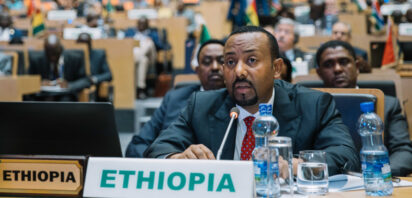
To understand how this is possible, it is best to start from the events that are now shaking the country. Last week, Hailemariam Desalegn, leader of the ruling government coalition (the Ethiopian People’s Revolutionary Democratic Front, known as EPRDF) announced his decision to resign as prime minister. He declared that his decision (alongside the release of hundreds of prisoners in the previous weeks, many of whom are political opponents) was aimed at calming a series of violent protests that were taking place all over Ethiopia. One day later, a country-wide state of emergency was declared, and it is yet unknown how long it will last.
This kind of situation is not new for the country. Socio-political upheaval has been affecting Ethiopia over the past three years, causing the deaths of hundreds of people. The solution adopted by the government has generally been the same: release prisoners and declare a state of emergency. As a matter of fact, a 10-month-long period of national emergency ended last year without actually tackling the conditions at the base of popular unrest. There’s no reason to believe that this recent announcement will be any different.
The abovementioned pattern illustrates two important considerations: first, the government appears unable to face the crisis, and its initiatives will likely fail (once more) to solve the problem; second, the causes of the social turmoil that is destabilizing Ethiopia are not merely political, but have much deeper roots.
At first glance, the protests appear to be a textbook example of a politically-marginalized but demographically large opposition expressing its dissatisfaction against an authoritarian government. While this is true to some degree, as there is indeed a high level of dissatisfaction toward the executive, the divide transcends the political realm; rather, it is strictly linked to ethnic issues.
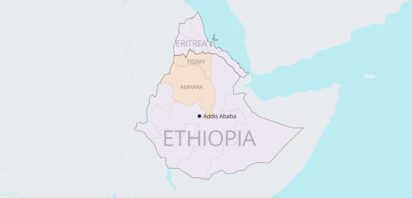
The core reason underlying ongoing instability is that the EPRDF is dominated by the Tigrayan group through its political party, the TPLF (Tigrayan People’s Liberation Front). This ethnic community is just one of the many composing Ethiopia’s population, of which it represents a minority making up only 6%. By contrast, the two most prominent ethnic groups are the Oromo (34%) and the Amhara (27%). Yet most of the political power and wealth in the country are in the hands of the Tigrayan, and this has bred resentment among other ethnic groups. As such, it is not surprising that the protests originally began in November 2015 in the Oromia-populated region, only to quickly expand to the Amharas. As usual, it was a response to attempts by the central (Tigrayan-led) government to expand its prerogatives at the local level.
Given that the unrest in Ethiopia has a clear political and, most importantly, an ethnic dimension, it’s unlikely that neither Desalegn’s resignation nor the renewed state of emergency will suffice to resolve the underlying issues. The core of the problem lies in the precarious living conditions affecting the country’s population, a trend that is only being further exacerbated by climate change. As a matter of fact, Ethiopia (and the Horn of Africa in general) is one of the regions most exposed to the deleterious effects of climate change. Projections expect the area to experience rising temperatures, less rainfall, and more frequent extreme weather phenomena (notably droughts). Considering the agricultural nature of Ethiopia’s socioeconomic assets, it is expected that in the coming decades, such climate conditions will have a sensibly negative impact on the Ethiopian economy and society, as they will result in reduced agricultural yields, water scarcity (affecting crops production and hydroelectric power generation, an important factor in Ethiopia), higher livestock mortality, deteriorating sanitary conditions, increased instances of disease, and recurrent famine. It is estimated that the combination of these factors will reduce the country’s GDP by up to 10% by 2045. But the economic losses, whilst important, are only a part of the problem; as they will be accompanied by (and will worsen) a humanitarian crisis of considerable proportions.