Lithium is an essential input in battery production, making it a strategic commodity amid the global pivot from fossil fuels. Yet the United States remains conspicuously absent on the list of top global lithium producers – at least for now. The Trump administration identified the supply of critical minerals as a strategic vulnerability in 2017 when it signed an executive order to assess and strengthen domestic supply chain resiliency. The order called for “a comprehensive evaluation of the defense and industrial base supply chains” and it produced a list of 35 critical inputs that are either essential to the economic and national security of the United States, vulnerable to disruption, or serve “an essential function in manufacturing a product, the absence of which would have significant consequences for our economy and national security.”
Unsurprisingly, lithium is on the list. So too is: cobalt, bauxite, uranium, and rare earth minerals.
The vulnerability has been identified by US policymakers; but can the United States actually hope to catch up to other global producers?
Background
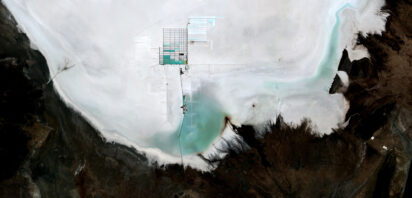
Though not currently home to major extraction sites, the United States has several corporate players in the lithium game. Largest among them is Albemarle Corp., which is the largest lithium producer in the world – most of which comes from brine-based extraction in Chile’s Atacama salt flats and mine-based extraction in Australia via Talison Lithium (a joint venture with China’s Tianqi Lithium). Livent is another US lithium player; the company was spun off from chemical giant FMC in 2018, and its extraction operations are currently concentrated in Argentina. Finally, electric vehicle producer Tesla, Inc. has indicated that it will seek to mine lithium directly, thus securing its own supply chains and, ideally, driving extraction (and battery) costs down with technological innovation.
US producers are about to get a helping hand from the federal government in setting up US-based extraction. Taking their cue from the aforementioned executive orders issued by the Trump administration, US lawmakers have tabled two bills – the Onshoring Rare Earths Act of 2020 (ORE Act) and the Reclaiming American Rare Earths (RARE Act). Despite their names, both acts include other, non-rare-earth entries on government’s list of 35 critical inputs such as lithium, cobalt, graphite, and manganese. The bills seek to incentivize US-based production via tax breaks and grants and, though still stuck in the initial stages of the legislative process, they have received a rare bipartisan embrace by lawmakers in the early going.