The trade war between the United States and China appears to be on the brink of escalation. Negotiations to find a common trade agreement have stalled, and the PRC has threatened to introduce restrictions on exports of rare earths to the U.S. China currently enjoys a quasi-monopoly over their production; meaning that the restrictions, if actually implemented, would result in higher prices for rare earths and would have a deep impact on the economy of the United States and the rest of the world. And while alternative sources of supply do exist, developing them will require considerable time and new investment.
Here’s what’s at stake in the brewing US-China rare earth dispute:
Background
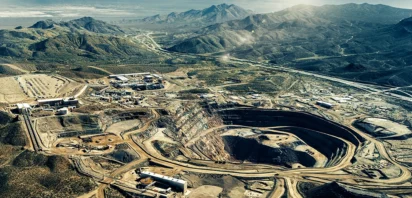
Rare earths are a group of seventeen chemical elements (more precisely metals) that are considered a strategic resource because they are essential for many of the high-tech industries that drive the modern economy. The U.S. was their leading producer until the 80s, even though it’s home to just one rare earths mine, located at Mountain Pass in California. However, the mine was closed due to environmental concerns (rare earths are usually found alongside radioactive material, which is released into the air during the extraction process). At the same time, China was emerging as an alternative supply source. It had huge reserves; and thanks to its massive, cheap workforce combined with low environmental regulations, it could easily extract large quantities of rare earths at a competitive price.
As such, the PRC soon achieved quasi-monopoly status over the rare earths market. Today, China holds 44 million tons (Mt) of mineral ore, the largest share of the world’s known reserves (around 37%); it is also the leading producer, with 120,000 tons of material extracted in 2018.