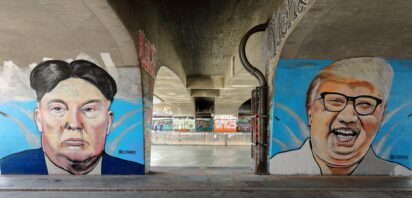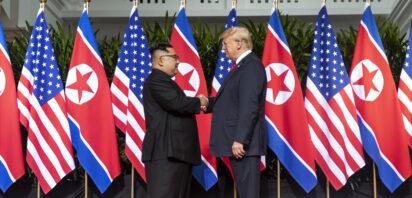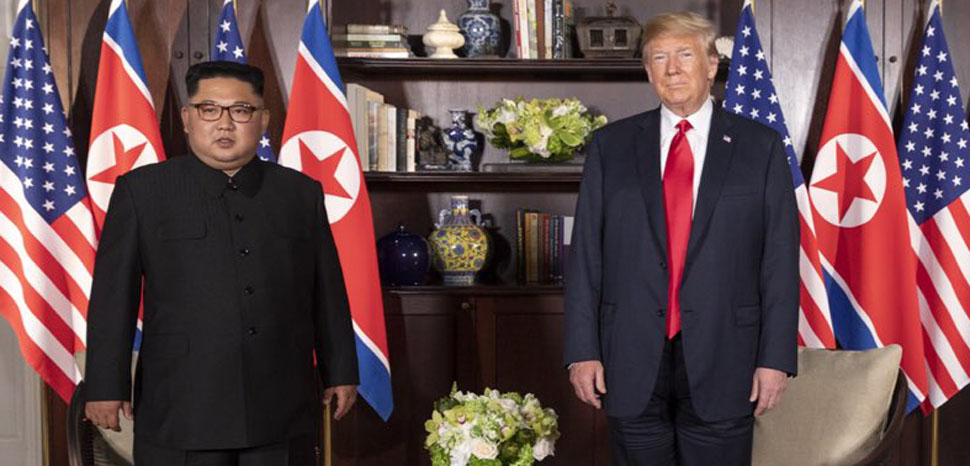
Donald Trump and Kim Jong-un will meet in Hanoi for a second high-level summit on February 27-28, where the two will try to find a way forward on the intractable issue of North Korea’s nuclear program. A lot will be riding on the meeting: personal reputations and political fortunes, future trends in nuclear nonproliferation, regional power dynamics, and most of all the distant yet all-too-possible prospect of renewed military, even nuclear conflict.
Here’s what US success (and failure) would look like at the upcoming summit:
Taking it slow. The first summit took a process that generally advances at glacial pace and threw it into overdrive. The quixotic goal of achieving ‘total denuclearization’ was chased over the course of a few days and, depending on who you believe, actually achieved. When President Trump got back to the United States, he had his own Bushian ‘mission accomplished’ moment when he tweeted that North Korea was no longer a nuclear threat.
This time around the Trump team will be looking to slow things down. Trump himself has been on-message so far, remarking last week that his administration will be adopting a more measured approach: “A lot can come from [the second summit] – at least, I hope so – the denuclearization, ultimately. I’m in no particular rush.”
This tempering of expectations suggests that we may see some kind of intermediate step as the central result of the summit – for example, the partial decommissioning of the Yongbon reactor or selective inspections being greenlighted by the North Korean authorities. This would represent a positive step toward denuclearization. But more importantly, it would be acceptable to the political sensibilities of both leaders: for Trump, it would be a tangible concession and concrete evidence of his diplomatic acumen; for Kim, it would shore up confidence in the diplomatic process without having to permanently give up any of his regime’s nuclear capacity (the assumption being that that would come later). Given the circumstances, this scenario would represent a realistic success for US negotiators. But it would surely come at the price of partial sanction relief.