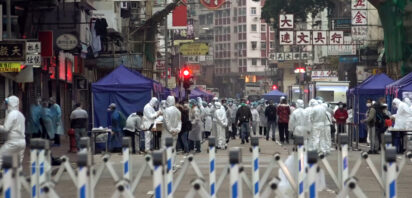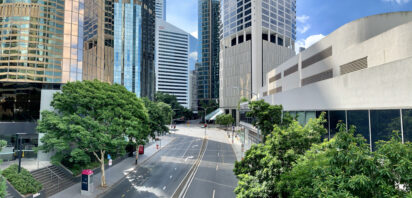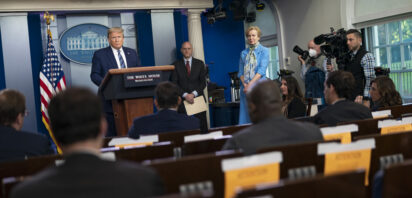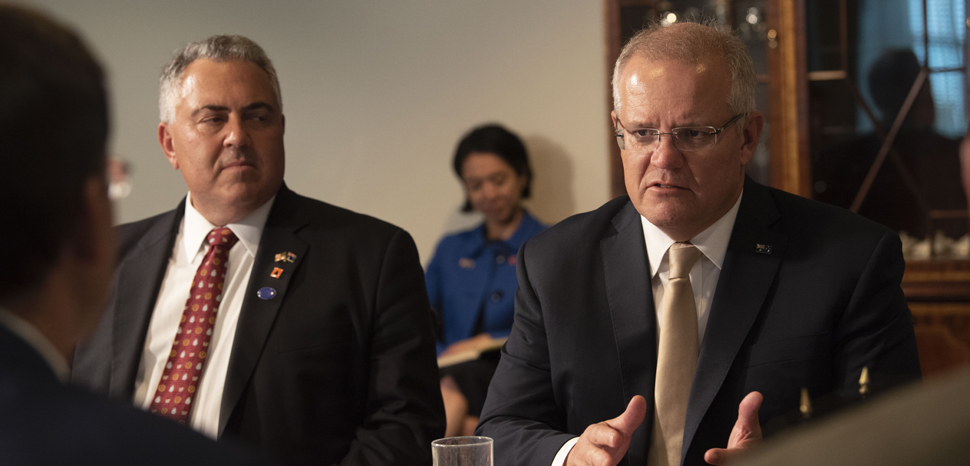
If a new and bipolar world order is emerging, one that pits a liberal West against an illiberal/hybrid bloc with China at its head, then Australia has frequently served as a laboratory for its new geopolitical dynamics. The Australian economy boomed on the back of China’s economic miracle; now, the Middle Kingdom absorbs as much as 40% of Australian exports on a month-to-month basis, with a degree of purchasing power that can make or break whole industries. Australian society has also had to grapple with the malign political effects that come with such a close association with an authoritarian one-party state, as illustrated by ongoing debates surrounding foreign influence. Finally, an increasingly erratic partner in Washington has caused some Australians to question their country’s place in the US alliance system, especially when siding with these traditional military institutions tends to come at the direct expense of relations with China.
And more recently yet, a new dynamic is emerging: the slow turning of the economic screws by Beijing whenever Canberra steps out of line. Evidently, the political linkages of close economic alignment are no longer hypothetical; prosperity comes with real strings attached. Just ask Australia’s barley farmers.
Background
Australia-China relations have been at a low ebb since the passage of the Foreign Influence Transparency Scheme (FITS) in 2018. Canberra further irked Beijing when it decided to ban Huawei from participating in national 5G networks. But it was recent calls by the Australian government for an international inquiry into the origins of COVID-19 that caused the diplomatic spat to spill into open economic warfare.
The blowback from Beijing has been unprecedented, and it almost looks like a new trade war in-the-making:
On April 26, Cheng Jingye, the PRC ambassador to Australia, warned that Chinese consumers could boycott Australia’s schools, agricultural exports, and wine over the Morrison administration’s support for a COVID-19 inquiry. Cheng added that Chinese tourists might “have second thoughts” about visiting Australia if they deemed the country to be “not so friendly, even hostile.” His comments were remarkable in the directness of the threat and is reflective of the “wolf warrior” vein of diplomacy that’s emanating from Chinese embassies around the world.
On May 9, China slapped a 73.6% ‘dumping tariff’ and a 6.9% ‘subsidy margin’ on Australian barley, effectively making it economically unfeasible to export a commodity that was worth $1.5 billion last year. China is Australia’s largest foreign market for barley, and it accounted for over 70% of Australian barley exports from 2015-2018.