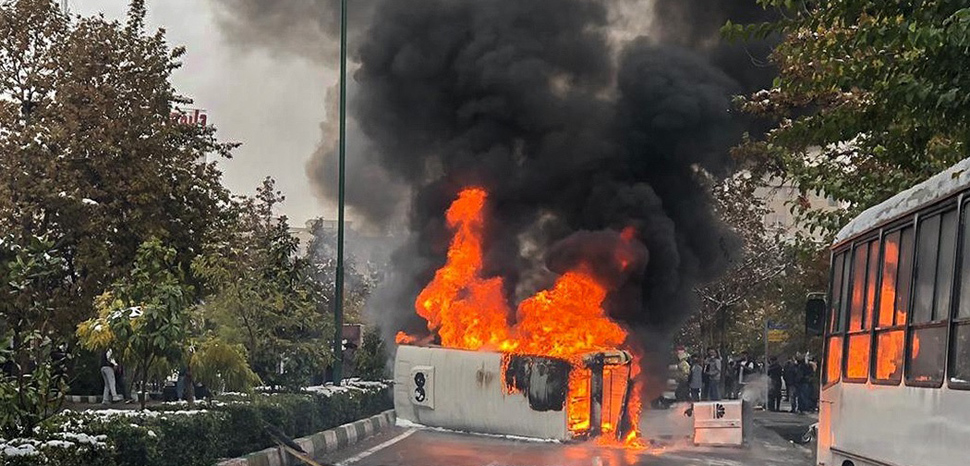
Via regional proxies like Hezbollah and allied militias in Yemen and Iraq, Iran has long nurtured levers of geopolitical influence throughout the Middle East. Yet now many of these proxies are facing their own popular reckonings in their respective domestic contexts, evident in the political deadlock in Beirut and the protest movement that swept Prime Minister Abdel Abdul-Mahdi from power in Baghdad. The protests couldn’t have come at a worse time for the Iranian regime, which is struggling to put down its own outbreak of violent unrest, fueled by the country’s endemic corruption and worsening economic outlook.
An interesting commonality has emerged in that the foreign and the domestic is linked in the minds of protesters in all three countries; for many of them, the Islamic Republic’s regional ambitions are needlessly exacerbating the deprivations of the poor and working class people, whether in Lebanon, Iraq, or Iran itself.
All this portends a reckoning for the Islamic Republic and its regional standing. However, recent history in Syria provides a cautionary lesson for those expecting some kind of democratic spring. Violence and civil war are just as possible as opening and reform amid a systemic breakdown, if not more so given the presence of paramilitary outfits, complete with their own extensive business interests, which stand to lose everything should the regime collapse. For now, the likeliest outcome is more instability and unpredictability in one of the most volatile regions of the planet.
Here are the latest setbacks for the Iranian regime and its proxies:
Background
Iran
As covered in a recent situation report, protests broke out in cities across Iran following a government decision to slash fuel subsidies in mid-November. The popular backlash was fierce – some estimate 80,000 protesters took to the streets in 100 cities, and there were several reported instances of arson – and it precipitated an extreme response from the government. There was the stick: state television admitted to the security forces killing protesters; death toll estimates vary, but Amnesty put the number at approximately 208 killed. Notably, much of this violence was concentrated in Mahshahr in Khuzestan province, where, according to the New York Times, dozens of young men were summarily executed by the Islamic Revolutionary Guards Corps while taking refuge in a marsh. The massacre came after several days of heavy fighting in the city. The intense violence in Khuzestan, home to an ethnic Arab population with a longstanding history of clashes with state authorities, demonstrates how the present economic-based unrest risks exacerbating sectarian cleavages within Iran and the wider region. These risks aren’t limited to the Arabs of Khuzestan; they’re also present with regards to the Kurds, the Azeris, and perhaps most seriously the Balochis in the south, all of which have ethnic brothers and sisters (and in some cases active insurgencies) on the other side of the border.