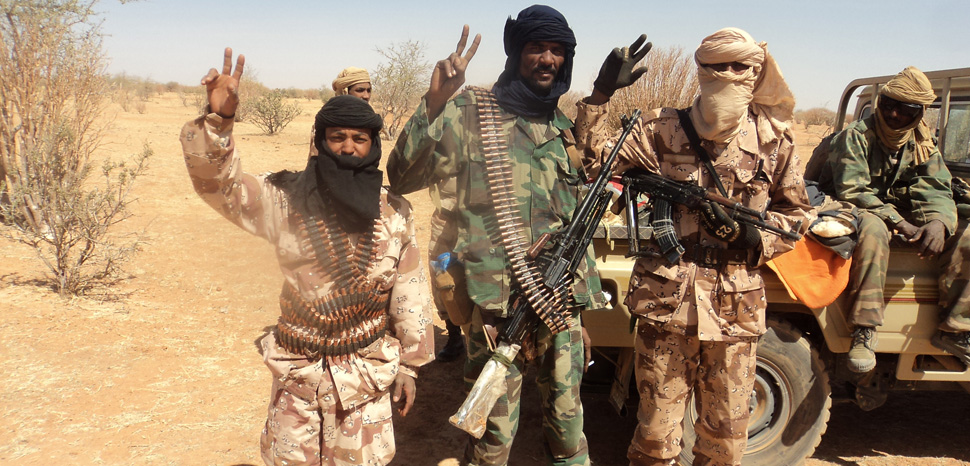
Hundreds of thousands of people are being driven from their homes by violent militias in Mali, destabilizing an already precarious political climate and swelling migration flows throughout the region.
The clashes are also exacerbating the country’s humanitarian crisis, where over 550,000 people are lacking in food and basic hygiene.
The outlook is expected to deteriorate over the short-term as weak state institutions struggle to reign in escalating violence between various well-armed groups, some with links to trans-national criminal and terrorist networks. The forces driving this violence – long-term climate change and competition for land and water resources – are unlikely to disappear anytime soon.
Analysis
The scale of the displacement does not augur well for regional security: 200,000 people have been forced from their homes since January – six times the number of the same period last year.
As is often the case in sectarian conflict, the violence is being driven by an array of destabilizing events unfolding simultaneously. Looming over all of them is a central government that has failed to assert its writ beyond the cities and in the northern regions, is under-financed and lacking in resources, and is still attempting to douse the fires of a 2012 civil war in which large swathes of the north fell into the hands of Islamic and Tuareg militias. Though fighting in the north has waned since then, one recent report from the Carter Center found that most of the peace accords that ended the conflict remain unimplemented.
This new pattern of violence resembles the past; same horror, different actors. It’s unfolding in central Mali, rather than the north where the Tuareg-led rebellion broke out in 2012. And though the themes of growing competition over land and water are the same, now most of the fighting is being waged between two different ethnic groups. On one side are the Dogon – a group of sedentary farmers who follow animist traditions. On the other are the Fulani – a group of nomadic pastoralists mostly of the Islamic faith. The two groups lived together in relative peace in Mali for centuries. However, the anarchy, conflict, land pressures, and rampant weapons stockpiling of recent years have given rise to armed militias on both sides. It’s these groups that have been perpetrating most of the violence in early 2019.