Mali, along with the rest of the greater Sahel region, has been marred by seemingly endless violence and protracted insurgencies that have dragged on, to differing extents, since the country’s independence. Poor economic conditions, political grievances and cultural divides underscore the Tuareg rebellion that has pitted the Malian state versus its northern constituents for the better part of six decades. Throughout the many conflicts between the Tuareg people and the Malian state, power in the central government has repeatedly changed hands due to hostile coups and subsequent military rule. This political strife has exacerbated the very same issues that fuel the conflict in the north: economic struggles characterized by food shortages and public health disasters, a lack of infrastructure and education, and a lack of reliable electricity generation.
Over the past few decades, the insurgent threat gained another dimension: transnational terror organizations. As with the rest of the Sahel and North Africa, jihadist extremist organizations, derivatives of Al Qaeda, Jama’at Nasr al-Islam wal-Muslimin (JNIM), and Islamic State Sahel Province (ISSP), have made major territorial gains and disseminated their ideology throughout the local populations. Yet boiling the terrorism landscape down to these two umbrella groups is severely reductive in any effort to characterize the explanatory factors as to why Mali’s counterterror initiatives and foreign-assisted operations have largely failed to stem the proliferation of jihadist violence.
A Shifting Counterinsurgent Landscape in Mali
Numerous academics and analysts have made the assertion that framing the conflict in Mali as a counterterror initiative is a fundamental mischaracterization, and the Malian government’s acceptance of this mischaracterization as fact is evident in its counterterror initiatives. The Malian government employs a central focus on conventional military action aimed at eliminating high-value targets, usually leaders of various terrorist groups, including AQIM, Ansar Dine, and al-Mourabitoun, which now operate under the same banner: JNIM. However, this strategy, due in part to the misunderstanding previously mentioned, has proved to be both strategically futile and misses the larger security context. Prior analysis has noted that while the jihadist groups should certainly be categorized as terrorists, responses should follow a counterinsurgent strategy, not just counterterror aims, which are usually confined to surveillance and law enforcement.
Perhaps more fundamental to the misunderstanding is a lack of a clear policy outline of the Malian government’s goals, mandates, or interests in its counterterror initiatives, and a lack of security capability in executing new counterterror laws and international agreements. Such a framework gains importance given the fact that the government must simultaneously pursue peace in the north and that jihadist groups in the Sahel, in particular JNIM, operate in a distinct manner from other terrorist organizations: they aim to control territory by co-opting local governance structures and engaging in communal enrichment programs, such as literacy initiatives, which differentiates them from the military training and disarmament, demobilization, and reintegration efforts typically aimed at local militia. Yet these groups also engage in traditional terrorist activity such as targeting Western entities and civilians.
Strategically, this narrow state focus on military action is inadequate for the foe at hand. Despite aligning under the same banner and integrating their command structure, JNIM casts a wide net for local and tribal allies, and despite heavy losses, has repeatedly been able to reconstitute forces and capabilities after attacks. The Malian government’s resource constraints and massive swath of territory that it must cover make traditional military action even more difficult to execute effectively. This is not to say that a traditional pressure campaign should not continue, but rather that it must be coupled with a multi-pronged approach that addresses some of the “push factors” resulting from military conflict that enable JNIM to continue building up its ranks.
Over a longer time horizon, this kind of multi-pronged approach might include military justice initiatives, education and infrastructure investment, and a restoration of civilian governance. In terms of military strategy, this means an increase of use in smaller, faster units that can counter guerilla warfare tactics across the vast and rough terrain. It also means an increase in the use of intelligence and collaboration with local tribes, which is hampered by economic grievance and the fact that many JNIM strongholds are in the north, where Tuareg tribes and militias provide little cooperation, if not additional armed conflict with the government. Many JNIM cells are deeply integrated into local civilian organizations and governments, which make it difficult to discern civilians from militants. This has in turn led to widespread atrocities committed against civilians by Malian troops, who lack the intelligence or resources necessary to engage in more precise warfare, which in turn further turns public and local opinion against the government, increasing extremist sympathy.
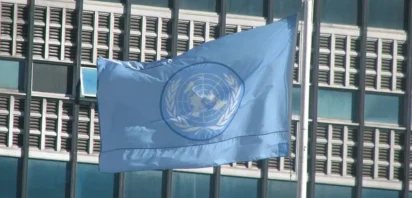
The wider security environment remains fraught. Post Arab Spring and the fall of Qaddafi, Tuareg militants, namely MNLA, returned to Mali amidst a massive proliferation of arms across the Sahel and North Africa. The power vacuum, which had existed in the north for decades, was further destabilized by an influx of arms and trained soldiers. Despite multiple ceasefire provisions and the UN’s MINUSMA peacekeeping mission, lasting peace has not occurred in northern Mali. The security environment and lack of state authority has allowed jihadist organizations such as JNIM to strengthen their presence amongst the anarchy.
France Out, Russia In: Evolving Foreign Involvement
Constant regime rollover in Mali and the surrounding Sahelian states has made it difficult for international cooperative agreements to remain in place long enough for them to be effective. Despite initial successes in Operations Serval and Barkhane, the deterioration of relations between Mali’s new junta government and Macron led to France’s withdrawal. Goita has exerted a similar pressure on the UN to withdraw MINUSMA.
In the absence of French forces, Russia and the Malian junta have tightened their cooperation. Forces from the Wagner Group aided Mali in retaking towns held by Tuareg rebels in 2023, increasing the access of both groups to gold mines and lithium and uranium deposits. Mali has since signed formal agreements with Russia allowing forces to protect gold and other mining interests in the northern portion of the country.
These agreements advance two crucial objectives for Mali: capacity-building for security operations in the north of the country via Russian cooperation and enhanced resource extraction in the north of the country to bolster the state financially. Wagner’s exit from the country in June 2025 changes the calculus for the Malian government. Wagner, owing to its perceived autonomy from the Russian government, was able to operate with significant bandwidth when it came to conducting operations without FAMa forces. They were also able to engage in atrocities against civilians without incurring risk for the Russian government. With the command of Russian operations in Mali largely shifting over to the Africa Corps, a group under the command of the GRU and the Russian Ministry of Defence, Russia will likely not be able to claim plausible deniability for their troops’ actions in the region. The Africa Corps troops are also going to take a more supervisory and training role, as opposed to the more independent “shock forces” role undertaken by the Wagner Group. This new modus of cooperation will likely necessitate closer coordination with the Malian government.
Given these factors, it may be plausible to assess that Russia’s intent is moving away from pure resource extraction to enacting geopolitical influence intent in Mali and the Sahel as a whole.
Multiple African IGOs and formal alliances have also seen breakdowns due to the emergence of military dictatorships in the region. Mali lacks the institutional and security capability necessary for implementing directives that come from the AU CT Framework, the PSC, and ECOWAS. After the 2020 and 2021 coups, the junta also lacks the political will necessary to implement these directives.
In 2017, the G5 Sahel was authorized by the African Union to establish a joint defense force (FC-G5S), intended for combating terrorist groups and the organized crime that enabled many of them to survive financially, building on the original G5 Sahel agreements formed in 2014 for combating transnational terrorism. The transnational nature and constitution of jihadist groups begets a strategic need for strong regional cooperation. A fragmented counterinsurgency response ignores the ability of groups like JNIM and ISSP to reconstitute once they cross a border, and represents a tactical disadvantage, since the terrorist groups are able to efficiently coordinate supply, training, and attack initiatives across borders as a single entity. The dissolution of the G5 Sahel represented a departure from the way that regional cooperation had been executed. New alliances, such as the Alliance of Sahel States, formed in opposition to threats from ECOWAS, give form to the growing political alignment between Russia and the Sahel.
In sum, a constant turnover of state power and lack of democratic institutionalization hampers international and regional cooperation in Mali and elsewhere in the Sahel. Even if such cooperation is reestablished, the counterinsurgent initiatives deployed by the Malian government would serve well to supplement conventional efforts with boosted local intelligence collection and civil initiatives to counter the efforts of JNIM.