The South China Sea (SCS) is an area of primary importance for the European Union. It is a vital maritime crossroad between the East and the West, but it is also the setting of one of the world’s most intricate territorial disputes. Yet, there are noteworthy contrasts in regards to the issue among the Union’s member states, and the current EU-level position is the result of a compromise where economic considerations have a greater impact than security ones. As such, while the Union officially maintains neutrality, in practice it implicitly condemns China’s actions; and this stance will hardly hold up in the long term.
Background
EU Interests in the South China Sea
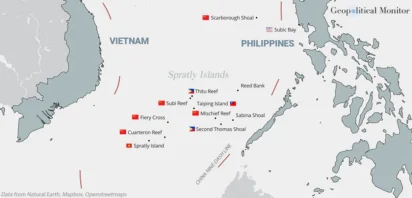
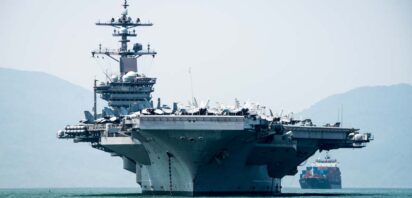
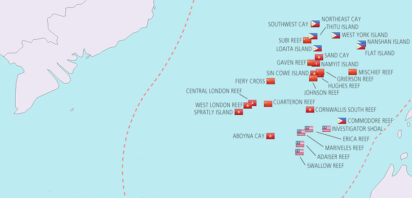
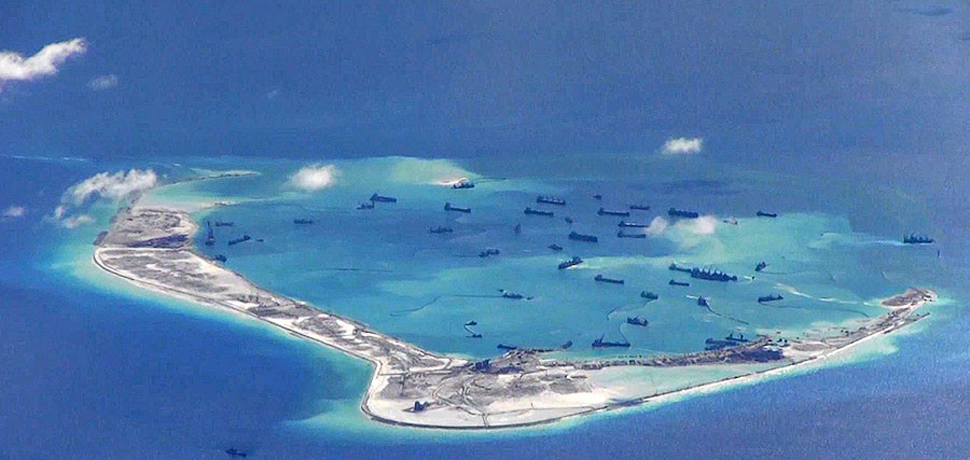
The South China Sea (SCS) is the subject of an intricate territorial dispute involving various littoral states in the region. To summarize, China claims nearly all of the SCS on the basis of the so-called “nine-dash line” map and considers the islands in the SCS (notably the Spratly and the Paracel archipelagos) as historically Chinese territories. The PRC has occupied several islands, expanding them and even creating new ones; all while building permanent infrastructure and even placing military forces on their soil, including fighters and missile batteries. However, other states reject China’s assertions and claim certain islands as their own territory, sometimes placing military forces of their own. While not being a claimant state, the United States is also involved in the area: it conducts patrol operations in the SCS as the guarantor of the freedom of navigation, and because of its geostrategic rivalry with China. In addition, there are also economic considerations: the SCS is a rich fishing ground and it is believed to host lucrative oil & gas reserves.
This has important implications on the EU. The latest version of the Union’s Global Strategy, released in 2016, explicitly acknowledges “a direct connection between European prosperity and Asian security,” adding that “In light of the economic weight Asia represents for the EU – and vice versa – peace and stability in Asia are a prerequisite for our prosperity.” The importance of the SCS originates from this economic realm, since it is a busy maritime traffic zone connecting Europe and East Asia. European states have no direct involvement in the SCS, in the sense that they do not hold any territory in the area and are not among the claimant parties in the dispute. Yet, the sea lanes of communication (SLOC) that stretch throughout its waters are essential for bilateral trade between these two rich zones, which is only getting stronger following the recent free trade agreements between Europe and South Korea and Japan. Moreover, emerging countries such as Vietnam and Malaysia are located along the shores of the SCS, thus increasing the strategic importance of the waters. Finally, by having its voice heard in the South China Sea dispute, the EU can also demonstrate its relevance and autonomy as an international actor, all the while gaining prestige as a responsible power that promotes stability and the peaceful resolution of disputes.
Yet China’s direct involvement creates a dilemma for the Union, which is forced to find a compromise that takes into account the divergent interests of the various claimant states and the economic heavyweight in the neighborhood.
The China Factor
On the one hand, the PRC is a great power of growing international influence as well as a huge market and a primary economic partner for the Union. But on the other hand, China is also a competitor in both economic and geopolitical terms. The Chinese have now acquired the know-how to compete with the West in the high-tech industries that will be paramount in the future, and the Chinese government continues to stand accused of unfair trade practices, for example forcing their economic partners to transfer proprietary technologies. Moreover, China is supporting large-scale initiatives – most notably the Belt and Road Initiative (BRI) to build new infrastructure across Eurasia – which has the result of expanding its political influence in many countries, Europe included. To further complicate things, European states are also closely allied with the United States, which has now adopted a more confrontational approach to China and does not want to see major strides in Sino-European cooperation. The same is true for other important partners for the EU, such as Japan, India, and Vietnam. Finally, China’s assertiveness in the South China Sea and other areas contrasts with the values of peace and respect for the rule of law, which the Union promotes.