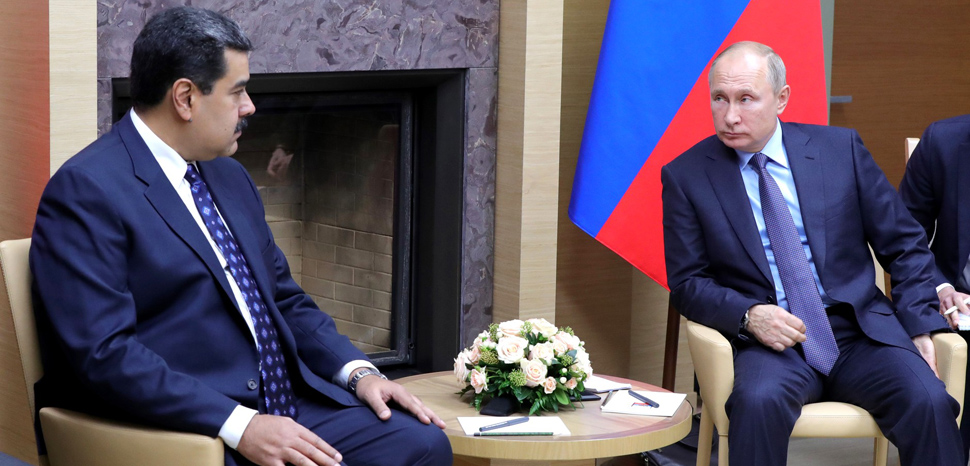
On November 8, Russian Finance Minister Anton Siluanov announced that Russia would restructure $3 billion of Venezuela’s debts. Reuters later reported that Russia and Venezuela would sign a deal on November 15 that would restructure Venezuela’s payments for 10 years. While the amount is modest compared to Venezuela’s total foreign debt of $120 billion, it provides some relief for the Venezuelan government to make short-term payments and avoid declaring default.
Venezuelan President Nicolas Maduro announced on November 2 that he wants to restructure and refinance Venezuela’s foreign debts. While Maduro did not explicitly say that the government is going into default, the restructuring announcement signals that Venezuela may not be able to continue making payments in the near future. Despite the country’s ongoing economic crisis, the Venezuelan government has continuously made payments on its foreign debts over the years. On November 9, the Venezuelan state oil company PDVSA managed to pay an overdue principal of $1.1 billion. While the payment shows that the Venezuelan government still intends to continue meeting its foreign debt obligations, PDVSA has still not paid $500 million in interest on the principal payment.
Russia’s Investment in the Venezuelan Government
The Venezuelan government has depended on Russian financial support to remain solvent. The Russian state-owned oil company Rosneft has purchased substantial stakes in five major PDVSA oil projects in exchange for credit and cash. In addition, Rosneft made collateral swaps with Citgo, PDVSA’s US subsidiary, giving it a 49 percent ownership share. The Russian government has provided the Venezuelan government with over $10 billion in financial aid over the past three years. Russia has also sold arms and military equipment to the Venezuelan government; in 2009, Russia gave Venezuela a 2.2 billion loan to purchase tanks and anti-aircraft missiles.