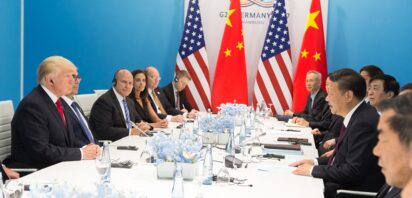
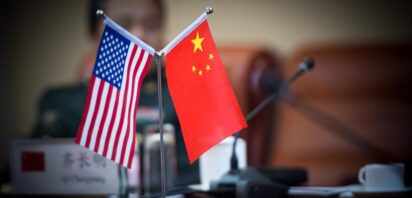
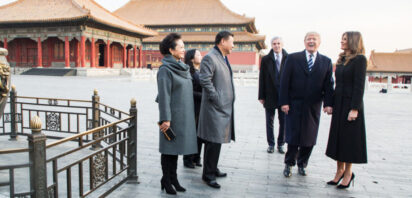
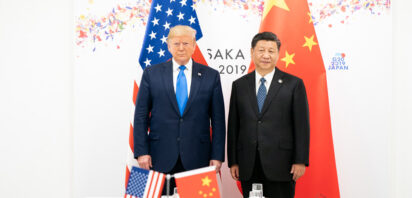
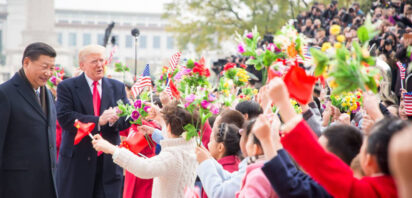
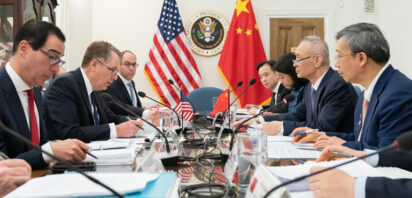
Whether or not the Trump administration follows through on its moonshot of negotiating over the One China policy, it seems increasingly likely that tensions over North Korea, Taiwan, the South China Sea, and trade could bring about a breakdown in US-China relations. The primary arena where such a breakdown would play out, at least initially, is bilateral trade.
President elect Trump has put some of his cards on the table already. He campaigned on punishing China for unfair trade practices, labeling the country a currency manipulator, and slapping tariffs as high as 45% on Chinese exports into the U.S. After his victory, he doubled down by calling the bedrock of US-China relations into question.
But how will China respond to all this? Here’s a list of Beijing’s potential targets.
Past is Precedent?
Unbeknown to many, this sort of thing has actually happened before in the early days of the Obama administration. One of President Obama’s early decisions in office was to slap a tariff on Chinese tire exports citing unfair government support for the industry. The Chinese side responded in 2010 by imposing a retaliatory tariff on US broiler chicken imports – an industry that accounts for over 300,000 jobs in the United States.
The result was a prolonged trade spat that still hasn’t ended. From the US perspective, the tariff protected jobs in one industry – though at a high dollar cost per saved job – at the expensive of jobs in another. Importantly, it also dragged out for several years in the World Trade Organization. A second complaint was launched against the Chinese tariffs in mid-2016; it is expected to be ruled on sometime next year.
The tire-chicken war might serve as a template for the trade wars to come. One protectionist move countered immediately by the other side, with the glacial pace of WTO arbitration doing nothing to stem a cycle of retaliation.
US Agriculture
In an early return volley against president elect Trump’s comments on the One China policy, the CCP mouthpiece Global Times published an editorial saying that China could respond in a trade war against major US companies like Apple and General Electric. It also invoked the threat of halting US imports of maize and soy.
Farming accounts for roughly 474,000 direct jobs in the United States according to the USDA. Obviously, most of these jobs are situated in the very rural communities that came out overwhelmingly in favor of Donald Trump in the November election. This fact is not lost on Chinese policymakers, who will keep Trump’s political base in mind when planning their response to his policies.
The United States is the world’s largest exporter of corn, and while China has fluctuated between corn importer and exporter, it is still an important market for US producers. Interestingly, the Global Times threat comes at a time when liberalization is looming over the Chinese corn industry. A tariff on US imports could help dampen the effect of removing the government price floor, which will inevitably send corn prices in China downward.
Soy is a much more clear-cut risk for US agriculture. China is by far the world’s biggest soy market, and US producers sold 27 million tons of soybeans there through 2015. In total, China is expected to import 87 million tons of soy in 2017, good for around two-thirds of global demand. A halt in imports or dramatic increase in tariffs could savage employment in the US agricultural sector. However, it would also hurt Chinese consumers when they’re reaching for a basic foodstuff at the supermarket, which may have Beijing thinking twice about this option.
US Automakers
The Chinese auto market surpassed the United States as the largest in the world in 2009, and since then it has not looked back. In 2015, vehicle sales exceed 25 million. The United States reported sales of 17.4 million in the same year. The demographics and growth potential of the Chinese market also make it a key expansion market for US automakers.
Far more US cars are sold in China than Chinese cars in the U.S., making the auto market a potential battlefield in a trade war. Just this week an official was quoted in the China Daily saying that an ‘unnamed’ US automaker will be punished for ‘monopolistic behavior.’ Beijing would have many tools available to it in targeting US producers, ranging from regulatory hurdles and red tape to outright tariffs. Importantly though, the employment impact of these tariffs wouldn’t necessarily have the same direct employment impact of say agricultural tariffs because the cars being sold aren’t exclusively made in the United States. For example, General Motors has six plants in China, a fact that could help insulate it somewhat from retaliation.
General Motors and Ford have the most to lose in a trade war. The Chinese auto industry is already a knife fight, with intense competition from an array of global and domestic brands, and lower margins vis-à-vis other markets.
Boeing
Boeing would be a favored target for Chinese policymakers. Not only is it highly symbolic of US industry, but most of its manufacturing base is still located in the United States (the company agreed on its first off-shore aeronautic plant in 2015, to be located in China). It’s also relatively easy for the national government to impose its will on commercial air carriers, particularly massive state-owned ones like Air China.
The China market is very important to Boeing, and the company is currently China’s leading provider of commercial aircraft. China accounts for around 13% of Boeing’s global sales and, again, is a key frontier of growth. In September 2016, Boeing estimated that China would purchase around 6,800 new planes over the next 20 years.
General Electric
GE stands as another major US multinational that’s exposed should a trade war break out. The company has reported revenue of around $8 billion in China since 2014, though it recently sold its entire appliance division to China’s Haier Group, which is based out of Qingdao.
GE’s operations could be impacted on many fronts – oil, health services, aviation, infrastructure – depending on what specifically the Chinese government targets. One potential sector of note would be renewables. The Chinese government has become the world leader in terms of renewable energy development and investment. Elbowing out GE’s hydro and wind components would be a serious blow to the company, particularly since it’s highly unlikely that the Trump administration will be stepping in to fill the investment gap on renewables in the United States.
General Electric currently employs around 130,000 workers in the United States.
Apple
The sheer size of the Chinese market makes it important to Apple, but it hasn’t been all smooth sailing for the iconic US brand. In 2015, the company was breaking records on the back of strong sales in China. Enter 2016 and the story has markedly changed, with sales down 33% in first quarter 2016. Through third quarter 2016, the iPhone’s market share has dropped to just 7% (in first quarter 2015 it was approx. 15%). What changed? A combination of intense competition from domestic upstarts like Oppo and Vivo, along with price disadvantages from a devalued yuan. There’s also regulatory hurdles that have been thrown at the company, blocking key features of the iOS software suite.
Apple has 115,000 full-time employees in the United States, and China accounts for roughly 22% of the company’s total sales.