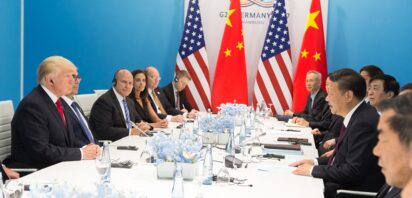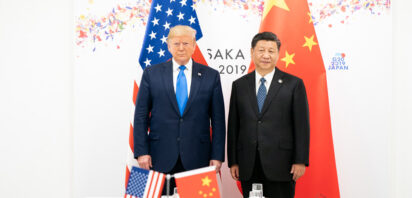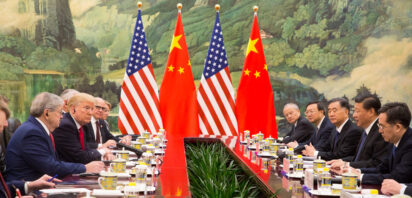
One of the landmark policies of the Trump administration was taking China to task over unfair trade practices. Though the complaints far predated Trump, with threats to classify China as a currency manipulator or remove its most-favored nation status long treated as rites of passage on the US campaign trail, Trump went much further than his predecessors by initiating a full-fledged trade war with the People’s Republic of China.
The goal was to end unfair state support for Chinese competitors (which would require systemic change in the PRC), renew the United States’ manufacturing sector, and eliminate its yawning trade imbalance with China.
Did the US-China trade war achieve its aims?
Analysis
Ending unfair state support for Chinese competitors
China is not a market economy, nor is it a planned economy in the vein of Soviet-era communism. Rather, displaying elements of both, it’s somewhere in between – a hybrid economy.
A central aspect of the Chinese system is its high degree of state involvement in economic planning. The most obvious manifestation is in state-owned corporations, which account for a large share of economic activity. In 2020, China had 124 companies on the Fortune 500 global list. A whopping 91, or 73% of them were state-owned. Among China’s 124 entrants, 78% of revenue and 84% of assets were attributed to the state-owned sector.
China’s huge state-owned sector manifests obvious imbalances when competing with foreign private counterparts which, after all, do not enjoy endless support from their own governments (or often any support at all). But unfair state support doesn’t end with SOEs. The Chinese government is also able to skew its own regulatory framework and investment and planning decisions to mint winners and losers in China’s private sector. Here Huawei is case-in-point: a company that is ostensibly private, but has benefited from extensive government support so as to give it a competitive edge abroad.