A jihadist group called the Sinai Province of the Islamic State made waves in the international media last week by executing a foreign worker named Tomislav Salopek. Salopek, a Croatian citizen, was working for the French energy services company Compagnie Générale de Géophysique (CGG) when he was seized by armed gunman three weeks ago, just some 22 kilometers outside of Cairo. His death comes after an unsuccessful diplomatic push from the Croatian government to secure his freedom.
The execution is a blow to foreign energy companies operating in Egypt, especially since Mr. Salopek was kidnapped in an area that is not generally considered high-risk. CGG has already issued a statement saying that it is reassessing its worker safety procedures. Other major operators in Egypt’s energy sector include BP, Germany’s DEA Group, Italy’s ENI, the UK’s BG Group, the US’ Apache, and China’s Sinopec.
This all comes at a particularly bad time for the Sisi government, which has been holding up Egypt’s energy industry as an engine to reinvigorate growth. Egypt’s energy infrastructure has been plagued by underinvestment which worsened considerably during the chaos of the Arab Spring years. Power generation stands at around 70% of capacity, acting as a consistent drag on industrial output and economic expansion. The high-profile “Egypt the Future” conference in March was meant to change all this, when global energy companies lined up to pledge their investment dollars on development ventures and infrastructure development. And though one single example a trend does not make, more kidnappings and executions of foreign workers risks throttling Egypt’s energy renaissance before it gets off the ground, say nothing of the potential damage to a crucial tourism industry that is also reeling in the aftermath of the Revolution.
The Sinai: Egypt’s Very Own Terrorist Vacuum
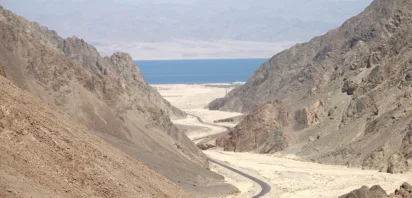
The Sinai Peninsula is a large swathe of desert and mountainous terrain situated between the Suez Canal, the Gaza Strip, and Israel. Historically a part of Egypt, though codified as a buffer zone between Israel and Egypt in the treaty of 1979, the region has always been sparsely populated, lawless, and highly susceptible to transnational crime and terrorist networks. These networks have sometimes found allies among the local beduin, a nomadic people who are still on the outside looking in on benefits of a modern Egypt. They see themselves as second-class citizens, and consequently harbor a deep and enduring skepticism towards the army chiefs in Cairo.