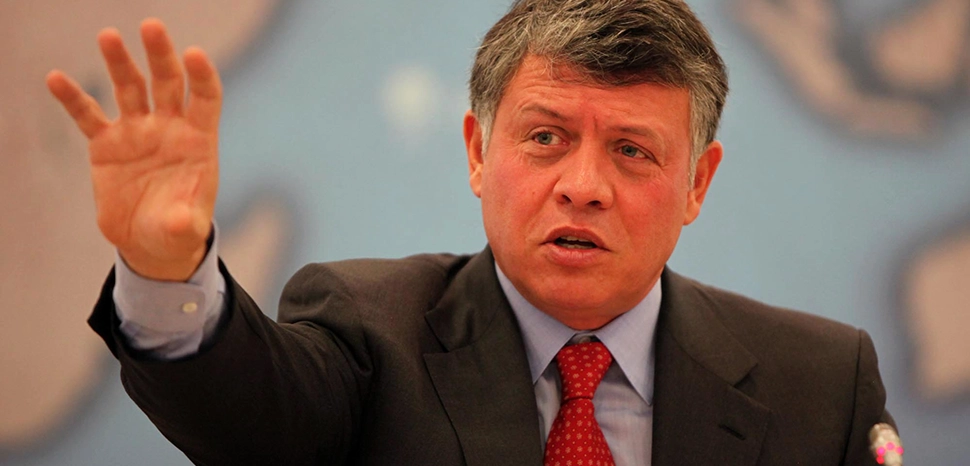
Since the 1973 ‘Yom Kippur’ war, Jordan has managed to avoid being entangled in the Middle East region’s wars. In 1990-91, then King Hussein, did not join the international coalition, which also included Syria, during operations ‘Desert Shield’ and ‘Desert Storm’ against Iraq. Jordan paid a high price for its pro-Iraqi stance, losing millions in aid funds from the Persian Gulf States and gaining hundreds of thousands of refugees. In 2003 a different king, Abdullah II, took a different stance by facilitating the British and American invasion of Iraq, but he refused any kind of direct involvement against what had been one of Jordan’s closest allies (Saddam Hussein); no doubt the pro-Saddam sympathies of Palestinians, who make up some 40% of Jordan’s population, played a big role in limiting the Hashemite Kingdom’s contribution.
Now Jordan has been sucked into a conflict against one of the darkest forces to be unleashed by the Iraq war, the so-called Islamic State or ISIS (The Arabs refer to it as Daish). This is Jordan’s first major individual military foray against a regional enemy – all others have been in conjunction with other Arab countries such as Egypt or Syria, and it is legitimate to ask to what extent the Jordanians are able to sustain a conflict with the self-styled Caliphate.
The angry reactions in the streets in Jordan reflect the solidarity of all Jordanians for the family of Lieutenant Moath Youssef al-Kasasbeh, the captured Royal Jordanian Air Force pilot whom ISIS killed, capturing his last moments on video as he was burned alive. Lt. Moath has become a hero and a symbol in the war on terrorism. Jordanians say they have united in the face of this kind of organization mainly because the barbarity of the pilot’s death. Jordan may even have reached a turning point as it has launched an intense air campaign against ISIS, even as it continues to reject the possibility of launching or participating in a ground attack.
King Abdullah’s gamble carries risks; one comes from Jordan’s northern borders, especially those with Syria and Iraq, where militants have sided ISIS. The other risks stems from the strong likelihood that ISIS has set up sleeper cells in Jordan which can strike at any moment.
King Abdullah is well aware that his country is going to be sucked into what is shaping to become yet another Middle East war – the one against the Islamic State. Indeed, the Hashemite Kingdom is no stranger to fighting – it has always had to fight for its survival, from its foundation under King Abdullah I, through to the father of the present king, Hussein, who made his mark by challenging the designs of the Palestinian ‘fedayeen’ from his Arab Legion in September 1970, and resisting a wave of terrorism in the nineties.