![Kerry Zarif Iran nuclear deal, cc US Department of State, modified, https://en.m.wikipedia.org/wiki/File:Secretary_Kerry_Discusses_Iranian_Nuclear_Program_With_Foreign_Minister_Zarif_in_Switzerland_%2816092274037%29.jpg / U.S. Secretary of State John Kerry sits with Iranian Foreign Minister Javad Zarif before the two resume negotiations about the future of Iran's nuclear program on January 14, 2015, in Geneva, Switzerland. [State Department photo/ Public Domain]](https://www.geopoliticalmonitor.com/wp-content/uploads/2015/02/Secretary_Kerry_Discusses_Iranian_Nuclear_Program_With_Foreign_Minister_Zarif_in_Switzerland_16092274037.webp "Kerry Zarif Iran nuclear deal, cc US Department of State, modified, https://en.m.wikipedia.org/wiki/File:Secretary_Kerry_Discusses_Iranian_Nuclear_Program_With_Foreign_Minister_Zarif_in_Switzerland_%2816092274037%29.jpg / U.S. Secretary of State John Kerry sits with Iranian Foreign Minister Javad Zarif before the two resume negotiations about the future of Iran's nuclear program on January 14, 2015, in Geneva, Switzerland. [State Department photo/ Public Domain]")
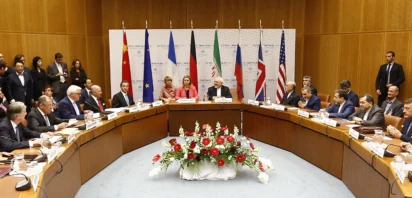
The Lausanne accord over Iran’s nuclear program has started to shift Western interests in the Middle East. Many Western powers, including the United States, are questioning their loyalty to Saudi Arabia. China is adding its own pressure, producing unexpected outcomes, accelerating the Iranian iteration of ‘glasnost,’ or in Persian ‘gozayesh.’
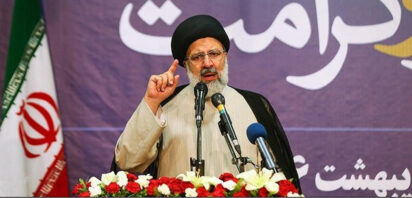
For years, the theocratic government in Tehran has been described as a ‘monster,’ the enemy of freedom and democracy. Yet, Lausanne has suddenly opened up new prospects. Israel does not agree, but that was a given and presumably any wider diplomatic opening between the West and Iran would include assurances for Tel Aviv. Saudi Arabia will need more convincing and may encourage a more radical policy shift in Western capitals. The Saudis have long challenged Iran over hegemony in Middle East and the West has basically ‘forgiven’ the Kingdom everything, including the fact that it is far more authoritarian than the Islamic Republic. Further, the West has reason to be grateful for the efforts of Iran’s Revolutionary Guards against Islamic State in Syria and Iraq where they contributed to the liberation of Tikrit – especially as the West itself (and its allies, such as Saudi Arabia, Turkey, and Qatar) share considerable responsibility in creating the monster that is ISIS.
But Iran is much more than a mop to clean up regional messes. Iran could also be an important business partner, offering a large industrial and consumer base. Despite sanctions, which in the case of the United States have been imposed since the 1979 revolution, Iran’s economy is still among the top twenty in the world, at least in terms of purchasing power. It is well known that Tehran is a key player in global energy markets, and is one of the greatest keepers of the world’s reserves of oil and gas; second only to Russia for natural gas, and third (after Venezuela and Saudi Arabia) for oil. Its major trading partners are China, India, Turkey, the United Arab Emirates and South Korea. Meanwhile, the West continues to hold the far more controversial Saudi monarchy in higher diplomatic esteem.
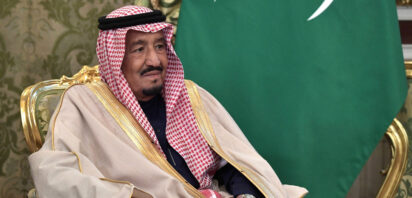
The conflict in Yemen, which has produced a disturbing increase in victims in a very short period, has attracted global attention largely because of the prominent role played by Saudi Arabia. The new Saudi king, Salman, has assembled a coalition of regional states to support its campaign, which many consider to be as another proxy for its conflict with Iran. But, the Saudis have had to pull back; cracks have started to show in its relationship to the West, while the emerging world power of China is changing the regional balance in favor of Iran and Yemen is its first reflection.