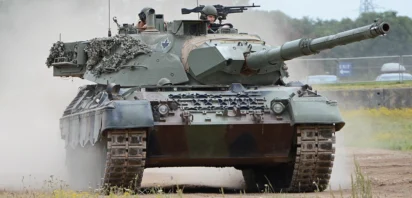
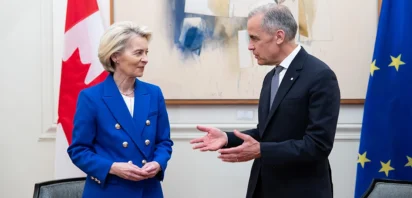
In February 2026, at the Munich Security Conference, Canadian Defence Minister David McGuinty signed a bilateral agreement that brings Canada into the European Union’s Security Action for Europe (SAFE) instrument. It marks the first time a non-European NATO ally has been written into the financial architecture of the EU’s defense rearmament push and reflects the shared strategic imperative of reducing dependence on the US defense industry.
What SAFE Actually Is
SAFE is a €150 billion loan facility, funded by EU borrowing on capital markets and disbursed to member states in the form of long-maturity credit. It is the first and largest pillar of the Commission’s Readiness 2030 plan, which aims to leverage up to €800 billion in European defense spending by the end of the decade. The regulation entered into force on 29 May 2025. Between February and April 2026, the Council green-lit national investment plans for 18 member states, enabling the Commission to begin distributing the first tranches of pre-financing. The numbers explain the geography of European rearmament with stark clarity. Poland alone is receiving €43.7 billion, nearly a third of the entire program. Romania follows with €16.7 billion, France and Hungary with €16.2 billion each, and Italy with €14.9 billion. Germany, Sweden, and the Netherlands requested nothing, because their sovereign borrowing costs are already lower than what Brussels can offer.
SAFE, in other words, is not a federal defense budget. It is a mechanism for countries whose credit ratings make EU-backed borrowing more attractive than market rates, and the bulk of that demand is concentrated on NATO’s eastern flank.
The second distinctive feature of SAFE is its “Buy European” clause. Procurement contracts funded through the instrument must ensure that no more than 35% of component costs originate outside the EU, Ukraine, or EEA/EFTA countries. That cap was the centerpiece of a tense negotiation last spring, when France pushed for stricter European content requirements, and Germany resisted out of concern over disrupting existing supply chains.
What Canada Gets from SAFE
The Canada-EU SAFE Agreement has two major implications: