Since its initial detection in Sierra Leone around 2016, kush has rapidly evolved from a localized public health issue into a region-wide phenomenon that threatens to destabilize governance structures and fragment state authority across West Africa. This is not a crisis that’s unfolding in isolation: the rise of kush falls within broader global patterns of synthetic drug proliferation, though it has rapidly become emblematic of how narcotic economies can erode sovereignty in the Global South and beyond.
Kush: Harbinger of the New Illicit Economy
Kush is not a singular substance but a chemically unstable, locally customized blend. Its core ingredients include nitazenes (laboratory-engineered opioids that can be up to 25 times more potent than fentanyl) and synthetic cannabinoids (substances designed to mimic the effects of THC but with far less predictability and exponentially greater toxicity). Additional contaminants such as acetone, formaldehyde, tramadol, and industrial solvents are sometimes used as fillers, heightening the compound’s volatility. The result is a drug that is both highly addictive and pharmacologically dangerous. Its low cost, often less than one cent in US currency per dose, ensures widespread accessibility among economically disenfranchised urban youth. These characteristics allow kush to swiftly become entrenched in narcotic markets. And once entrenched, it does not take long for societal fallout to emerge, as the incapacitating effects of kush, which range from cognitive impairment to complete loss of consciousness, lend themselves to pervasive socio-economic marginalization.
Decentralized Distribution, Local Synthesis
The kush trade has evolved into a decentralized and flexible supply chain, similar to that of fentanyl. While many chemical precursors are imported from countries with robust industrial bases, particularly China, the Netherlands, and the United Kingdom, the final product is often synthesized and distributed locally in informal, unregulated laboratories. These “ghettos” are frequently located in urban slums and peri-urban zones where state oversight is minimal. Regional-level synthesis reduces reliance on centralized production hubs and complicates law-enforcement efforts by dispersing nodes of vulnerability across multiple jurisdictions. The modularity of this distribution model, which includes large-scale importers and financiers, as well as small-scale mixers, couriers, and vendors, facilitates resilience in the face of counter-narcotic operations.
Kush production depends on a continuous influx of precursor chemicals, many of which are classified as dual-use substances with legitimate industrial applications. These include opioid analogues, chemical solvents, and synthetic compounds manufactured in high-volume industrial economies. Despite international controls, regulatory enforcement in source countries is often inconsistent or poorly targeted. Exporters often exploit loopholes by mislabeling shipments, concealing end-users, or operating through intermediaries with limited accountability.
Although the origin countries, most notably China, the Netherlands, and the UK, do not appear to directly promote the kush trade, their failure to impose stringent export controls creates a permissive environment that indirectly sustains synthetic drug economies in West Africa.
Managed Decay of Political Authority
In cities such as Freetown, Monrovia, and Conakry, criminal networks involved in kush distribution have assumed quasi-governance roles. In areas where the state is absent or ineffective, these groups provide rudimentary services, including security, dispute mediation, and economic subsistence, while simultaneously functioning as enforcement arms for political patrons. They derive legitimacy not only through coercion but also by filling governance vacuums. Concurrently, elements within law enforcement, municipal authorities, and political parties may be complicit in the kush economy.
This dual presence, operating both outside and within the state apparatus, results in a hybrid model of governance in which illicit economies substitute for formal state capacity while infiltrating and co-opting its institutions.
In West African contexts, illicit economies (including drugs) have historically been used to fund political patronage and exert street-level control during election periods. Given its apparent scale and profitability, the kush economy is likely to follow similar patterns, enabling political actors to finance campaigns while simultaneously securing loyalty among youth and local power brokers. For ruling coalitions, aggressively suppressing the drug trade could dismantle these networks and provoke intra-elite fragmentation.
In this context, keeping the crisis within a tolerable range offers several advantages: it preserves the rents generated by trade and allows international actors to continue providing aid and technical assistance. This managed decay could suggest a deliberate choice to stabilize power rather than to address systemic dysfunction.
Arguably, the most powerful aspect of the kush economy is its ability to convert criminal actors into political stakeholders. These groups exert de facto control over specific urban territories and maintain negotiated relationships with formal political elites. Their ability to deliver votes, suppress opposition, and maintain street-level order makes them valuable to electoral strategies, particularly in contexts of fragmented or clientelist politics.
This transforms the nature of political authority. It no longer resides solely within the state but is instead diffused across a spectrum of actors engaged in mutually reinforcing arrangements. The legitimacy of governance, in this context, becomes transactional and contingent rather than institutional and universal.
Implications for Global Drug Trafficking
- West Africa as a ‘Soft’ Geopolitical Zone: The kush crisis exemplifies West Africa’s designation as a “soft” geopolitical zone, an area where structural vulnerabilities, including high youth unemployment, fragmented urban governance, porous borders, and institutional fragility, facilitate the penetration of illicit economies. These conditions are not merely accidental or transitional. Rather, they reflect systemic features shaped by historical underdevelopment, weak state formation, and uneven globalization. This structural configuration enables both criminal syndicates and external powers to maneuver with relative ease and exploit the region’s pliability for strategic, political, and economic gain. The kush crisis, therefore, could also become a lever for external actors to expand their influence under the banner of stabilization and public health.
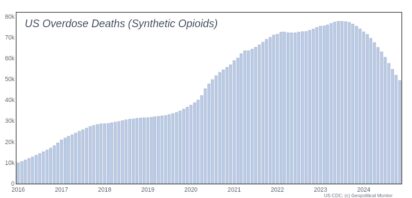
- The New Illicit Economy Synthetic Commodities: Kush, alongside fentanyl, signals a paradigmatic shift in global narcotics markets from organic, plant-based drugs such as cocaine and heroin to synthetic compounds that can be manufactured at scale with minimal geographic or agricultural constraints. This shift disrupts conventional supply chain interdiction strategies that focus on source country eradication or the interdiction of well-established trafficking corridors. The synthetic drug economy is defined by its flexibility, modularity, and low barriers to entry. It allows new players to enter the market with limited capital and infrastructure.
- Emergent Modalities of Strategic Erosion: The consequences of synthetic drug proliferation extend beyond public health or criminal justice domains. By inducing long-term institutional attrition through cycles of dependency, corruption, and enforcement fatigue, synthetic narcotics like kush become instruments of what can be termed “strategic erosion.” Whether leveraged intentionally or permitted through regulatory inertia, this process undermines state coherence, amplifies external dependency, and distorts national priorities. In fragile and transitional states, these dynamics compound existing vulnerabilities and accelerate institutional disintegration, reshaping the architecture of state authority. Thus, the kush crisis challenges traditional frameworks of enforcement and capacity-building by exposing deeper structures of potential complicity, strategic interests, and global interdependence.
* This article was originally published on May 22, 2025.