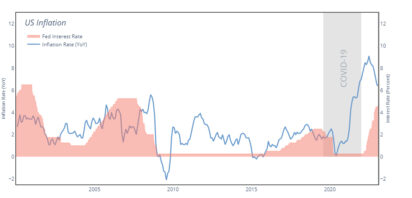
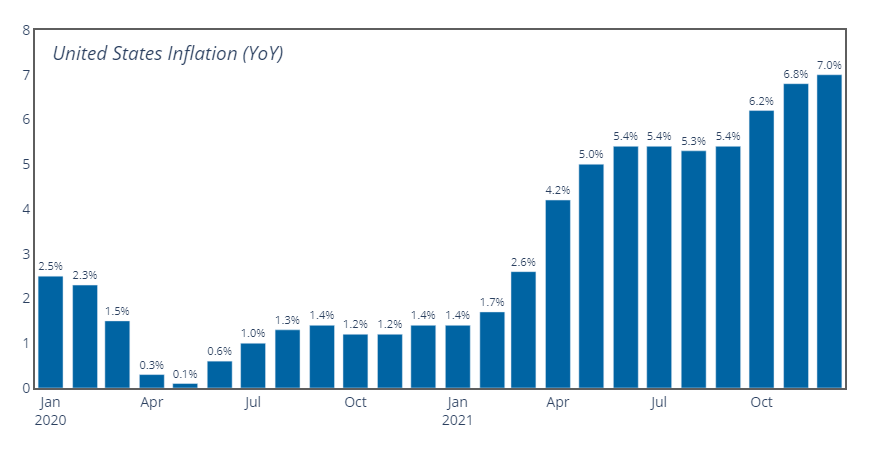
 The US Consumer Price Index increased by 7 percent year-on-year in December, with price increases led by energy (29.3 percent YoY) and food (6.3 percent). In monthly terms, both food and prices in general were up by 0.5 percent month-on-month.
The result is roughly in-line with economist expectations, representing the United States’ steepest annual rate of inflation since 1982.
If there’s a silver lining to be gleaned from the numbers, it’s that monthly inflationary momentum has eased back from November, which saw a 0.8 percent MoM increase across-the-board. But this will cold comfort for a Biden administration watching its approval ratings crater on economic concerns, among which inflation ranks high.
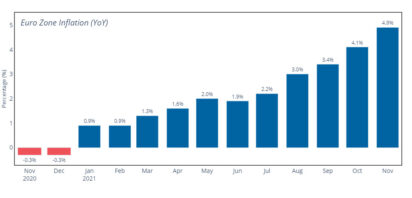
Similar to the euro zone, which recorded its own eye-watering rate of 5 percent in December, the latest US numbers will push back the horizon for a return to the Federal Reserve’s long-term target of 2 percent. The ‘transitory’ moniker has now been dropped by the Fed, which has pivoted toward a hawkish stance in its recent signaling, with some Fed officials now mooting the possibility of three rate hikes in 2022, beginning in March. This would represent a major about face from the previous thinking of no new hikes until 2023 – a belief that was widely held until as recently as October 2021. In fact, in one Reuters poll conducted at that time, under one percent of economists believed that the initial rate hike would come in Q1 2022, and 11 percent in Q2 2022. Obviously if this poll were held again today, the results would be dramatically different.