An oft-overlooked aspect of the COVID-19 pandemic has been its effect on global food production.
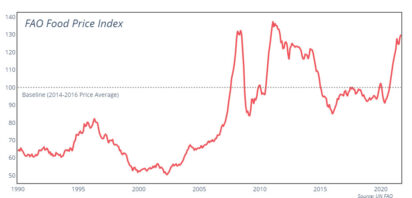
The Food and Agriculture Organization (FAO) food index, which reflects prices of a basket of agricultural staples like cereals, oilseeds, dairy, sugar, and meat, has now increased for six months running. November’s reading of 105 was four points up from the month before – the biggest month-on-month jump since July 2012.
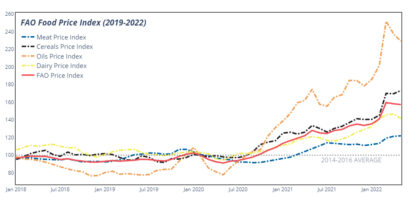
Cereals, sugar, and vegetable oil saw the biggest price gains, the last of which jumped 14.5% month-on-month (a “stunning” increase according to the FAO report). Meat and dairy products also increased in price, albeit slightly.
Food prices now stand at their highest level since December 2014.
Analysis
The threat posed by COVID-19 to various links of the global food supply chain was evident from the earliest stages of the pandemic. Lockdowns, transport disruptions, and individual fear of infection have combined to reduce the overall labor pool engaged in agricultural production around the world; they have also prompted export restrictions of certain staples, though perhaps not to the extent once feared.
As is the case in the agricultural sector, the consequences of these trends on food prices operate on a delay. The output effects of undermanned planting seasons, disrupted pesticide or seeds supplies, equipment shortages, and reduced pest control measures aren’t fully revealed until harvest time.
Now eight months into the COVID-19 pandemic, the latest FAO food index readings might be just that: a reckoning long foretold by the labor and supply chain upheavals of COVID-19.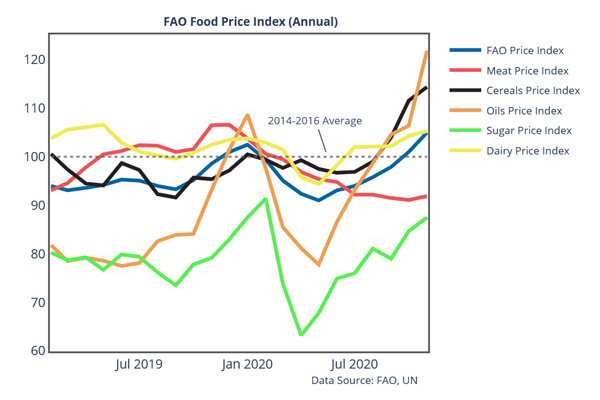
Price increases in vegetable oils were most pronounced in November, increasing 14.5% month-on-month. According to the FAO report, these increases mostly reflect upward pressure from soy, rapeseed, and sunflower seed and palm oil prices. It’s a sharp turnaround from earlier this year, when vegetable oil prices were languishing at multi-year lows.