Last week, US President Donald Trump hopped off the fence regarding an issue that had been seeped in ambivalence since the beginning of his presidency: the long-term status of US assistance to Syria’s Kurds. In announcing a pull-out from northeast Syria, Trump paved the way for a Turkish invasion and the establishment of a ‘buffer zone’ for refugee resettlement along the border. But how long the Turks intend to stay, their actual plans for the zone, and how other players in the Syrian theater will respond are still unknown.
Two lessons however were immediately apparent: 1) hard power reigns supreme as we move toward a post-sanction world; and 2) it doesn’t take much for a delicate equilibrium like Syria to cascade back into chaos.
Analysis
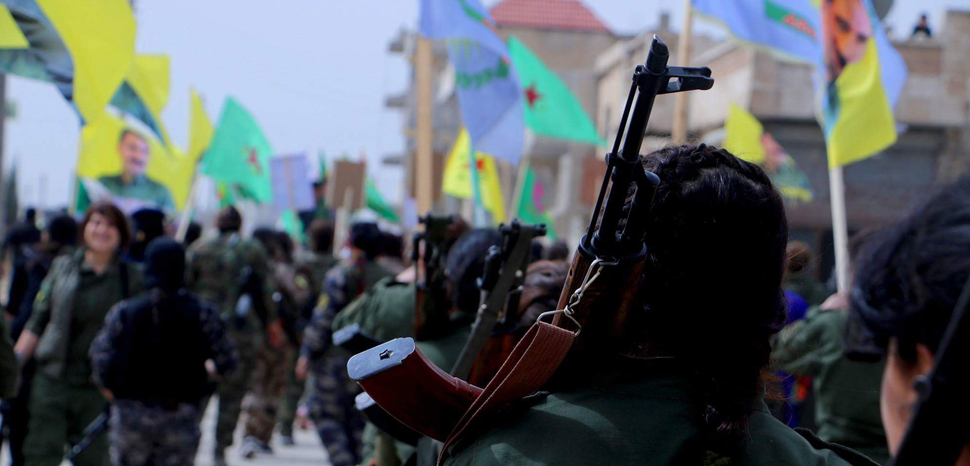
The ‘Kurdish issue’ in Syria has already been extensively covered; simply put, it boils down to a choice between two friends who despise each other: the old ally who has been drifting lately (Turkey) or the new one who has recently done right by you (Syria’s People’s Protection Units/Syrian Democratic Forces [YPG/SDF]).
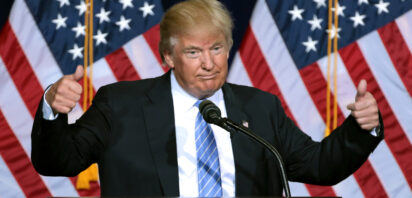
President Trump opted for the ‘old friend’ in the end; however, there is some evidence to suggest he didn’t grasp the ramifications of his choice at the time. Specifically, Trump paired the announcement with a threat to “totally destroy” Turkey’s economy should Ankara embark on anything “off limits,” which alludes to the invasion while still being vague enough remain deniable. The threat has since been followed up on over the weekend, when, amid a chorus of criticism from both sides of the US political divide, President Trump slapped sanctions on Turkish officials and doubled the preexisting steel tariff, bringing it to 50%.
To recap: President Trump defers to ‘old friend’ in an intractable foreign policy dilemma, then proceeds to threaten said friend with total destruction, and then actually follows through with the threats. The above flowchart doesn’t suggest anything approaching a cohesive foreign policy strategy, let alone serious thought and consideration, if anything because the subsequent Turkish invasion should have been 100% anticipated. On the other hand, it’s possible that President Trump overestimated the coercive power of the economic punishments at his disposal. This would be understandable because, as this situation clearly demonstrates, the US’ punitive toolbox short of hard power is becoming less and less fearsome, especially when weighed against the domestic political benefits of playing the ‘national card,’ which is exactly what President Erdogan is doing.
For President Erdogan, the long-held goal of establishing a buffer zone now seems to be in-reach. The plan would help to secure several core interests. First and foremost, it inserts a wedge between Turkish Kurds and the Syrian Kurds, mitigating the risks of cross-border support in a struggle against the Turkish state. Over the short-term, this wedge will be in the form of military hard power. However, herein lies a long-term solution as well, at least so far as Ankara is concerned: the resettlement of Syrian refugees along the border, splitting the contiguous Kurdish population. The military campaign also helps to achieve more immediate political goals for Erdogan: 1) It helps to resettle the approx. 3.5 million Syrian refugees currently living in Turkey; and 2) it both diverts attention from, and ascribes a new reason for, the country’s ongoing economic malaise. This latter point is particularly appealing, because it shifts blame away from Erdogan’s economic policies and toward the unfair caprices of an imperial-minded Washington D.C.