To understand the Middle East today, stop reading it from Washington. Read it from Tel Aviv, where the sirens are real, the threat is existential, and the debate between liberals and realists is not academic. It is a matter of survival.
Since October 7, 2023, Israel has been living under a logic that its Western observers struggle to fully grasp: that of a state which knows, with clinical precision, that several of its neighbors and their backers are organized around a single objective, its disappearance. This is not paranoia. It is written on the walls, literally. In the north, Hezbollah — armed, financed and directed by Tehran — spent two decades building an arsenal of over 150,000 rockets pointed south. To the northeast, in Tehran, a countdown clock installed in 2020 displays the date by which the Islamic Republic has promised Israel will cease to exist. To the southwest, in Gaza, Hamas carried out the deadliest massacre of Jews since the Holocaust. And further south still, from Yemen, Houthi missiles reach Tel Aviv. The geography of threat is total.
How should a state respond to this? That question — deceptively simple — is where international relations theory stops being abstract and becomes existential. Two schools of thought have long shaped the debate: liberalism and realism. In most capitals, they are competing frameworks. In Israel, they are competing survival strategies. And the gap between them has never been wider.
The Liberal Reading: Peace as the Only Sustainable Security
The liberal tradition — associated with thinkers such as Robert Keohane and Joseph Nye — holds that lasting security cannot be built on force alone. It requires institutions, interdependence, and political solutions that address the root causes of conflict. Applied to Israel’s situation, the liberal argument runs as follows: Hezbollah, Hamas, and the Houthis are not ends in themselves, they are instruments. Iran sustains them because they serve as legitimizing tools, allowing Tehran to present itself as the defender of the Palestinian cause before the Arab world. Strip Iran of that narrative by advancing a credible political horizon for Palestinians, and the proxies lose their recruitment base, their popular legitimacy, and ultimately their strategic utility.
This argument is not without weight inside Israel. A significant part of the Israeli left, and much of the international community, has long maintained that there is no military solution to the Palestinian question, that every operation in Gaza, every strike in Lebanon, every targeted assassination produces temporary relief and long-term radicalization. From this perspective, October 7 was not a failure of deterrence. It was the predictable consequence of decades of management without resolution. The liberal prescription is uncomfortable, politically toxic in the current climate, and requires a partner that is difficult to identify, but its diagnosis carries an internal coherence that cannot be dismissed.
The Realist Reading: Force as the Only Language Understood
The realist tradition — from Hans Morgenthau to Kenneth Waltz and John Mearsheimer — offers a radically different lens. States are rational actors pursuing power and security in an anarchic international system — anarchic not in the sense of chaos, but in the absence of any authority above the state. They do not respond to goodwill; they respond to capability and resolve. Applied to Israel, the realist argument is blunt: Iran does not support Hezbollah because of the Palestinian cause. It supports Hezbollah because a permanent military presence on Israel’s northern border is a strategic asset, a forward deterrent, a pressure valve, a card to play in any future negotiation. The cause is a pretext. The logic is power.
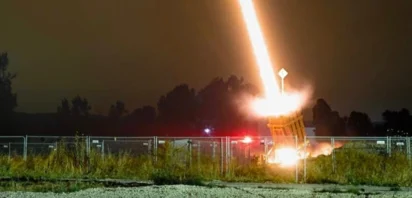
This reading resonates deeply in a society that has absorbed missile attacks from four directions simultaneously. When the sirens sound in Tel Aviv, no one is thinking about institutional frameworks. The realist conclusion draws itself: the only thing that has ever stopped an attack is the credible threat of devastating retaliation. The only thing that will prevent the next one is the same. Hezbollah’s military degradation in the autumn of 2024 is not celebrated in Israel as a solution, it is understood as a window. But windows close and the question is what is built inside them before they do.
Trump, Maximum Pressure, and What It Looks Like From Tel Aviv
Against this backdrop, Trump’s maximum pressure campaign on Iran reads very differently from Tel Aviv than from Washington, or from Paris. For most Israeli security analysts, it is not primarily a diplomatic strategy. It is a structural weakening operation: degrade Iran’s financial capacity, tighten the sanctions perimeter, and force Tehran to choose between its nuclear program, its proxy network, and its domestic stability. Whether or not it produces a deal is secondary. What matters is that Iran has less to spend on Hezbollah, less capacity to rearm Gaza, less room to maneuver.
The regional fractures this strategy produces — a Saudi Arabia caught between de-escalation and alignment, a Lebanon unable to govern its own territory, an Iraq split between US bases and Iranian-backed militias — are visible from Tel Aviv but viewed through a different lens. These are not collateral damages to be regretted. They are, from a realist Israeli perspective, the predictable consequences of a region that has never resolved its fundamental tensions. The Abraham Accords — normalization with the UAE, Bahrain, with Saudi Arabia potentially next — represent the liberal face of this realism: building a coalition of shared interests around a common threat, bypassing the Palestinian question rather than solving it. Whether that bypass is sustainable is precisely what the liberal critique contests.
Living Inside the Equation
The debate between liberals and realists is not resolved in Israel, it is lived. A society that evacuated entire communities from its northern border for over a year, that buried 1,200 people in a single morning, and that knows the clock in Tehran is still counting, does not have the luxury of theoretical detachment. The liberal argument demands a political courage and a regional partner that the current moment does not offer. The realist argument provides a logic for action but no endpoint — deterrence must be rebuilt after every war, and every war produces the next generation of recruits. What Trump’s strategy changes, from Tel Aviv, is the external pressure on Iran and therefore the cost Tehran pays for maintaining its proxy network. What it does not change is the underlying equation: a state surrounded by actors committed, with varying degrees of capability, to its elimination. That equation predates Trump. It will outlast him. The question Israel lives with, every day, is not which theory is correct. It is which one buys more time.
The views expressed in this article belong to the author(s) alone and do not necessarily reflect those of Geopoliticalmonitor.com.