Afghanistan is known as the graveyard of empires for a reason.
Occupying prime geopolitical real estate as a land bridge between Europe and Asia, the country has figured into continental trade routes for as long as humans have been trading. This geography is still highly relevant today, evident in the regional trade schemes lining up to incorporate Afghanistan: China’s Belt and Road (BRI), India’s North-South Transport Corridor (NSTC), and the Lapis Lazuli corridor to name a few.
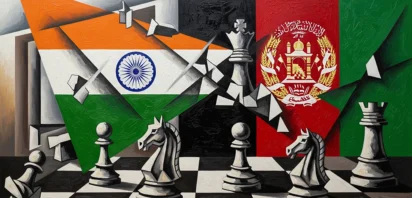
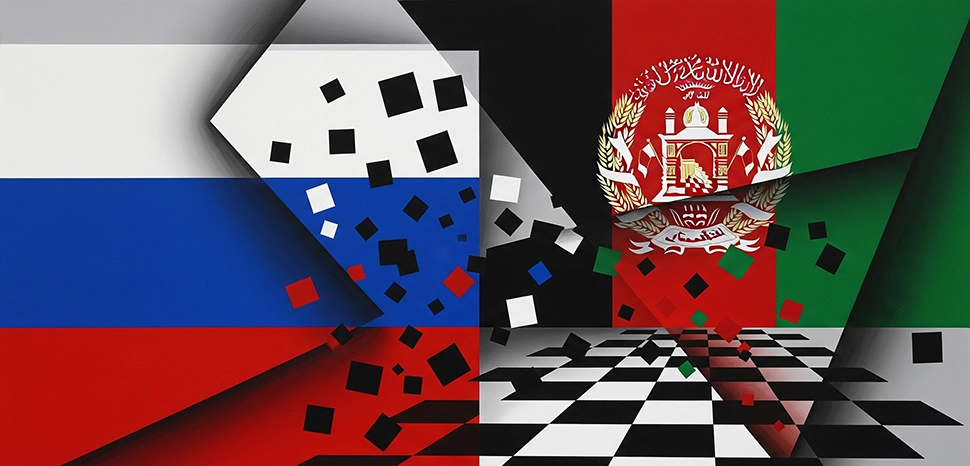
Now that the United States is heading for the exits, Afghanistan will once again become a coveted piece on the geopolitical chessboard of regional heavyweights. This series will examine their goals and motivations. It continues with Russia, a country that is just now reentering the Afghan foray after a long absence following the Soviet Union’s withdrawal in 1989.
Background
A bitter historical legacy
As heir to the historical legacy of the Soviet Union, Russia has a complicated relationship with Afghanistan.
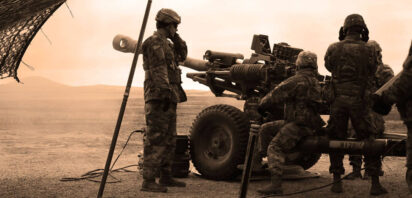
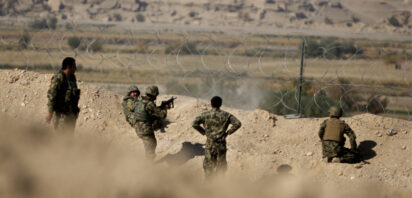
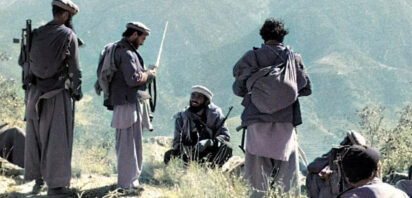
The USSR invaded Afghanistan in 1979 in support of the local communist party there. A US-funded, Pakistan and Saudi Arabia-supported Sunni insurgency (the mujahedeen) subsequently killed up to 25,000 Soviet troops in a brutal guerilla war, syphoning off billions of dollars and contributing to the eventual collapse of the Soviet system back home. When the Soviets were eventually forced to withdraw in abject defeat in 1989, they left behind a weak government that was besieged on all sides. In 1992, that government finally fell to an offensive by the Islamists, and President Mohammad Najibullah – the leader the Soviets left in charge – was hung from a traffic pole in Kabul.
The Soviet experience offers a few obvious parallels to the present: The USSR attempted to impose its political structure on what is and always has been a fiercely independent and tribal society, lost a long and costly war, and left behind a weak government that was unable to prevail in the ensuing conflict, in part because it lacked nationalist credibility for having collaborated with the Soviets for so long.
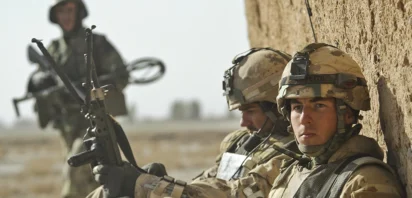
The bitterness of defeat and the chaos of the Soviet Union’s collapse left Russia as a minor player for most of the NATO campaign in Afghanistan. But not anymore. Recent years have seen Moscow resuming its historical role in the region and actively seeking to secure its long-term interests in Afghanistan wholly independent of any US plans for the country.
Russia’s interests in Afghanistan
Though it’s far from a central focus of Russian security planning, Afghanistan contributes to the stability and economic development of Central Asia – a region that Russia views as its geopolitical backyard.
Russia’s two greatest security concerns are containing Islamic State and eliminating narcotics smuggling networks operating between Afghanistan and Russia via Central Asia. The ISIS threat stems from terrorist attacks on Russian citizens and interests, and the possibility of ISIS recruits or returnees radicalizing Russia’s Muslim territories like Chechnya and Dagestan. In terms of drugs, Russia wants to avoid a situation where Afghanistan’s opium-growing heartland is allowed to thrive unchecked. Ideally, Russia also wants to prevent the long-term stationing of NATO troops in the country.