More than a decade of European investment in the Sahel has yielded a troubled result: instability is spreading, not receding.
Since 2020, the region has witnessed six successful military coups, surging extremist violence, and conflict related deaths have increased by more than 1,000 percent since 2010.
The European Union’s Common Foreign and Security Policy (CFSP) was designed as the bloc’s most ambitious attempts to project stability beyond its borders. Rooted in the Maastricht Treaty and codified through Article 21 of the Treaty on European Union, the CFSP sought to promote peace, democracy, and the rule of law globally.
Yet, as the current Sahel situation illustrates, the EU’s strategic ambitions have failed to deal with complex local realities.
At its core, the CFSP reflects a vision of international order grounded in multilateralism and aligned with the principles of the United Nations Charter. Rather than simply countering threats such as terrorism, the EU has sought to address root causes through governance reform, institution-building, and economic support.
This dual approach combines security and development which distinguishes the EU from more traditional military-first actors in the region.
But the Sahel region has exposed the limits of this model.
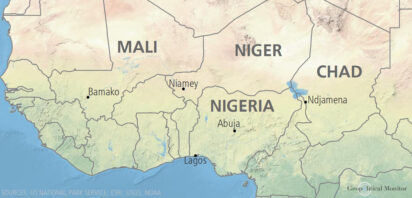
Countries such as Mali, Niger, and Gabon have experienced coups, political instability, and a resurgence of extremist violence. These developments challenge a central policy assumption underpinning EU policy: that external support and institutional reforms can create sustainable stability. Instead, they reveal a more fragmented reality, where local political dynamics often undermine externally driven frameworks.
Part of the problem lies in how the CFSP has evolved. Rather than emerging from a long-term single grand strategy – similar to US grand strategy – the CFSP has been shaped as a reactive policymaking modeled by successive crises, from the Balkan conflicts of the 1990s to the Syrian civil war and a rising ISIS. This reactive approach has allowed for some flexibility, but it has also exposed structural weaknesses. Evidently, policy responses are often rapid, unsuccessful, and rarely durable.
The EU has relied on partnerships, particularly with the African Union. This reflects its commitment to multilateral cooperation. Yet, these partnerships face continuous limitations, including competing priorities, limited resources, and coordination challenges. Highlighting that cooperation alone cannot compensate for a lack of strategic alignment and long-term objectives.
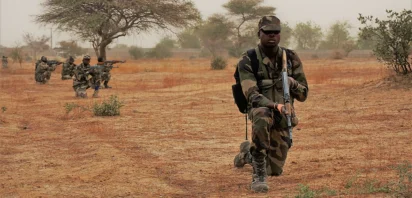
Nowhere is this more evident than in Niger. Once viewed as a cornerstone of regional stability, Niger received substantial EU support, including funding, training, and cooperation through initiatives such as the G5 Sahel Joint Force. Despite these efforts, the country experienced a political collapse that exposed the fragility of externally supported systems. A clear lesson for future EU policymakers: external actors can reinforce stability, but they cannot create political legitimacy where it is absent.
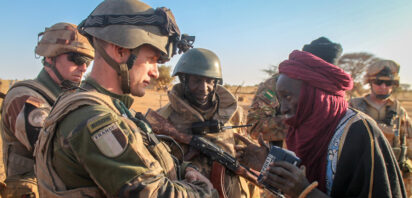
Mali offers an even more cautions example. International military heavy interventions such as France’s Operation Barkhane aimed to contain extremist threats and restore state authority. Instead, they became entangled in local political tensions, contributing to a deterioration in both governance and security. What was intended as stabilization ultimately deepened instability.
In contrast, Gabon may offer a different path and set of opportunities. With less direct EU military involvement, it presents a fertile environment for a more calibrated approach – one more focused on governance, institutional reform, and political engagement rather than security-first interventions. This suggests that the CFSP may be most effective when it operates as a strategic framework, not a direct intervention tool.
Ultimately, if the European Union is serious about its role as a global security actor, it must confront an uncomfortable reality: its current approach is not delivering results in the Sahel.
Moving forward requires a fundamental shift. The EU must invest in a clear long-term strategy combining security, governance, and development. It must recognize that stability cannot be engineered and sustained through funding and training alone.
The lesson from the Sahel is not that the CFSP has failed – but that it has reached its limits. And the EU is fast approaching the point of no return.
The views and opinions expressed in this article are those of the author alone and do not represent those of GeopoliticalMonitor.com