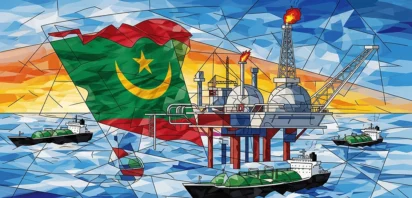
Europe’s energy strategy rests on a category error. Supplier diversification – replacing Russian pipeline gas with US LNG and Qatari volumes – is treated as equivalent to supply security. The two are not the same thing. Supply security, in practice, depends on how many independent corridors, routes that do not share chokepoints, those contracts actually represent. The March 2026 attacks on Qatar confirmed this distinction at scale. Drone strikes on March 2 led QatarEnergy to announce the suspension of operations at Ras Laffan, affecting a large share of export capacity at the world’s largest LNG export facility, accounting for approximately a fifth of global supply. This was followed by missile strikes on March 18 and 19 that caused extensive further damage.
A nominal two-week ceasefire announced on April 8 was suspended within hours by Iran, following Israeli strikes on Lebanon. As of April 14, the Strait remains effectively closed, with daily transits still in single figures against a pre-war rate of 130 to 150 vessels. The underlying conditions have not shifted.
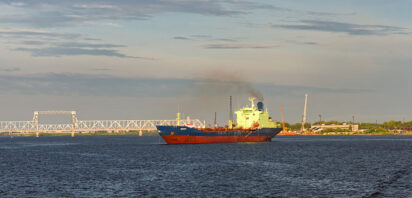
The Strait of Hormuz, through which roughly twenty percent of global LNG trade transits, is a structural condition shared by multiple suppliers simultaneously, whose disruption propagates across all of them regardless of how many offtake agreements a buyer holds. Replacing Russia with Qatar and the United States may reduce dependence on one political actor, but it leaves chokepoint exposure largely intact. The result is that what passes for diversification is actually, in significant part, substitution.
Yet the distinction between supplier count and corridor independence has consequences that European procurement frameworks have, so far, largely ignored. A supply system organized around multiple sellers whose exports converge on the same maritime passage consequently behaves, under disruption, like a system with a single supplier. Indeed, Europe sources only around ten percent of its LNG imports through Hormuz directly. Asian economies, however, depend on the Strait for more than a quarter of their total LNG imports. When those buyers scrambled for alternative cargoes, European benchmark gas futures surged by nearly fifty percent on March 2, eliminating much of the slack that nominal diversification was supposed to provide. The cascade, in other words, did not require direct exposure to Hormuz. Integration into a shared global market was sufficient.
Subsequent missile strikes on March 18 and 19 compounded the damage, with QatarEnergy’s CEO stating publicly that a substantial share of Qatar’s LNG export capacity had been disrupted, with repairs expected to extend over several years. In that light, Europe’s current supply architecture, measured against the criterion of corridor independence, remains structurally underbuilt. Additional contracting with Gulf or US suppliers is thus unlikely to repair it. The problem appears to be architectural in nature, which means additional supply contracts are unlikely to resolve it.
For that reason, route security tends to be underpriced by procurement frameworks that optimize on volume and cost. What brings it into view is usually a shock of the kind that just occurred. The March 2026 attacks have, as a result, shifted the relevant policy question from supplier selection to corridor architecture. I believe the West African Atlantic corridor is where that question finds its most concrete answer.
The Structural Gap
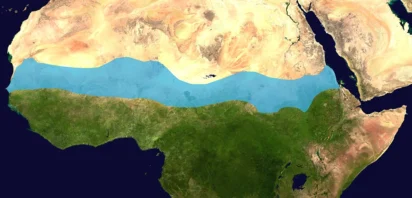
The West African coastline hosts a chain of LNG facilities that share one geographic characteristic: they all face the Atlantic. Nigeria’s Bonny Island, Equatorial Guinea’s Punta Europa, the Republic of Congo’s floating platform, and the Greater Tortue Ahmeyim development on the Mauritania-Senegal border export gas without passing through any chokepoint that Gulf or Russian supply routes also depend on. A cargo from the Atlantic Basin and a cargo from the Gulf are not equivalent instruments of supply security, and European buyers are beginning to treat them differently.
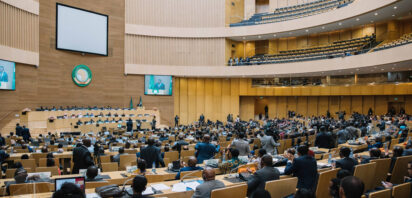
This shift is already visible in practice. Italy’s prime minister concluded expanded energy cooperation agreements with Algeria in late March, and the EU’s foreign affairs chief visited Nigeria and Ghana in March, signing a security and defense partnership in Ghana and a migration cooperation agreement in Nigeria, while Nigeria already supplies more than half of Portugal’s LNG imports. The Paris forum on April 22 will bring together senior delegations from Nigeria, Senegal, Equatorial Guinea, the Republic of Congo and other African producers alongside European buyers, investors, and the newly appointed Secretary General of the Gas Exporting Countries Forum, formalizing a pivot already underway.
Among the developments expected to dominate the forum, GTA Phase 2 is the most watched: partners are advancing a scale-up using existing floating infrastructure that could, if financing is secured, roughly double liquefaction capacity before the end of the decade. Congo LNG reached that threshold faster than most expected, with Phase 2 operational since December 2025 and adding 2.4 million tonnes per year. Nigeria’s ambitions are of a different order, with a 2026 gas master plan targeting twelve billion cubic feet per day by 2030 and more than sixty billion dollars in sector investment. Senegal’s Yakaar-Teranga discovery sits behind all of this as the corridor’s largest undeveloped reserve, its commercialization decision still pending but capable of reshaping the corridor’s capacity through the following decade.
What the American Offer Cannot Resolve
Washington’s response to the Ras Laffan strikes has been to present expanded American LNG supply as the answer to European vulnerability. This addresses the question of which supplier fills the gap, but leaves the deeper question of corridor architecture untouched. The US already provides more than half of Europe’s LNG imports. At that concentration, the corridor from US Gulf Coast terminals to European regasification hubs is itself a form of dependence, compounded by Washington’s demonstrated willingness to use energy exports as instruments of foreign policy leverage. The administration conditions tariff relief on expanded US energy purchases and presses Brussels to accelerate the Russian gas phaseout on US timelines, while its energy secretary describes long-term European dependence on US supply as a policy objective. In practice, the two have proved difficult to separate.
US export terminals are already at full capacity, meaning additional shipments to Europe require diverting cargoes from Asian customers, a move with its own geopolitical costs. The structural ceiling on US supply is thus closer than the headline commitments imply, and the political conditions attached to that supply do not disappear as volumes increase.
An architecture in which the US provides an even larger share of European LNG would, on current evidence, deepen concentration. The dependency does not dissolve. It changes address. For that reason, genuine corridor diversification would need supply that is politically independent of both Washington and the Gulf, exiting through a route that does not share geopolitical exposure with existing dominant flows. The West African Atlantic corridor appears better positioned to satisfy that condition, because the independence it offers derives from geography and is not contingent on any bilateral relationship remaining stable.
The Governance Condition
Route independence is, however, only part of the picture. What European buyers are also beginning to scrutinize is governance. EU methane regulations will from 2027 require new import contracts to comply with EU-equivalent methane reporting rules, and maximum methane-intensity values will apply to fossil fuel imports from 2030. The Carbon Border Adjustment Mechanism’s extension into hydrogen markets adds a further compliance layer for producers seeking to participate in the low-carbon segments of European energy demand.
In practice, these standards do two things at once. They filter out producers who cannot meet them, and they tend to lock in those who can. The compliance infrastructure, monitoring systems, and certification frameworks take years to build and are rarely assembled quickly in response to a market signal.
The West African Atlantic corridor’s geography is durable in a way that its governance is not, and the gap between those two conditions differs considerably from one producer to the next. That divergence is likely to determine whether the corridor consolidates or fragments under the pressure of the next supply cycle. The Paris forum on April 22 is thus where that divergence becomes consequential. It will test which of the two faces of the corridor European buyers are actually responding to, the route security it provides structurally or the emergency flexibility it offers in a tight spot market. The difference between the two is not immediately visible in contract terms. It becomes apparent over the following supply cycle.
Long-term offtake agreements anchored in route security logic are what tends to generate the investment certainty that Phase 2 expansions and pre-FID projects require. Spot-market flexibility sought during a supply emergency and abandoned when pressure eases has historically generated little of the investment certainty that producers need to justify capital commitments at scale.
The deeper logic behind the corridor is triangular. The Middle East will remain a source of structural instability regardless of how the current conflict resolves. Even a ceasefire, as April 8 demonstrated within hours, does not alter the underlying conditions that make Hormuz a permanent risk variable in European supply planning. Iran’s opening position in the Islamabad talks, which began on April 10, includes claimed sovereign oversight and toll rights over the Strait of Hormuz. If accepted in any form, that demand would convert a temporary disruption into a permanent structural condition. A change of regime in Tehran might reduce tension at the margins, but it would not eliminate the geographic concentration that makes Gulf LNG collectively vulnerable to a single point of failure. On the other side, deepening dependence on US supply in a period of openly transactional politics carries its own durable risk, one that does not expire with any particular administration. Washington has shown that energy exports and political leverage are difficult to separate, and there is no structural reason to expect that to change.
In this sense, West Africa sits outside both of these risk categories. Its corridor does not pass through any contested waterway, and its producers do not operate within Washington’s political orbit. The corridor is not yet at the scale required to serve as Europe’s primary alternative. But it is the only corridor currently available that is structurally insulated from both the Gulf’s geographic fragility and the United States’ political conditionality simultaneously. That is a narrower claim than it might appear, but it is also a more durable one.
Even so, whether European counterparts arrive in Paris prepared to act on that distinction, or treat the current pressure as a temporary inconvenience to be managed through spot procurement, is the question the forum will answer. European gas storage currently sits at around thirty percent of capacity, well below the levels at which the continent normally enters its summer refill season. That context will weigh on every discussion at the table. The choice is more consequential than it might appear. QatarEnergy’s CEO has placed damaged capacity repairs at three to five years, independent of when the strait itself reopens. I suspect the answer will depend less on the analytical case, which is now difficult to dispute, than on the contracting appetite European buyers bring to the table.
The views expressed in this article belong to the author(s) alone and do not necessarily reflect those of Geopoliticalmonitor.com.