Us Military Bases News & Analysis

De-escalation Without Resolution: Iran and the Limits of American Power
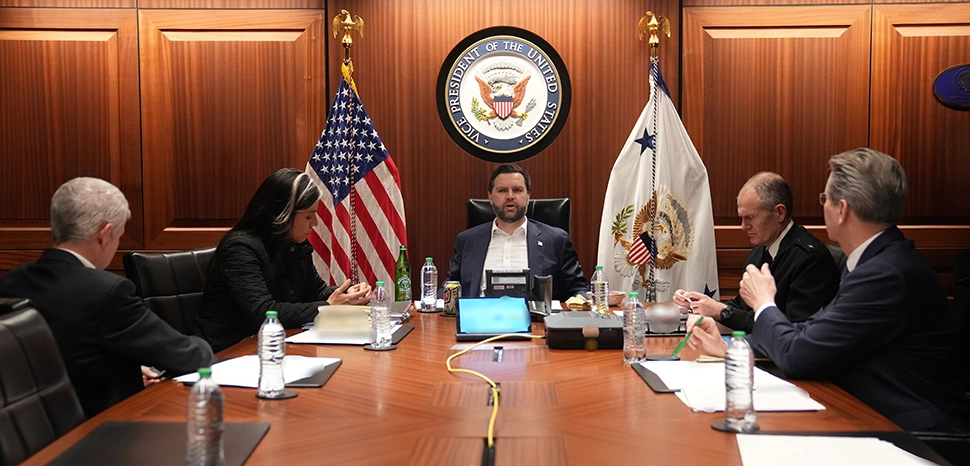
President Donald J. Trump Monitors U.S. Military Operations in Iran: Operation Epic Fury, February 28, 2026. cc White House, modified, https://commons.wikimedia.org/wiki/File:President_Donald_J._Trump_Monitors_U.S._Military_Operations_in_Iran_Operation_Epic_Fury,_February_28,_2026_%2855121734280%29.jpg

The Iran war has revealed both the enduring military predominance of the US and the limits of that power in shaping political outcomes.

A Fine Balance: Dependence and Autonomy in US Alliances
cc Dati Bendo/European Commission, modfied, https://commons.wikimedia.org/wiki/File:NATO_Summit,_Vilnius.P061598-631772.jpg

Alliances are not neutral, and bases are not passive infrastructure. They are instruments of strategy. The sooner that policy reflects this, the more resilient alliances will be when the next crisis hits.

What the Iran War Reveals About the Limits of US Power

STRAIT OF HORMUZ (Oct. 29, 2011) The amphibious assault ship USS Bataan (LHD 5) transits the Strait of Hormuz. Bataan is deployed to the U.S. 5th Fleet area of responsibility conducting maritime security operations and theater security cooperation efforts. (U.S. Navy photo by Quartermaster 1st Class Thomas E. Dowling/Released)

The Iran conflict reflects a sobering lesson for US policymakers: in an era of asymmetric competition and economic interdependence, raw military strength alone is no longer sufficient to guarantee strategic control.

Thailand: The Frontline Nobody’s Watching

U.S. Air Force Airmen assigned to the 77th Expeditionary Fighter Generation Squadron conduct maintenance on an F-16 Fighting Falcon during exercise Cope Tiger 25 at Korat Royal Air Base, Thailand, Mar. 17, 2025. Exercises like CT25 enhance capability and interoperability, while strengthening trust between like-minded nations to ensure the air, maritime, cyber, and space domains remain open to all nations. (U.S. Air Force photo by Master Sgt. Jerilyn Quintanilla)

While Europe remains preoccupied with itself, a geopolitical buildup is taking shape in the Indo-Pacific that has long ceased to be mere war-gaming. The third act of the world order won't premiere in Brussels—but in Chumphon, Ranong, Subic Bay, Guam, and most importantly: Bangkok.

From Guam to Camp David: Nixon-Era Lessons for the US-Japan-ROK Trilateral

Flags representing the United States, Japan and the Republic of Korea are displayed during a trilateral meeting with Japanese Foreign Minister Tarō Kōno and Republic of Korea's Foreign Minister Kang Kyung-wha on July 7, 2018 in Tokyo, Japan. (State Department photo/ Public Domain), modified, https://commons.wikimedia.org/wiki/File:Secretary_Pompeo_Participates_in_Trilateral_Meeting_in_Tokyo_%2828400351467%29.jpg

The Nixon era not only offers ambiguous lessons, but practical guideposts for strengthening trilateral US-Japan-ROK security cooperation, made all the more relevant by growing concerns of a ‘dual contingency’ in Taiwan and the Korean Peninsula.

Trump Dreams of Bagram’s Geopolitical Reemergence

cc USGOV-PD, modified, English: A C-5 Galaxy takes off from a runway at Bagram Air Base, Afghanistan. In recent years, the 22nd Airlift Squadron has participated in missions in Afghanistan supporting Operation Enduring Freedom. / https://commons.wikimedia.org/wiki/File:22d_Airlift_Squadron_C-5_taking_off_from_Bagram_Air_Base_Afghanistan.jpg

A return of the Bagram Air Base remains highly unlikely, but movement in this direction reflects a tentative warming in US-Afghan ties.

Gaming a Taiwan-Korea Dual Contingency: Falkland Lessons for the US-Japan-ROK Alliance

At Sea - 230716-N-CD453-1132 (July 16, 2023) Se Jong Daewang class destroyer ROKS Yul Gog Yi I (DDG 992) (left) of the Republic of Korea Navy and Atago class destroyer JS Maya (DDG 179) (right) of the Japan Maritime Self-Defense Force sail alongside Arleigh Burke-class guided-missile destroyer USS John Finn (DDG 113) (center) while conducting a trilateral ballistic missile defense exercise, July 16. John Finn is assigned to Commander, Task Force 71/Destroyer Squadron (DESRON) 15, the Navy’s largest forward-deployed DESRON and U.S. 7th Fleet’s principal surface force. (U.S. Navy photo by Mass Communication Specialist 2nd Class Samantha Oblander) / https://www.usfj.mil/Media/Images-Internal/igphoto/2003260018/

The Falklands War was a reminder that alliances succeed or fail on the basis of political imagination and practical enablers, not just treaty text, and military planners must bear these lessons in mind when preparing for a Taiwan-Korea dual contingency in East Asia.

US Military Redeployment in Iraq: Strategic Withdrawal or Tactical Shift?

Media outlets visit one of the many impact sites created by the recent missile attacks at Al Asad Air Base, Iraq, Jan. 13, 2020. Multiple international news agencies were invited by military officials to participate in a media event at Al Asad due to the recent ballistic missile attacks. (U.S. Army photo by Spc. Derek Mustard) / https://de.m.wikipedia.org/wiki/Datei:Al_Asad_Airbase_damage_following_IRGC_missile_attack.jpg

The US withdrawal from Iraq’s Ain al-Asad and Victoria bases does not amount to a strategic withdrawal from the Middle East. Rather, it’s a tactical shift intended to put the US military’s long-term presence on a more stable footing.

The Strategic Case for US Security Guarantees in Europe

cc US Army Europe, modified, https://flickr.com/photos/usarmyeurope_images/7273917208/in/photolist-c5LHYj-c5LJaE-mXUxaL-UwbBfr-2nCeTN8-2n9KMDZ-2nbHm8r-ZxR9VX-2hvoiz6-2hvn15Z-2hvr5ws-2hqfRnp-2qCTwzn-2hrHEYA-2hgqtyu-2hqchm2-2hqdMu5-YtbGJE-2hvuNoG-2hrMBEh-Za1Thj-2hujwGZ-2hvr4Uq-GnXmmQ-GnXmn1

Despite arguments advocating retrenchment, the benefits of maintaining a strong military presence in Europe far outweigh the costs for Washington.

The Secret History of South Korea’s Nuclear Weapons Program

cc, Baek, Jong-sik, modified, English: South Korean Army parade at Armed Forces Day in 1973. A huge Card stunt which is honoring Park Chung-hee is being performed. https://en.m.wikipedia.org/wiki/File:Card_Stunt_for_Park_Chung-hee.jpg

South Korea attempted to develop a domestic nuclear weapons program in the 1970s, and for reasons that remain highly relevant in contemporary geopolitics.

Backgrounder: US Military Budget 2025

US Department of Defense, modified, A formation of Royal Australian Air Force aircraft fly over Avalon Airport at Geelong, Victoria, Australia, Feb. 25, 2019. Along with Australian aircraft, U.S. military aircraft were to be showcased through flight demonstrations and static displays during the 2019 Australian International Airshow and Aerospace & Defence Exposition. (U.S. Air Force photo by Staff Sgt. Sergio A. Gamboa) www.dvidshub.net, https://flickr.com/photos/39955793@N07/46495003394/

The US military budget for 2025 maintains the traditional defense posture of out-spending any near-peer competitor; however, its only getting harder to keep pace.

US Expands Military Footprint in the Philippines
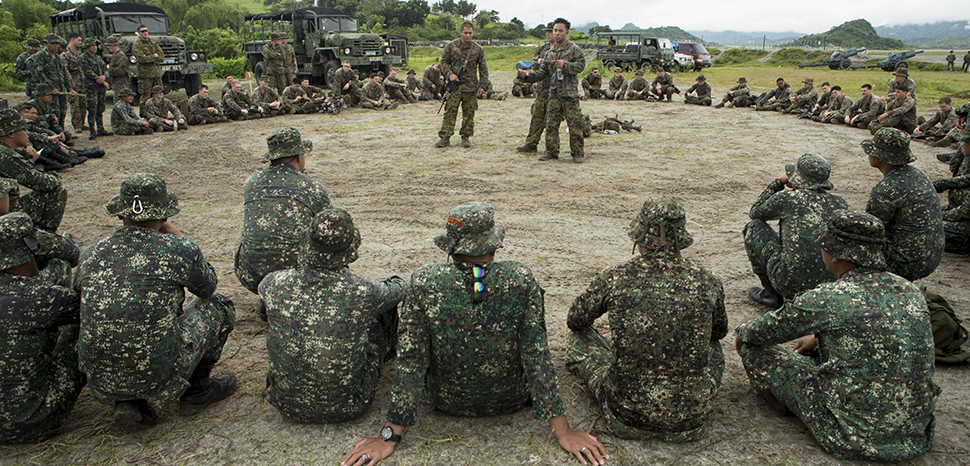
Philippine Marines and U.S. Marines attend a combat lifesaver course during Philippine Amphibious Landing Exercise 33 (PHIBLEX) on Colonel Ernesto Ravina Air Base, Philippines, Oct. 7, 2016. PHIBLEX is an annual U.S.-Philippine military bilateral exercise that combines amphibious capabilities and live-fire training with humanitarian civic assistance efforts to strengthen interoperability and working relationships. The Philippine Marines are with Battalion Landing Team, 2nd Battalion, 32nd Marine Company. The U.S. Marines are with Battalion Landing Team, 2nd Battalion, 4th Marine Regiment, Echo Company. (U.S. Marine Corps photo by MCIPAC Combat Camera Lance Cpl. Jesula Jeanlouis/Released)

New military bases in the Philippines suggests that Manila is interested in hedging its geopolitical bets.

Japan: An Empire Reawakened?
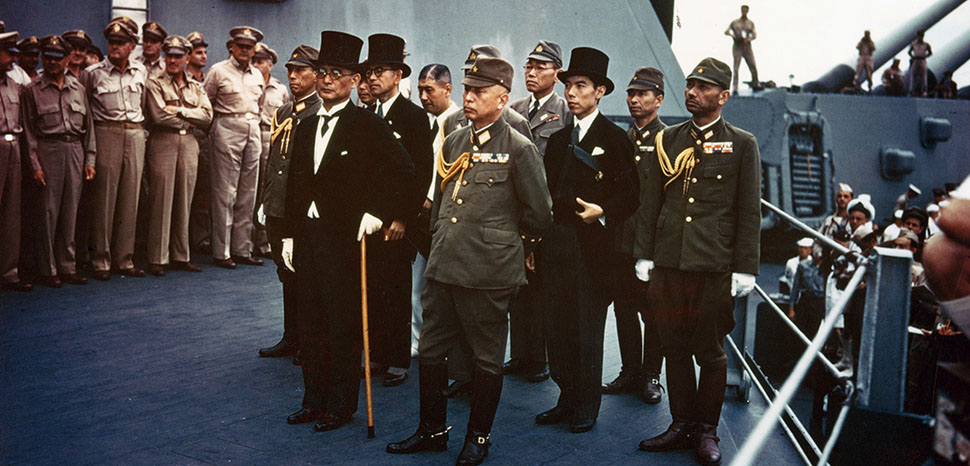
(Color)  Surrender of Japan, Tokyo Bay, 2 September 1945

Growing multipolarity in the international system raises some interesting questions for Japanese foreign policy going forward. Is Tokyo about to step out of Washington’s shadow?

Cambodia Naval Base Gets a Chinese Upgrade
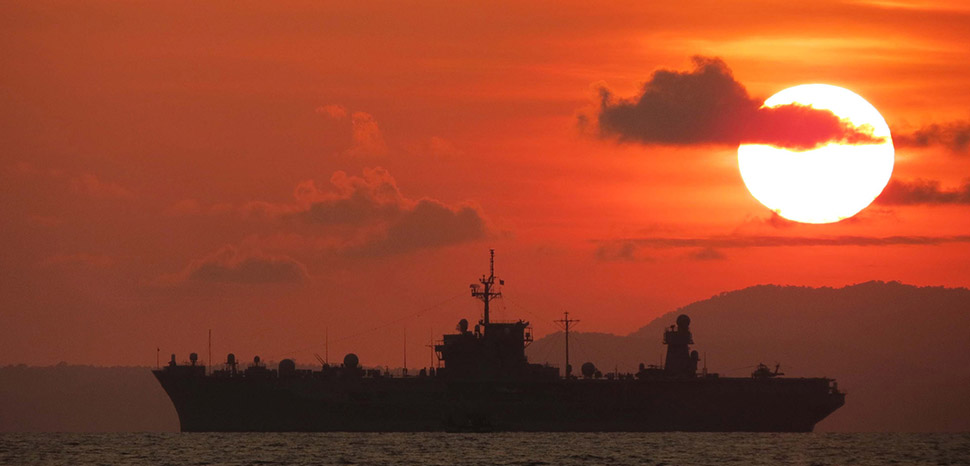
cc COMSEVENTHFLT, modified, SIHANOUKVILLE, Cambodia (May 1, 2012) - U.S. 7th Fleet flagship USS Blue Ridge (LCC 19) anchors off the coast of Sihanoukville, Cambodia. Blue Ridge is on patrol in the Asia-Pacific and in Sihanoukville for a port visit. (U.S. Navy photo by Lt. Cmdr. Sarah A. Stancati)

Cambodia insists work on a newly-dredged port and shipyard at Ream Naval Base is not being carried out to enable a permanent Chinese military presence. Washington is not so sure.

China Seeks Atlantic Ocean Military Base
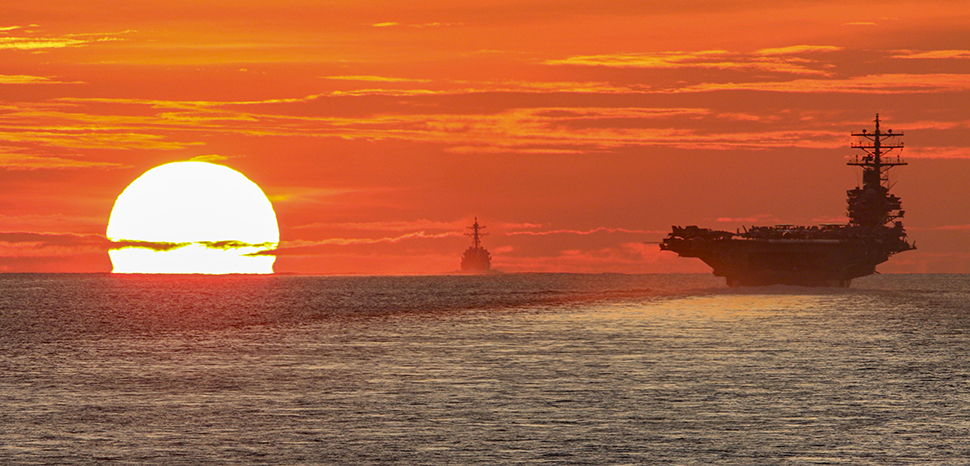
cc Official U.S. Navy Page, modified, https://flickr.com/photos/usnavy/51269312997/in/photolist-2m7uCyn-2mKMtYg-Sygk7t-2meN86g-2mbrBvf-2jh6aSN-2m1avpY-2jeQQg5-2m6wCz6-2mEQWCx-2iSQ3Cw-2jcHVq4-2mKtxVK-SjNABw-EyjgcS-2jdjoNF-2muYezm-JLhJ7L-Sygi1V-Kr2tLg-eSAQSB-2iGZfBD-eSN8ou-2j6biw1-2ksGCQN-2gn1Zoi-2kc4YeS-2mEtFsv-eznud9-2mnmRSv-rTHqtu-cC9BKs-eSAQX4-2kA8gmq-eSNgHN-2hDbcqD-eSN8od-2mkZLVi-SLomfN-2hMWoDK-2i5y5oJ-2kzCzRc-eSN7Ab-eSAFTk-eSN8fu-eSNgG1-2m19nmo-rev9En-2mMbZa7-2iTbuMf

US efforts to rebuff China’s geopolitical advances in Equatorial Guinea are highly reminiscent of the Cold War.

Colonial Pipeline Attack: A Warning for the US Military
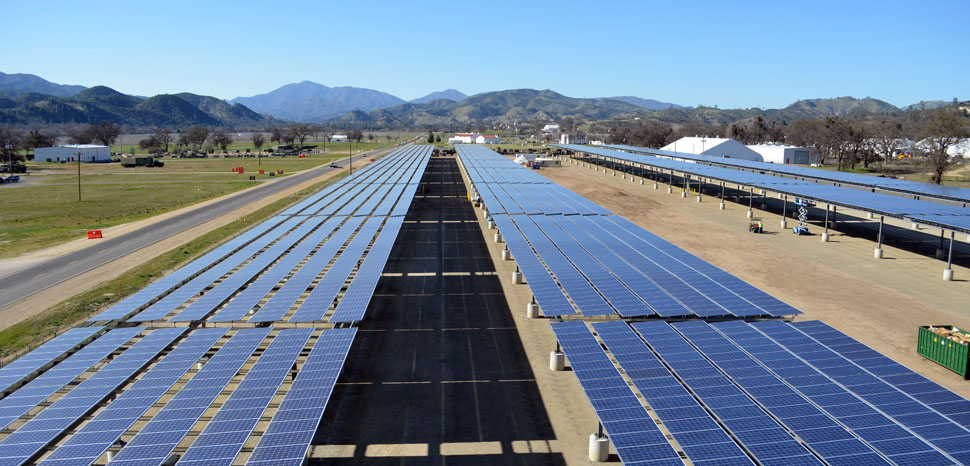
ccU.S. Army Corps of Engineers, modified, Solar panel arrays form a canopy at a construction site in Fort Hunter Liggett, Calif., March 12, 2013. The construction site is for phase 1 and 2 of a solar microgrid project at the installation, managed by the U.S. Army Corps of Engineers Sacramento District. Phase 1 was completed in April 2012 and generates one megawatt of power, enough energy to power 250 to 300 homes. Phase 2, scheduled for completion in May 2013, will generate an additional one megawatt of power and is expected to be the second of four at the post. The Sacramento District awarded contracts of $8.4 million for phase I and $9.7 million for phase 2. Along with the energy production, the cover provided by the panel arrays will shade the majority of the post’s vehicles. Fort Hunter Liggett is one of six pilot installations selected by the U.S. Army to be net-zero energy, meaning the installation will create as much energy as it uses. (U.S. Army photo by John Prettyman/Released), https://www.flickr.com/photos/usacehq/8580148034

The Colonial Pipeline attack should be a warning for defense leaders: Make sure your bases have resilient energy infrastructure or that vulnerability will be used against you.

Outlook 2021: Korean Peninsula Tensions

GPM-placeholder-outlook-1

Will inter-Korean tensions be dialed up or dialed down in the year ahead?

2020 NATO Europe Redeployment: Political Opportunism or Sound Military Strategy?
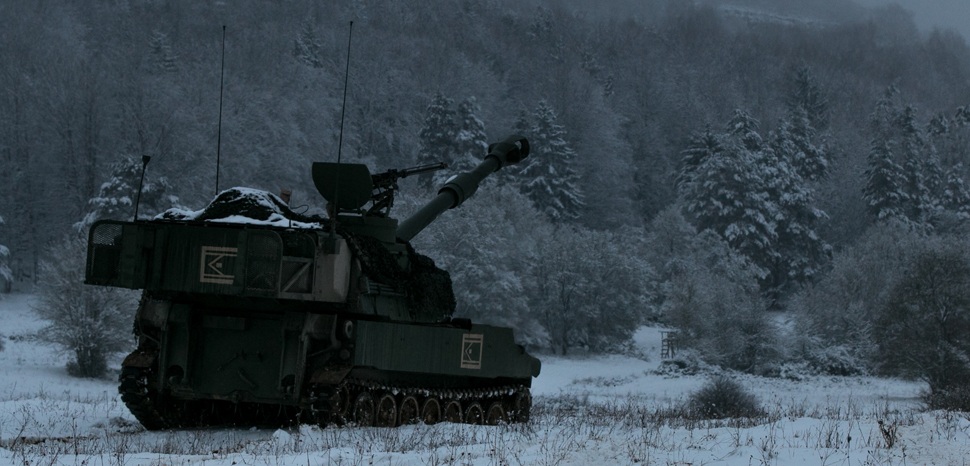
cc US Army Flickr, modified, A U.S. Army Paladin assigned to Battery C, 1st Battalion, 7th Field Artillery Regiment, 2nd Armored Brigade Combat Team, 1st Infantry Division, Fort Riley, Kansas, stands ready to fire during training at Hohenfels, Germany Jan. 22, 2018. The 2nd ABCT is among the units from 10 nations participating in Allied Spirit VIII, a multinational exercise designed to test participants' readiness and build upon existing relationships. U.S. Army photo by Spc. Dustin D. Biven., public domain

Evaluating the motives, impacts, and strategic consequences of President Trump’s recent decision to shake up the US military footprint in Europe.

Will US Troops End Up Stationed in Iraqi Kurdistan?
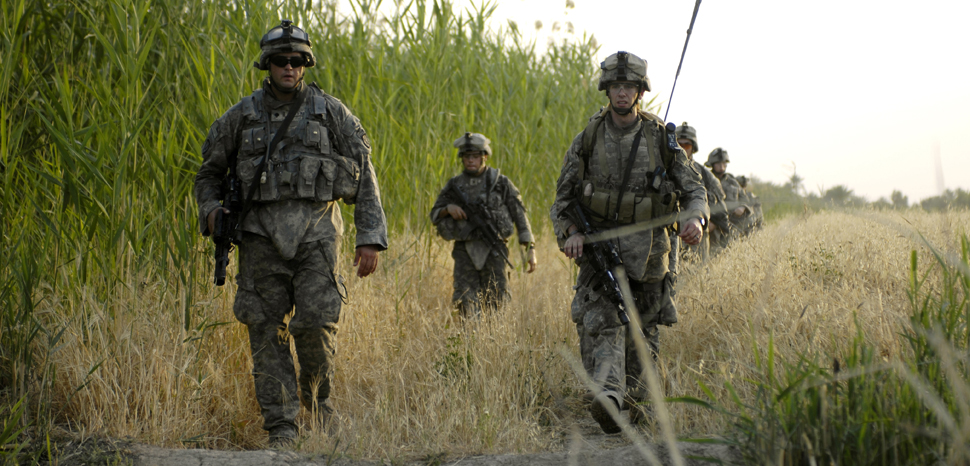
cc Flickr The U.S. Army, modified, https://creativecommons.org/licenses/by/2.0/

What might seem like an appealing option to US military planners is actually fraught with its own geopolitical perils.

Middle Powers in Great Power Rivalries: The Case of the Philippines
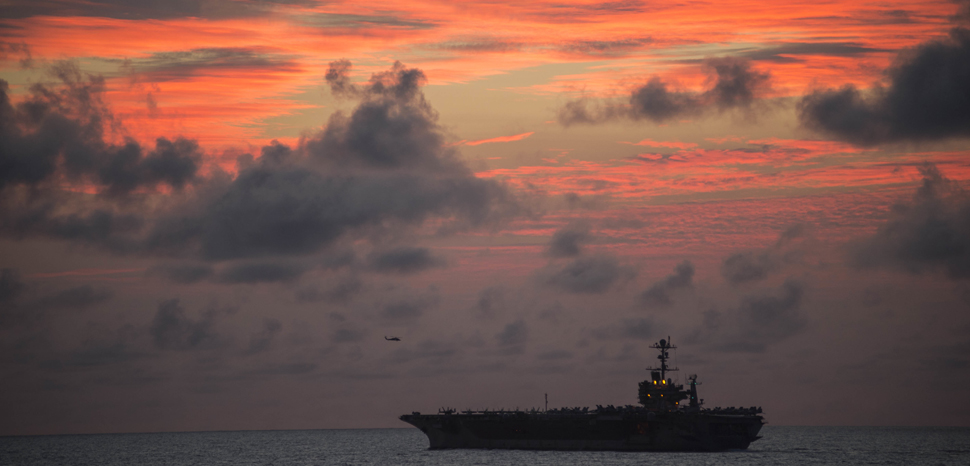
cc Flickr Official U.S. Navy Page, modified, https://creativecommons.org/licenses/by/2.0/USS John C. Stennis (CVN 74) Conducts Flight Operations during RIMPAC 2016

Examining the Philippines’ role as a middle power amidst growing US-China competition.

More US Military Bases Articles