The latest quarterly report from the Special Inspector General for Afghanistan Reconstruction (SIGAR) contained a now-familiar laundry list of bad news for Coalition forces:
Some highlights from the report:
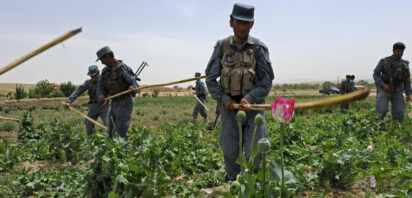
- The US has spent $8.8 billion so far on counter-narcotics in Afghanistan, and continues to spend $1.5 million a day. Despite large sums spent on crop eradication, drug seizures and interdictions, alternative livelihood support, and government incentives, the drug trade continues to expand country-wide. In 2016-2017 alone opium output grew by as much as one-third, and by some estimates opium still accounts for 19-32% of Afghanistan’s GDP. The opium industry employs up to 590,000 people (Afghanistan’s army and police forces combined total just 352,000). In a stark moment of clarity, the report admits that “no counterdrug program undertaken by the United States, its coalition partners, or the Afghan government resulted in lasting reductions in poppy cultivation or opium production.”
- Going by SIGAR’s metrics, the Afghan government ceded considerable territorial control over the quarter: it now controls 55.5% of the country, the lowest reading since district control tracking was introduced by SIGAR in 2015. The report notes that “control of Afghanistan’s districts, population, and territory overall became more contested this quarter, with both the Afghan government and the insurgency losing districts and land area under their control or influence.”