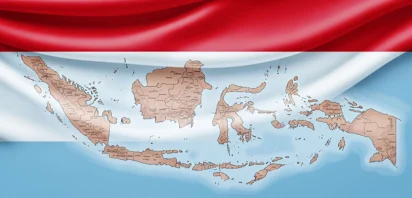
Indonesia’s latest geopolitical turn does not read like a calculated policy adjustment. It feels closer to a moment of quiet rupture—one where necessity, fear, and ambition collide in ways that will echo far beyond Jakarta.
In April 2026, Indonesia elevated ties with the United States to a Major Defence Cooperation Partnership, while simultaneously signing one of the most sweeping trade agreements in its modern history. On paper, the move carries the familiar language of partnership, capacity-building, and mutual respect. In reality, it signals something far more profound: a middle power, long anchored in non-alignment, edging into the gravitational pull of great power conflict at a time when the global order itself is fracturing.
The Crisis That Turned Vulnerability into Strategy
The timing is everything. The war involving Iran has choked nearly 20 percent of global oil supply through disruptions in the Strait of Hormuz, sending shockwaves across energy markets and exposing the fragility of globalization’s most basic assumption—that trade flows freely even in times of crisis. For Indonesia, an energy-importing archipelago of more than 270 million people, the shock has been visceral. The rupiah has wobbled, supply chains have strained, and the spectre of economic contraction has sharpened political urgency.
What appears as a distant geopolitical rupture is, in truth, an intimate economic shock reverberating through Indonesian households, where the choking of nearly 20 percent of global oil supply collides with a fragile subsidy system, a weakening rupiah, and fractured supply chains to ignite an inflationary spiral that touches everything from fuel pumps to a plate of tempeh.
In that moment of acute vulnerability, Jakarta’s pivot towards Washington begins to resemble less a strategic choice than a compelled refuge—a reluctant descent into a ‘gilded cage,’ where sovereignty is quietly traded for currency stability, supply chain security, and the political imperative to contain the kind of inflation that has historically unsettled the nation’s very foundations.
Against this backdrop, Jakarta’s bargain with Washington begins to make sense—though it does not become any less fraught.
From Washington’s vantage point, Indonesia is no ordinary partner. It is, as defense analysts have bluntly observed, the ‘indispensable geographic link’ between the Indian and Pacific Oceans. In a moment when fixed US bases in Japan and the Philippines face heightened vulnerability—from missile threats to domestic political constraints—the ability to secure overflight access and logistical flexibility across the Indonesian archipelago offers something approaching strategic insurance.
This is not alliance-building in the traditional sense. It is more fluid, more ambiguous—what some in strategic circles describe as a network of ‘lily pads,’ allowing military reach without the political cost of permanent basing. Yet ambiguity does not dilute consequence. Even a non-binding overflight arrangement shifts the geometry of power projection across the Indo-Pacific.
For Indonesia, the calculus is less abstract. It is immediate and economic. The Agreement on Reciprocal Trade (ART) slashes tariffs, opening the US market to Indonesian exports such as palm oil, coffee, and cocoa, while committing Jakarta to eliminate around 99 per cent of tariffs on US goods. In parallel, the extension of the Grasberg mine license to 2061—backed by US$20 billion in investment commitments—cements deeper integration into US-centric supply chains for critical minerals.
These are not marginal adjustments. They amount to a structural reorientation of Indonesia’s economic and strategic posture. And yet, beneath the surface of transactional logic lies a deeper unease—one that cannot be measured in tariff schedules or defense memoranda.
When a Foreign Policy Doctrine Collides with a New Reality
Indonesia’s foreign policy identity has long rested on bebas dan aktif: independent and active. It is a doctrine born of anti-colonial struggle and crystallized at the 1955 Bandung Conference, where newly independent states asserted their refusal to be drawn into great power rivalry. That legacy is not merely rhetorical. It is woven into Indonesia’s political consciousness, shaping public expectations of sovereignty, dignity, and moral leadership.
Today, that legacy is under strain. Indonesia now walks a tightening geopolitical tightrope—crafting a fragile ‘triangular hedging’ strategy that leans on US security, feeds on Chinese economic gravity, and draws energy lifelines from Russia, all while testing the very soul of its bebas dan aktif doctrine and risking a slow drift into new forms of dependence.
Domestic backlash has been swift and emotionally charged. Public polling suggests that more than half of Indonesians oppose participation in the US-backed ‘Board of Peace’ for Gaza, with support languishing below 34 percent. Street protests, religious edicts, and civil society mobilization have converged into a rare moment of national consensus: discomfort, if not outright resistance, to perceived alignment with US strategic objectives in the Middle East.
The imagery is striking—thousands rallying under Palestinian flags in Jakarta, invoking solidarity that transcends borders. It is not simply about Gaza. It is about identity. About whether Indonesia remains a voice of the Global South or becomes, however reluctantly, an adjunct to great power agendas.
When the Law Pushes Back against Power
Legal challenges have further complicated the picture. Scholars and civil society groups argue that the trade agreement may violate constitutional provisions requiring parliamentary approval for international treaties. Lawsuits now frame the deal as an ‘unlawful government act,’ alleging that it imposes sweeping obligations on Indonesia while extracting limited reciprocal concessions.
Such critiques are not merely procedural. They speak to a deeper fear: that economic desperation is being leveraged into long-term dependency.
The phrase ‘gilded cage’ has begun to circulate in policy discourse. It captures a paradox that extends well beyond Indonesia. In an era of intensifying geopolitical competition, middle powers are offered partnerships that promise prosperity and security, yet risk constraining autonomy in subtle but enduring ways.
This is not Indonesia’s dilemma alone. Across Southeast Asia, and indeed the broader Global South, states are navigating similar tensions—seeking to hedge, to diversify, to avoid binary choices in a world increasingly defined by them. Vietnam balances China and the United States with meticulous care. India engages in strategic partnerships while preserving decision-making independence. Even traditional US allies, including Australia, maintain rigorous legal and parliamentary oversight over foreign military presence.
Indonesia’s case, however, is uniquely exposed. Its geography makes it indispensable. Its economy makes it vulnerable. Its identity makes it resistant. That combination produces not clarity, but friction.
There is still space for agency. Indonesia has signaled that overflight arrangements remain non-binding, that sovereignty over airspace is non-negotiable, and that participation in Middle Eastern initiatives is conditional. These caveats matter. They suggest an awareness—perhaps even an anxiety—about crossing lines that cannot easily be uncrossed.
The path forward will demand more than tactical hedging. It will require a reassertion of principles in a language that resonates both domestically and internationally. Transparency in treaty-making, genuine parliamentary scrutiny, and renewed investment in multilateral diplomacy are not luxuries; they are necessities for sustaining legitimacy.
At the global level, Indonesia’s choices carry symbolic weight. If a country so deeply associated with non-alignment begins to tilt, others may follow—not out of conviction, but out of perceived inevitability. Conversely, if Indonesia can navigate this moment while preserving its independence, it may yet offer a template for middle powers seeking to survive without surrender.
There is a quiet truth at the heart of this story. Great powers often believe they are shaping the strategic environment. But in moments like this, it is the decisions of middle powers—their hesitations, their compromises, their refusals—that reveal the true contours of the international order.
Indonesia’s pivot is not yet complete. It remains, in many ways, a negotiation in motion—between necessity and principle, between survival and sovereignty.
What is at stake is not simply Indonesia’s alignment. It is whether, in an increasingly polarized world, there remains space for countries to choose something more difficult than sides: to choose balance, even when balance comes at a cost.
The views and opinions expressed in this article are those of the author alone and do not represent those of Geopoliticalmonitor.com