Following the collapse of the Islamabad talks, diplomatic momentum has shifted decisively surrounding the Iran war. Tehran has moved quickly to reshape the negotiating landscape through its outreach to Oman and Russia. In Muscat, the Iranians tactically redirected discussions away from the entrenched deadlock over uranium enrichment and sanctions and toward the more immediate question of maritime security in the Strait of Hormuz. Tehran’s subsequent engagement with Moscow is even more consequential. Russia’s willingness to “do everything” to support Iran, including mediating, signals that the crisis is no longer confined to a US–Iran binary, but is expanding into a wider geopolitical contest.
In this rapidly evolving landscape, India’s continued restraint risks being interpreted less as prudence and more as passivity. With its core interests, namely energy flows through Hormuz and maritime stability directly exposed, India’s current posture is becoming increasingly untenable.
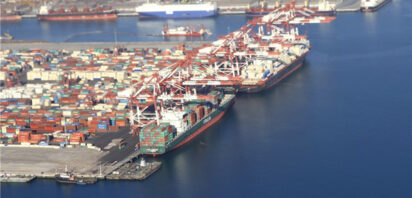
Yet India is not without options. Chabahar port, where India has invested more than US$120 million, offers a rare, if narrow, strategic entry point into the conflict, one that is neither overtly political nor diplomatically intrusive.
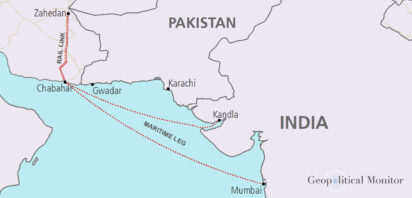
Chabahar is not as a standalone port, but may be best understood as part of a developing multi-modal corridor linking India to Eurasia. Cargo moves by sea from India to Chabahar, then overland via road networks into Afghanistan, through the Zaranj–Delaram link, and onward through rail connections into Iran’s national network. From there, it connects to the broader International North South Transport Corridor (INSTC), which links India with Central Asia, Russia and beyond.
Although not yet formally integrated into the INSTC, India is actively pushing to position Chabahar as its eastern extension, linking India to Afghanistan and Central Asia while bypassing Pakistan. What began as a connectivity project has now acquired clear geopolitical weight.
For Iran, Chabahar provides economic breathing space under sanctions, attracts external investment, and offers a hedge against over-dependence on China. Historically the United States has tolerated Indian investment in Chabahar by allowing limited waivers on its sanctions to allow support towards economic stability and humanitarian access in Afghanistan. Another factor playing into US strategic thinking is to provide a counterpoint to the Chinese backed port of Gwadar in Pakistan. Through its waivers, the US can exercise indirect influence over Iran by allowing limited activity and retaining control over scale of engagement.
This triangular convergence gives Chabahar port unusual strategic relevance. It is one of the few spaces where the interests of the United States and Iran overlap, albeit for different reasons, creating scope for limited, functional cooperation even amid confrontation.
The deepening Gulf crisis has only enhanced the corridor’s significance. As Iran and Russia look to bypass Western sanctions, and India seeks to strengthen its Eurasian connectivity strategy, Chabahar is emerging as a critical node in a shifting regional order.
At the same time, Russia’s emergence as a potential mediator introduces urgency. If Moscow consolidates its role, India risks being structurally sidelined in a process that directly affects its core interests.
A Path Forward for India
India need not declare mediation, but it must act with intent. First, it must secure a quiet accommodation with the United States, ensuring at least a limited and targeted sanctions waiver tied to Chabahar-linked activity. This is not unprecedented, and discussions on the issue are already ongoing between the Indian government, Iran, and the US.
Second, it must obtain clear assurances from Iran that Chabahar will remain insulated from political leverage and that maritime flows through Hormuz will not be disrupted.
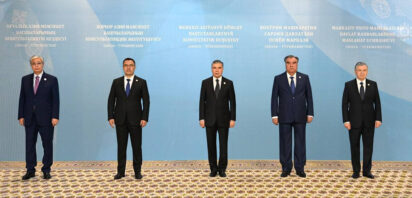
Third, India should move to multilateralise the corridor by bringing in Central Asian stakeholders such as Kazakhstan. As the world’s leading uranium producer and a key supplier to India’s civil nuclear program, reinforced by a recent bilateral supply arrangement, Kazakhstan is a logical anchor for the corridor. As a landlocked state seeking alternatives to routes dominated by China and Russia, it also has a structural incentive to participate. Its inclusion would transform Chabahar from a bilateral initiative into a shared regional asset, increasing cargo volumes, enhancing viability, and raising the cost of disruption for all stakeholders.
Such a configuration would give the United States a reason to tolerate the project, provide Iran with an incentive to stabilize it, and embed India within a broader Eurasian framework.
Chabahar’s relevance to conflict mitigation lies precisely in this convergence. The global economy has been adversely affected by the trade collapses and shipping disruptions. Cooperation on Chabahar may enable incremental diplomacy through partial relaxations of US sanctions over Iran and cooperation can be tested in small steps. Unlike nuclear negotiations, it is a technical and economic platform, which allows cooperation without high political cost.
Because India operates Chabahar, it occupies a unique position as a stakeholder for Iran and a negotiating partner for the United States. That dual engagement gives it a foothold in crisis management. The question is no longer whether India should step in. It is whether it will do so before the space is occupied by others.
The views and opinions expressed in this article are those of the author alone and do not represent those of Geopoliticalmonitor.com