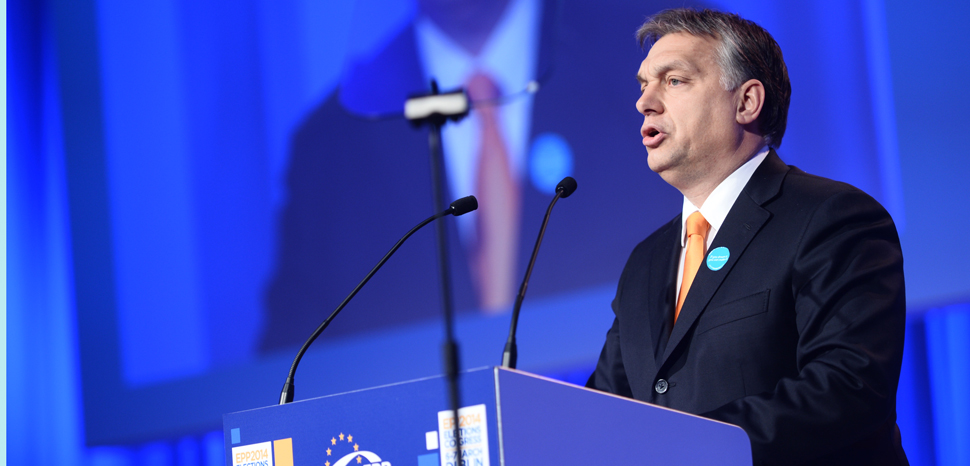
Viktor Orbán’s Fidesz party has won a resounding victory in Hungary’s general election, returning the nationalist leader to power for a fourth term.
With 93% of the vote counted, Fidesz and its ally the Christian Democrats now appear to command the two-thirds supermajority needed to bypass opposition parties and, if necessary, amend the country’s constitution. Turnout was reported at around 68%, which is even higher than the 61% recorded in 2014.
Orbán’s illiberal and anti-immigrant ruling style is anathema to the high ideals touted by many in Brussels. And while there may have been some hope of a different result over the weekend, particularly that Fidesz would fall short of a supermajority and have to moderate some of its more extreme policies, Orbán’s victory will prompt a reevaluation of the ‘wait-and-see’ approach and set the stage for an open showdown between Brussels and Budapest.
Impact
Viktor Orbán: The European Union’s bête noire. Since being elected prime minister in 2010, Viktor Orbán has seemingly gone out of his way to spurn Brussels at every turn. His autocratic ruling style has challenged EU norms and put Hungary on a path toward illiberal one-party democracy ala Turkey or Russia. Politically, Orbán has tried to close universities that receive foreign funding (all to curb the supposed omnipresent influence of US-Hungarian billionaire George Soros); he has created a state media authority that holds extensive powers over print, broadcast, and internet media, drawing criticisms from France and Germany over freedom of the press; he has amended the constitution whenever laws were deemed unconstitutional; and he has inserted campaign finance roadblocks for opposition parties, all the while allowing government resources to be brought to bear in election campaigns (the OSCE has declared that this election did not represent ‘a level playing field’). But perhaps more so than anything else, Orbán has been a fiercely anti-immigrant and anti-refugee voice that many Eastern and Central European countries have rallied around in opposition to the ‘Western’ values of Germany and France. In addition to rejecting EU attempts to institute a continent-wide resettlement police, Orbán built a wall along the country’s border with Croatia and Serbia at the height of the EU migrant crisis in 2015.