Geopolitics Weekly analyzes emerging geopolitical trends around the world, distilling the cacophony of global events into one easy reader. It lands in the inbox of Geopolitical Monitor subscribers every week. This week’s edition has been made available to all our readers.
Asia
Japan-China Tensions Escalate over Taiwan Comments
What Happened
Over the weekend, China cautioned its citizens against traveling to Japan and dispatched coast guard vessels to the disputed Senkaku Islands (Diaoyu in China). The moves are the latest escalation in the wake of Prime Minister Sanae Takaichi’s earlier remarks that a Taiwan blockade would represent an existential crisis for Japan.
Why It Matters
- An Early Test for Takaichi. A previous Geopolitics Weekly highlighted how Prime Minister Takaichi’s right-wing views might manifest in Japan’s foreign policy. No one expected the reckoning to come so soon – perhaps not even Takaichi, who was responding to a routine question in Parliament only to have the matter blow up when the exchange was shared online by China’s consulate general in Osaka, Xue Jian. Now the spat has escalated into a critical early test for Takaichi’s vision of a more active role for Japan in Indo-Pacific security. Its resolution or escalation will go far in previewing what to expect from the administration, especially because there are no easy off-ramps for either side. Takaichi will find it difficult to walk the back the comments because this ‘existential threat’ wording forms the legal basis of Japan being able to assist the United States in a Taiwan contingency. And for the Chinese authorities, this becomes a credibility test to demonstrate how the CCP has empowered China and resigned the ‘century of humiliation’ to distant history.
- Dangerous Territory. Any uptick in China-Japan tensions is concerning, and in directly involving Taiwan this dispute becomes even more incendiary. Past upheavals over ownership of the Diaoyu/Senkaku Islands have stretched months, generating nation-wide protests, boycotts, property damage, and eventually crackdowns. Moreover, relations were headed in the wrong direction even before the latest breach, fueled by high-profile incidents of anti-Japanese violence in China and a worsening mutual animosity among the public. This may help to explain why vitriol escalated so quickly in the wake of Takaichi’s Taiwan comments, with Xue Jian essentially invoking the decapitation of Japan’s prime minister and Beijing promising Japan a ‘crushing defeat.’
- All Eyes on Washington. Takaichi got into this mess in part to demonstrate Japan’s value as a US ally. Now as Tokyo faces a growing backlash, it will be telling to see how Washington responds, particularly on shows of force around the Senkaku Islands and other gray zones. The U.S. has been criticized in the past for not being more assertive in its support for allies like the Philippines in the face of hybrid warfare in the South China Sea. It has since reversed course and pledged more active support for both Tokyo and Manila. This situation may provide an opportunity to put theory into practice; however, US involvement would jeopardize its own tentative détente in the trade war, and all the while China continues to hold a trump card on a swathe of critical mineral inputs.
Trump Intervenes (Again) as Thailand-Cambodia Ceasefire Frays
What Happened
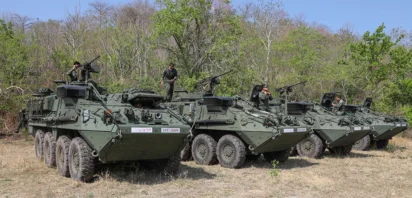
President Trump has “stopped a war” by threatening a new round of punitive tariffs in calls to leaders in Thailand and Cambodia over the weekend. Tensions over the disputed Thai-Cambodia border had flared after a landmine explosion killed two Thai soldiers on November 10, prompting Thai Prime Minister Anutin Charnvirakul to temporarily withdraw from the de-escalation process.
Why It Matters
- Easy Peace, Easy War. Recent tensions lay bare the flaws in President Trump’s top-down approach to peace-building. It’s far easier to sign the broad strokes agreement than it is to draft and implement the fine print – where the actual border falls, who wins, who loses, how an agreement is enforced, etc. Gaza and the DRC are two other conflicts where the peace hasn’t stuck or actually broached any of the hard issues. Consequently, the fighting only pauses so long as there’s a credible fear of US punishment, and history teaches that this kind of attention from Washington can be fleeting. The problem lies in Trump’s transactional approach to deal-making – well-suited for the world of business, but maybe less so when navigating the layers power and identity that people are willing to die for.
- Tensions Remain High. The Thai-Cambodia border is a good example of this oversimplification, where the signing of a ‘peace accord’ does not account for nor alter the ground-level realities. To cite two glaring issues with the Kuala Lumpur Peace Accord signed in October: 1) it calls on the implementation of prior border agreements when these very agreements are being openly called into question by the Thai government and possibly about to be overturned via popular referendum; and 2) the ASEAN Observer Team the agreement mandates was toothless and ultimately unable to stop the fighting that broke out last week. Peacekeeping deployments are large and armed for a reason – it’s the only way to deter two sides from fighting; it’s the only method that tends to work.
North America
Prime Minister Carney Unveils Seven New Nation-Building Projects
What Happened
Prime Minister Carney recommended seven new initiatives to the Major Projects Office (MPO), the newly established branch of government responsible for facilitating nation-building projects in Canada.
The projects include:
- Northwest Critical Conservation Corridor. A broad effort to develop infrastructure and critical minerals extraction along a broad swathe of land spanning northwest BC and Yukon.
- North Coast Transmission Line (NCTL). An initiative to build electricity transmission and data infrastructure on the west coast; the project will facilitate other nation-building targets like the Prince Ruport port expansion and…
- Ksi Lisims LNG. A floating export terminal in northern BC with a projected export capacity of up to 22.4 billion cubic meters per year.
- Crawford Project (Nickel). A $5 billion nickel mine in northern Ontario with a projected extraction capacity of 240k tonnes per day and refining capacity of 120k tonnes. Owned by Canada Nickel.
- Matawinie Mine (Graphite). A $1.8 billion graphite mine in Quebec that supplies the nearby Bécancour Battery Material Plant. Owned by Nouveau Monde.
- Sisson Mine (Tungsten). Projected to output 33,000 tonnes of tungsten per day. Owned by Northcliff Resources. Notably, the project has also received funding from the US Defense Production Act as part of an effort to diversify supply of critical minerals away from strategic competitors like China.
- Iqaluit Nukkiksautiit Hydro Project. A hydro-electric project that will end Iqaluit’s reliance on imported diesel and pave the way for new development in the Arctic.
Why It Matters
The list projects continuity, not a fundamental transformation of the Canadian economy, taking advantage of pre-existing strengths. Notably absent from the list of referred projects (so far) is any rail infrastructure or attempt to backstop manufacturing capacity. Another absence that bucks the primary commodity theme is the lack of pipeline projects to bring Albertan oil to global markets. This is likely down to the immediate demands of politics and practicality, as many of the approved projects were already underway in some capacity – these are the easy and quick wins.
Canada Opens Door to State Equity Stakes in Critical Minerals Projects
What Happened
Prime Minister Carney’s first budget includes the creation of a ‘critical minerals sovereign fund,’ that would allow the Canadian government to maintain equity stakes and/or negotiating offtake agreements (exclusive purchase quotas) for projects it backs.
Why It Matters
- State Capitalism Making a Comeback. The establishment of a Canadian critical minerals sovereign fund advances the trend of state intervention into what was, at least in recent years, the market’s exclusive purview in Western countries. It mirrors moves south of the border – the government-held golden share in the Nippon Steel merger, the Intel stake, and the DoD stake in MP Materials – all of which mirror the sort of tactics that China has used to consolidate its dominance of strategic supply chains.
- Don’t Go Chasing Windfalls. The fund should be framed as an effort in strategic accountability rather than profit. Public coffers front the investment but also receive some of the return, either in equity or output. The critical minerals industry can’t be expected to generate the kinds of sovereign wealth oil profits seen in Norway or Saudi Arabia, since critical mineral prices tend to be propped up by an artificial scarcity that could dissipate as new players enter the game.