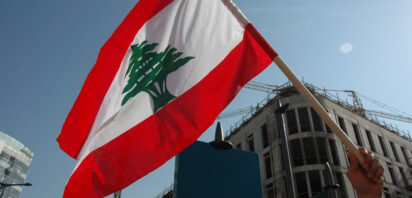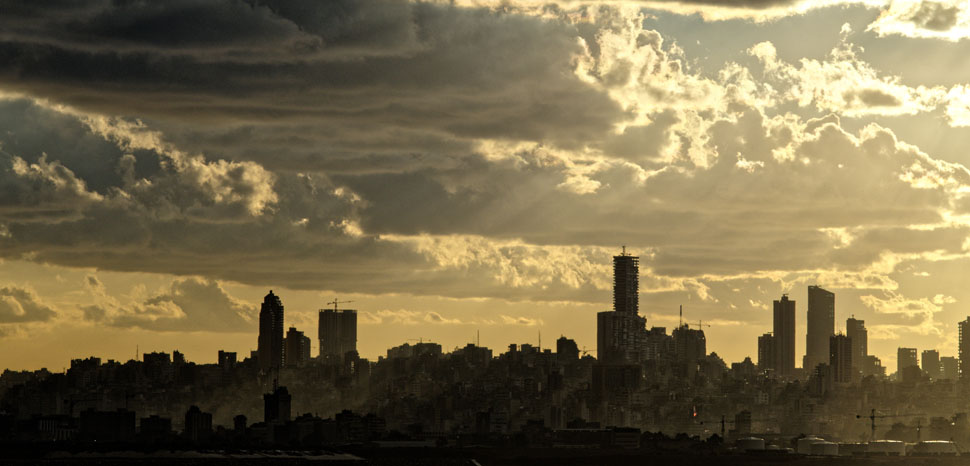
Lebanon is no stranger to crisis. The country was mired in economic contraction, debt, mass protests, and political deadlock through 2019. Then 2020 arrived, bringing a global pandemic and the tragic explosion that leveled a portion of Beirut in August.
Now, going by just about any metric, the economic outlook for Lebanon is beyond dire.
Background
Nowhere is the crisis more apparent than in the findings of a recent report from the United Nations’ Economic and Social Commission for Western Asia (ESCWA), which projected an overall economic contraction of 20% in 2020. According to the report, a staggering half of all private sector sales came to a halt between 2019-2020, resulting in around a quarter of the private sector workforce being laid off.
Year-on-year between 2019 and 2020, construction sector sales dropped by 45%; hotels by 41%; manufacturing by 44%; transportation by 46%; and retail by 47%. Job loss was deepest in the construction industry, which saw employment slashed by 40%.
Pervasive job loss has resulted in spiking poverty rates as breadwinners are unable to care for their families. According to the World Bank, nearly half of the country’s population is living under the poverty line (below $14 a day), and one-fifth are living in extreme poverty ($4 a day).
Mounting pressures eventually forced the central bank to abandon the Lebanese pound’s hitherto sacred dollar peg in 2019, ushering in a free-fall in the currency’s real buying power. Though the peg is still technically in-place and one US dollar should net 1,500 pounds, lack of available foreign currency means it is almost never honored, and black-market exchange rates are upward of 10,000 pounds to the dollar.