The Bank for International Settlements (BIS) – the ‘central bank for the world’s central banks’ – released its Annual Economic Report this week.
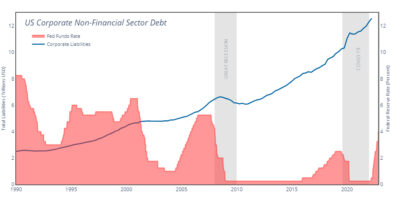
Overall the report strikes a hopeful tone despite a downturn in global growth, pointing to services and labor markets as positive forces for the near-term. It also outlines a few negative trends to monitor, including the growing tendency of central bankers to favor short-term growth at the expense of long-term stability and a sharp increase in corporate debt in the United States.
Specifically, and in an unsettling parallel to Great Recession, the BIS cites the ‘remarkable’ growth of leveraged loans packaging the corporate debt of below-investment-grade companies.
Are these the mortgage-backed securities of the next financial crisis?
Impact
In the report’s own words:
The corporate sector in some countries [in the developed world] has shown clear signs of overheating… Perhaps the most visible symptom… is the remarkable growth of the leveraged loan market, which has reached some $3 trillion. While firms in the United States – and, to a lesser extent, the United Kingdom – have accounted for the bulk of the issuance, holdings are spread out more widely. For quite some time, credit standards have been deteriorating, supported by buoyant demand as investors searched for yield. Structured products such as collateralized loan obligations (CLOs) have surged – reminiscent of the steep rise in collateralized debt obligations that amplified the subprime crisis. Should the leveraged loan sector deteriorate, the economic impact would depend on the potential amplification mechanisms. These can run right through the banking system, linked to unstable wholesale funding, and other parts of the financial system that hold leveraged loans and CLOs, via price adjustments.
An overriding takeaway from the report is that, in the estimation of the BIS, historically low interest rates throughout the developed world are producing some potentially destabilizing externalities.