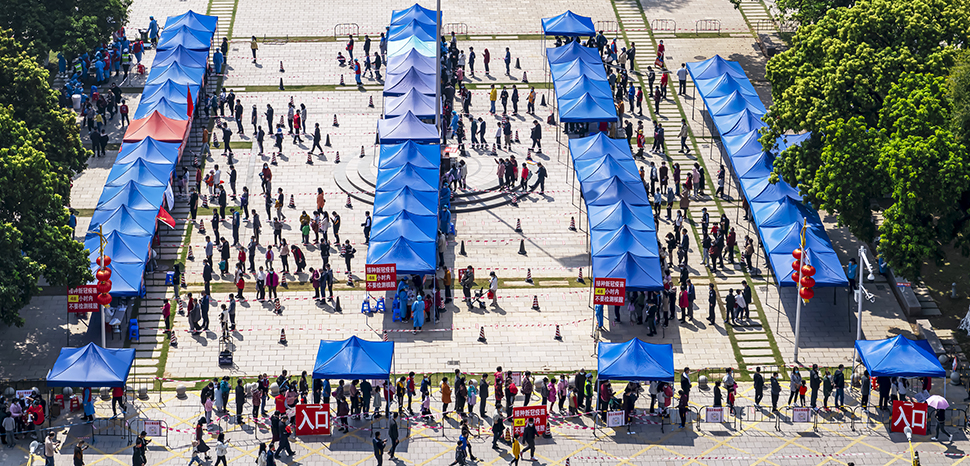
The Beijing authorities unveiled a municipal vaccine mandate this week, marking the first time that residents of a Chinese city face legal compulsion to prove their vaccination status before entering public places such as theaters, gyms, libraries, or stadiums. The mandate is likely the first of many as state authorities strive to increase vaccination rates amid mounting evidence that COVID-19 variants are beginning to thwart the conventional ‘dynamic-zero’ policy playbook.
Nearly 90% of the Chinese population is vaccinated; however, this apparently high threshold must be qualified in two ways. One, vaccination rates tend to lag among the elderly population – the very cohort that’s most at-risk from COVID infection. Two, vaccinations tend to be home-grown rather than mRNA, which produce a weaker immune response and are less able to maintain their protection against new variants. Foreign mRNA vaccines from BioNTech and Moderna have yet to be approved for mass use in China, which has instead placed hopes in a home-grown mRNA shot that’s still in the testing phase.
The timing of the mandate – and similar regulations that are likely to follow – isn’t terribly difficult to figure out. Months of lockdowns in Shanghai and other cities in the economic heartland have produced a laundry list of adverse economic effects ranging from plunging consumer confidence to increases in unemployment. This has even led to the old supply-side economic stimulus guidebook being dusted off with a plan for $75 billion in new infrastructure spending reportedly now in the works to revive the flagging economy.
But these past lockdowns aren’t the main problem; rather, it’s the uncomfortable truth that the suffering of locked down residents seems often to be for naught, because no matter how comprehensively COVID-19 is stomped out by mass testing and strict quarantine policies, new outbreaks always seem to be waiting in the wings. And even more alarmingly for state authorities, these outbreaks show a tendency toward newer variants which are both more communicable and harder to detect in testing, producing large relatively large case clusters before the zero-COVID circuit breakers can be tripped.