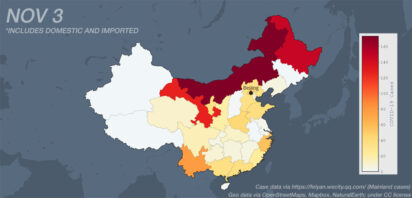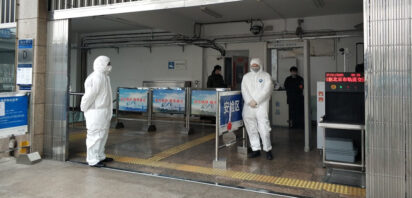
The latest news out of China is mixed. On one hand, the Chinese economy grew by 6.5% over the fourth quarter, making it the only major economy to post annual growth in 2020. On the other, a worsening COVID-19 outbreak in the northeast threatens a repeat of the wide dispersion of the virus witnessed during the 2020 Lunar New Year.
The state authorities have now recorded six consecutive days of triple-digit increases, with cases concentrated in Hebei and Heilongjiang. Yet actions being taken by the governments of affected provinces suggest the possibility of a more serious outbreak than what the official numbers reflect.
Analysis
So far as the state authorities are concerned, there are obvious benefits in downplaying the current outbreak, largely pertaining to propaganda targeting domestic and foreign audiences. These include: 1) insulating economic confidence; 2) demonstrating the competency of the Chinese governing system and, increasingly, China-made vaccines; and 3) adopting a ‘lighter touch’ than the harsh lockdowns of early last year, which were bitterly resented by some residents in Wuhan and social media users elsewhere in China.
Thus, in judging the current outbreak one must keep in mind a truism of China-watching: focus on what the state authorities are doing rather than what they’re saying.
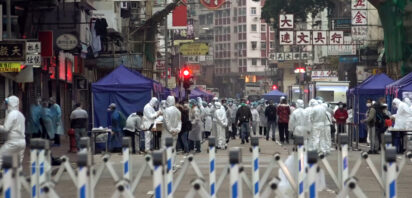
What are they doing? Implementing lockdowns – in spirit if not in name. As of right now, some 29 million people in 11 regions in Hebei, Heilongjiang, and Jilin are under lockdown and effectively unable to leave their houses unless for essential supplies, according to numbers provided by the state-controlled Global Times.
Xinle, Shijiazhuang, Nangong, and Xingtai – all in Hebei Province – have been designated ‘high-risk’ areas by provincial health authorities. And in the starkest reflection of anxieties on the part of the state authorities – surge hospitals have started to go up. Six temporary hospitals with a total capacity of 6,500 rooms are being built in Nangong, and a 3,000-room hospital is being built in Shijiazhuang.