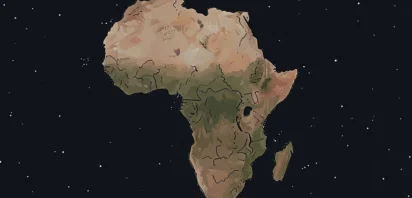
Under the highland light of Addis Ababa, the African Union met to discuss a fundamental and profound issue: water, sanitation, and human dignity. Water is essential for life. Water is the embodiment of stability. Water is a driver of development. Yet as the 39th Summit drew to a close, a deeper realization settled over proceedings.
This gathering was never solely about infrastructure or public health. It was about sovereignty, security, and stewardship in an unsettled international order — and a continent asserting its place within it with quiet determination.
The statistics alone should unsettle the conscience. Around 400 million Africans still lack access to clean water, and 800 million to safe sanitation. Waterborne diseases remain among the leading causes of death. The African Union’s own data concedes that three out of four jobs on the continent are water-dependent, and that up to 80 percent of ailments affecting the labor force can be traced to poor hygiene and sanitation. These are not marginal deficits. They are structural wounds.
The Assembly launched the Africa Water Vision 2026, describing water as a ‘collective good’ foundational to economic growth, peace, and climate resilience. The language was careful, even lyrical. Yet the financing gap remains stark. Meeting Sustainable Development Goal 6 in Africa is estimated to require roughly $30 billion annually.
Many governments are already spending more than 20 percent of state revenue servicing debt. Between 2022 and 2024, developing countries paid $741 billion more in debt service than they received in new loans — the largest such gap in half a century. Twenty-two of 33 African countries are either in or at high risk of debt distress. In such conditions, water policy becomes inseparable from fiscal sovereignty.
Fragility, Security, and Power
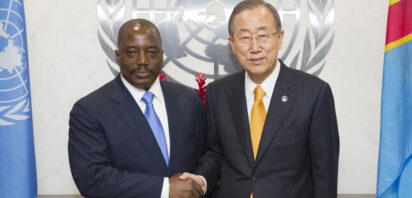
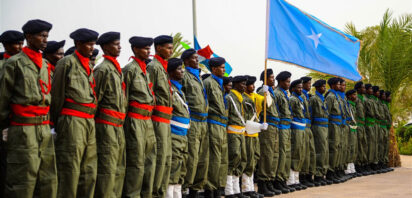
Security shadows every development aspiration. Sudan’s civil war has reportedly killed as many as 400,000 people and displaced 12 million — the largest humanitarian crisis on earth. In eastern Democratic Republic of Congo, renewed M23 offensives have uprooted 2 million. The Sahel continues to experience a grim convergence of insurgency, banditry and military coups. Brookings describes ‘persistent fragility’ and deepening mistrust across governance systems. The African Standby Force exists largely on paper.
The mantra of ‘African solutions to African problems’ remains morally compelling but operationally strained. This matters profoundly for other middle powers.
Instability across the Sahel and the Horn reverberates through global supply chains, migration patterns, and maritime security corridors linking the Indian Ocean to the Atlantic. Africa’s Red Sea and western Indian Ocean littorals straddle strategic shipping lanes vital to global trade. Defense and development are not separate silos; they are twin pillars of strategic stability.
At Addis Ababa, leaders also adopted the Algiers Declaration on Colonial Crimes, calling for recognition of slavery, deportation, and colonialism as crimes against humanity and designating 30 November as a continental day of tribute. The symbolism was powerful. Some estimates suggest the economic cost of colonial extraction runs into the trillions of dollars. Yet symbolism alone cannot restructure global finance, nor restore looted artefacts, nor rebalance trade asymmetries.
If Europe’s post-war project was built on ‘never again,’ Africa’s future may require a similar moral architecture — one that weds memory to material repair.
Economic integration remains Africa’s great unfinished symphony. Most member states have ratified the African Continental Free Trade Area, yet implementation lags. Customs bottlenecks persist. Crucially, the protocol on free movement of people has gained limited traction. Analysts from Afronomicslaw argue that without labor and service mobility, tariff reductions alone will not deliver transformation. The European Union’s experience demonstrates how free movement can foster both economic dynamism and continental identity.
Africa’s demographic surge — 12 million young people entering the labor force each year against only 3 million new formal jobs — demands bold integration, not incrementalism. Climate change compounds every vulnerability. Africa is warming faster than the global average. Droughts, floods, and cyclones are no longer episodic shocks but structural realities. Water security, food systems and conflict risk intertwine in a tightening knot. Yet adaptation finance remains elusive.
Africa needs $1.4 trillion this decade for climate resilience, yet gets just $35 billion annually, much of it debt, widening an already dangerous financing gap. Therefore, while global climate funds promise billions, delivery is often slow and conditional. Debt-for-climate swaps and green bonds could offer pathways forward, but require coordinated diplomatic muscle.
A Continent Claiming Its Future
There are, however, glimmers of strategic imagination. The African Union Commission’s memorandum of understanding with Google on artificial intelligence and digital transformation signals recognition that technological sovereignty will define the coming decades. If managed wisely, Africa’s digital leap could bypass legacy constraints, build fintech ecosystems and strengthen cyber resilience. If neglected, the continent risks becoming merely a data hinterland for external powers.
The 2026 Summit revealed a tension between idealism and urgency. The rhetoric of unity, justice, and water security speaks to a continental aspiration for dignity. Yet hard power realities — fiscal distress, insurgency, geopolitical competition — press in from all sides. Africa’s future will not be shaped by declarations alone, but by institutional muscle, disciplined financing and strategic partnerships grounded in mutual respect rather than extractive opportunism.
Engagement with Africa can no longer be episodic, paternalistic or dressed up as charity. It must become a shared strategic commitment, grounded in the hard truth that maritime security, critical minerals, climate survival and debt reform are global fault lines, not regional footnotes. The future of supply chains, sea lanes and green transitions runs through African soil and waters.
What is required now is not pledges, but partnership — co-investment in resilience, technology and peace that recognizes a simple reality: Africa’s stability and prosperity are inseparable from the credibility of the international order itself.
Addis Ababa in February carried both gravity and quiet resolve. The water theme was a reminder that development begins with dignity, with the most elemental human need. Yet beneath the symbolism lay a deeper reckoning with history, power, and possibility. Agenda 2063 is more than a roadmap; it is a generational covenant.
By 2050, one in four people on earth will be African. The question is not relevance, but fairness — whether the international system will rise to meet this demographic, economic and moral reality. The waters flowing through the Ethiopian highlands carried more than a development message. They carried the weight of a continent intent on shaping its own future.
The views expressed in this article belong to the author(s) alone and do not necessarily reflect those of Geopoliticalmonitor.com.