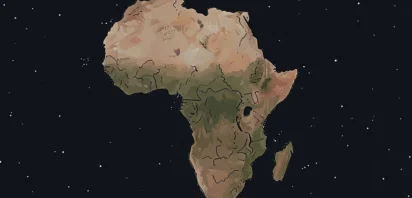
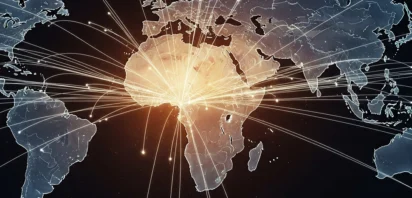
As the global order seems to become more multipolar, new opportunities are appearing for African states to advance development, internal stability, and make intelligent use of their political power space. Influences on one’s instruments of power like geography and natural (critical) resources favor many African states as global powers seek to diversify their supply chains. Combined with Africa’s rapid population growth, in theory, this could be Africa’s decade. There is political space for a shift in how African states could and should flex their power.
Power politics is the historical standard across the globe. Why should it be any different for African states? Imperialism and colonialism in the 19th and most of the 20th century created lasting impediments to African development. But increasingly, instead of bearing the brunt end of realpolitik’s blunt club, African nations are reaching for the handle.
Principled power politics is where good leaders seek the best for their country while fighting their own predilection to pride and the corroding nature of power itself. If African nations were burdened solely with the same human nature that can corrupt any leader in their statecraft, that would be one thing. Instead, for decades, African countries have carried the extra expectation of crippling international consensus politics. They have been duped by scapegoat stratagems and captured by illusions of continental-wide African identity.
A better expectation would be to admit that as in every other global region, African leaders can and should play power politics to their state’s advantage. To regard the continent in any other manner is to disrespect its agency, limit its potential, and assign the world’s youngest and promising land mass to an ironic cycle of crisis, recovery, and underdevelopment, chasing idealist visions instead of strong practical policies. We have yet to see what the African continent could fully contribute to global development were Africa to be regarded as more than the globe’s raw materials supplier, second-rate product dumping ground, or the United Nations’ intractable challenge.
Crippling International Consensus
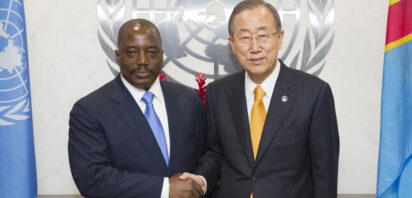
One third of all United Nations peacekeeping missions have been in Africa. That is not including majority European and United States-funded African Union or African Regional security missions. United Nations missions have had some success in peacekeeping but not in peacemaking, despite the monetary benefit and training value each mission provides to its African participants.
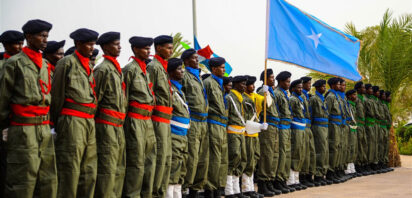
There is a solid mission for African forces, collectively banded, locally trained, and lethally empowered. Instead, Africa’s most effective peacemakers often are shamed into inaction, resort to foreign mercenary support or destructive unconventional warfare to solve their internal security challenges. East and Southern Africa have demonstrated successes in combating threats in Somalia, the Congo and Mozambique via a regional or even single force. In West Africa Mali, Burkina Faso and Niger are attempting to prove that coordinated lethal, military power could be more effective than a globally approved defense effort.
But practically speaking, most African-led efforts fail to fund themselves. When the money is available, the power of politics can too often trump the prudent priorities that make power effective.
Scapegoat Stratagems
Scapegoat stratagems rarely provide solutions. Some scapegoating is grounded in half-truths. Others are based on counterfactuals that conveniently forget and remember personalities and events to fit the desired narrative. Africa’s colonial era agreements are leveraged or condemned in support of a policy depending on the state’s interests. The commonality across the board is that scapegoating rarely presents sustainable, realistic solutions. This brand of power politics stems from bitterness instead of prudent planning and careful crafting that better fits contemporary realities.
Scapegoat stratagems are more prevalent against powers like the United States, Russia, China and colonial powers like France. But accounts of Saudi Arabia, the United Arab Emirates, Qatar, Turkey or Iran taking increased interest in Africa’s resource wealth, arable land, defense procurement, or religious markets, are also increasingly part of the story. This serves to confirm not only Africa’s importance in a multipolar world but the standard nature of power politicking. Finally, scapegoating tends to overemphasize foreign involvement while ignoring often horrendous internal conflicts where African leaders share responsibility.
African Identity
Consensus failures lead to scapegoat stratagems which finally, ultimately become muddled in arguments of African identity. It is one thing to abuse cultural knowledge to divide and conquer, as colonialism often did. But it is condescending to tout the beauty of Africa’s hundreds of languages and ethnic groups while at the same time forcing an elusive African identity. It is also a stunning display of ignorance when much of African internal politics must balance scores of ethno-linguistic differences and seek wise management of their own borders like, again, every other country in the world seeks also to do.
Africa’s fifty-four countries could theoretically be politically imagined to form hundreds of separate nation-states. The fabricated borders stemming from the 1884-85 Berlin conference, unlike Eurasia’s political boundaries, were not afforded legitimacy via internal rival bloody conquests and painstaking negotiations. However, as one of Africa’s most respected historians on colonialism reminds, “there is no part of the world where there are no minorities.” A logical state approach might be one of careful management of resources and geographic boundaries; inclusive politics instead of the extremes of factionalism on one side or strict consensus on the other. The suggested approach eschews exploitation of ethnic, tribal or racial lines for near-sighted political purposes.
As is the case with any unifying block project like the European Union, Association of Southeast Asian Nations, or the African Union, the larger it becomes, the more national interests it seeks to amalgamate and the more ineffective its policies absent a common threat. The reality is that all of Africa’s regional groupings are already dominated by internal power players or dependent in part on external non-African funding. Pan-African concepts should fuel powerful ideas or enable collective bargaining or lower internal trade barriers. It’s unfair to expect an entire continent to overcome what far smaller global regions still wrestle to make in a comprehensive or viable collective union, much less identity.
Let Africa Be Powerful
Respecting Africa’s right to power politics is not meant to be a pessimistic statement. I am and have always been an Afro-optimist. Power politics does not mean unjust violence, repression or invasion. It can mean war, following time-tested principles of proper motive and means. Principled power politics is where good leaders seek the best for their country while fighting their own predilection to pride and the corroding nature of power itself.
Wise realism recognizes that power will corrupt.
The best leaders recognize their human weakness, seek to prevent national interest over-reach and instead build cooperation where states’ interests align. The best power projection is robed in humility. The pinnacle of strong politics engenders reconciliation, not illegal expansion and corruption. Africa has had many leaders that embodied this mold. But too many still battle against idealist expectations unfairly expected of them.
African leaders may choose to economize their limited resources and maximize rents on their strategic location. Some countries have exercised tighter government controls but also deregulated the business environment with impressive results. African countries should be expected to renegotiate for the best trade and investment deals, whether with China, France, the United States or their neighbor. African countries need to better utilize their competitive advantage on the commodity, service or mineral extraction value chain balancing investment incentives between local entrepreneurs and foreign capital. Like everywhere else on the globe, attracting foreign direct investment and welcoming foreign conflict mediators can be a healthy economic and security strategy that need not infringe on national sovereignty.
Finally, like every other state, African leaders should be afforded the respect to leverage, enhance, or exchange their partner base. Relatedly, African nations deserve stronger representation in a reformed United Nations Security Council, recognizing, again, that no one, two, or even three African countries, no matter their GDP or population, can speak for all of Africa.
Powerful People
With political power comes popular accountability. African citizens also have a role in preserving their sovereignty and nurturing dynamic patriotism. West Africans should be proud to study the savvy and wealth of their historical kingdoms like that of Mansa Musa and the courage of leaders like Samori Toure. One should expect East Africans to study the historical city states and trade routes of the wealthy Swahili coast. The Great Zimbabwe in Masvingo is an awe to behold. Italy should feel no offense when Ethiopians beam at the victory in Adwa; nor the United States when Angola commemorates its veterans of the battle at Cuito Cuanavale.
Just as citizens do in every other state, armed with patriotic pride, Africans should be expected to hold their leaders accountable. With over one hundred attempted and successful coups across Africa in the last sixty years, many with popular support, no one can deny Africans their agency. But too much focus on coups will miss the diverse flavors of specific country social activism. Even countries like Niger poll impressively high on peaceful citizen political engagement. But in some locations, Islamist violence, civil wars, banditry, vandalism and bad investments have been examples of individual and political self-interested realist power which has denied many African countries of their development potential.
What’s worse for citizens is that cyber, AI-enabled, deep fake information operations (IO) feed on and breed in Africa’s scapegoating, consensus crippling, identity confusing environment. The IO dilutes solid political influence and would-be social cohesion. It manipulates a diaspora which has no eyes on the ground of whatever country the IO targets. Even IO that overexaggerates and over-promises can frustrate the electorate and disenchant a diaspora initially willing to invest.
If internal overregulation kills business potential, external overregulation strangles security and development progress. Africa should not be the world’s experiment in liberal internationalism, idealism, or a test bed for AI-warped narrative battles. To truly respect Africa, its diversity and potential, Africa should be treated like every other world region, not patronized with programmatic promises, stunted by continental consensus requirements, or duped to wallow in scapegoating without realistic solutions. Africa’s optimistic population and inherent wealth are the seeds for a global prosperity, not just Africa’s. The world, including Africa itself, needs to let Africa be powerful.
Caleb Slayton is a US Air Force officer with a collective twenty years of personal and professional experience living across Africa and in East Asia. He is a graduate of the Naval Postgraduate School in Monterey California and Indonesia’s Command and Staff College.
The content and opinions in this paper are those of the author and do not necessarily represent the opinions of the United States Air Force, the United States military, or Geopoliticalmonitor.com.