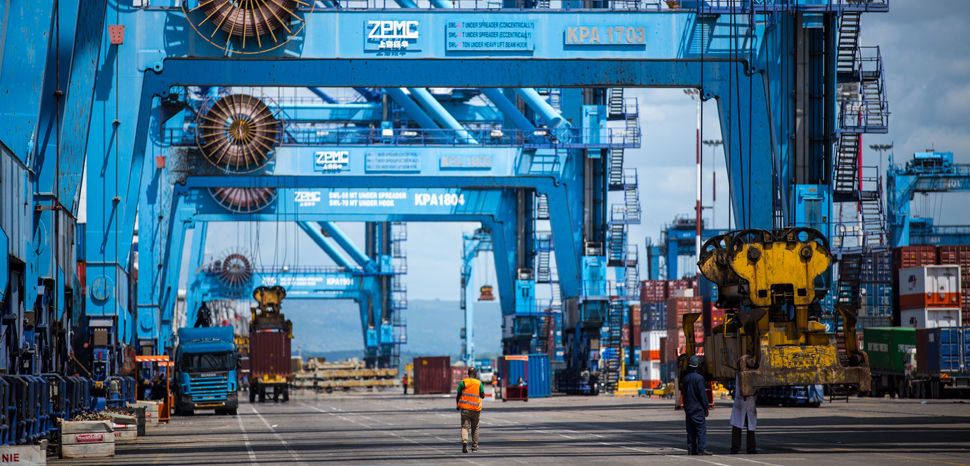
Following its’ founding in 1963, the Organization of African Unity (OAU) cited Africa’s economic integration as an essential component to the continent’s prosperity. In the wake of decolonization and the formation of newly independent African states, the OAU’s emphasis on developing a single market Africa was borne out of a desire to eradicate reliance on the West. Against the backdrop of the Cold War, the relative youth of the OAU’s member-states placed governments on the continent in a precarious position as they squared alliance with foreign powers with the need for aid and capital.
In spite of the OAU’s lofty, pan-African ambitions to sow political and economic unity on the continent, the group’s legacy was marked by its’ ineffectual means to enforce and scale policy. As the OAU’s pan-African thrust waned, efforts to harmonize trade policy on the continent were undertaken on a regional basis, resulting in 8 regional economic communities (RECs), shaped by geographic proximity.
Though the OAU and its successor, the Africa Union (AU), boasted a membership that covered the continent, the lack of enforcement mechanisms and cohesion remained, and continues to be, an obstacle.
Yet, in spite of such a track record, the recent signing and commencement of the African Continental Free Trade Agreement (AfCFTA) represents a noteworthy step toward the original goals espoused by the OAU. Though global trends would suggest that the popularity of trade blocs, and more generally, multilateralism, is in retreat, the AfCFTA managed to garner 54 signatories. With Eritrea as the sole holdout, the agreement establishes the largest free trade area in the world since the World Trade Organization was founded nearly a half-century ago.
Such a feat suggests that, at least in principle, the notion of a free trade area that spans the continent is of interest to nearly every African government. The unified market of 1.2 billion people and a GDP of $2.5 trillion hopes to bolster intra-African trade, which currently represents 18% of total trade. In comparison, intra-Europe trade amounts to nearly 70%, with intra-Asia trade standing at nearly 60%.
By expanding market access on a continental scale, AfCFTA’s signatories hope that new markets will enable export growth for its’ local producers in the face of lagging domestic demand. Proponents of the deal suggest that preferential trade treatment will lead to a resurgence in agricultural and manufacturing activity and buck the global slowdowns in these areas. Other gains that may accrue include innovation in the face of increased competition, and the impetus to diversify the economies of states dependent on oil (Nigeria, Angola), mining (Congo, South Africa), or agriculture (Liberia, Somalia).
In order to facilitate these benefits, the terms of the deal stipulate that 90% of tariffs be eliminated, with further reductions of non-tariff barriers. Furthermore, the agreement promises to liberalize migration through free movement.
Yet, such conditions, while conducive to economic growth, may not pass muster in terms of political popularity. Transitioning the deal from a theoretical framework into actionable policy will dually require creating cohesion among the disparate protocols of extant RECs and acquiescing to some of the drawbacks that free trade inevitably enables.