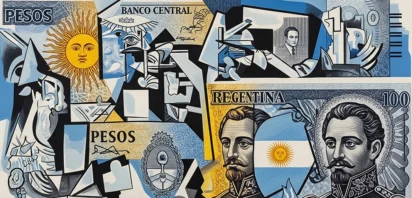
Argentina is one of the most important countries in South America, with a population of 44 million people and a GDP of 911 billion USD in terms of purchasing power parity. Also rich in natural resources and home to a prosperous export-oriented agricultural sector, Argentina has the groundwork to be one of the richest and most influential countries in the continent. However, longstanding issues of poor economic governance and financial instability continue to compromise Argentina’s position. Last week, its central bank raised interest rates several times in an attempt to stem the rapid depreciation of the peso, raising concerns among investors. And now the executive branch is openly seeking aid from the IMF.
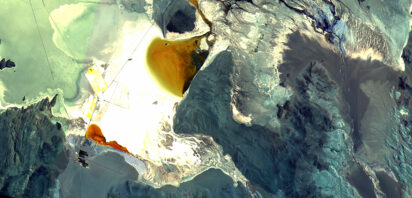
On the positive side, Argentina’s energy and mineral resources have the potential to transform its economic outlook. These sectors can attract considerable FDI from great powers whose economies require these precious raw materials. But this too can be a double-edged sword, as such investment quite often translates into geopolitical leverage down the road.
Background
Argentina’s economic troubles have a decade-long history, which parellels its difficult political life. A wealthy country at the dawn of the 20th century, as with most South American states it adopted a populist economic approach after WWII. The strategy was based on trade protectionism to insulate domestic industry from foreign competition and on expansionary policies meant to stimulate growth through high public spending, often in the form of subsidizing important sectors of the economy. While achieving some successes, these measures failed to create a solid and competitive economy in the long term. Instead, they helped to foster a crony capitalist system of vast and often corrupt state-dependent, uncompetitive industries. Ultimately, the macroeconomic situation deteriorated: there was constant deficits, high public indebtment, and soaring inflation. The combination left the economy vulnerable to external shocks, such as the oil crises of the 1970s. In the end, Argentina decided to adopt a pro-market neoliberal approach based on privatization, financial deregulation, and disciplined fiscal and monetary policies that became the mainstream during the 1980s-90s.
Neoliberalism did not solve the country’s chronic economic problems, which culminated in the 2001 crisis that brought severe recession and a decade of social and political unrest. The 2001 crash was viewed as a major failure of the neoliberal method, and it prompted subsequent governments to resume the state-led economic model.