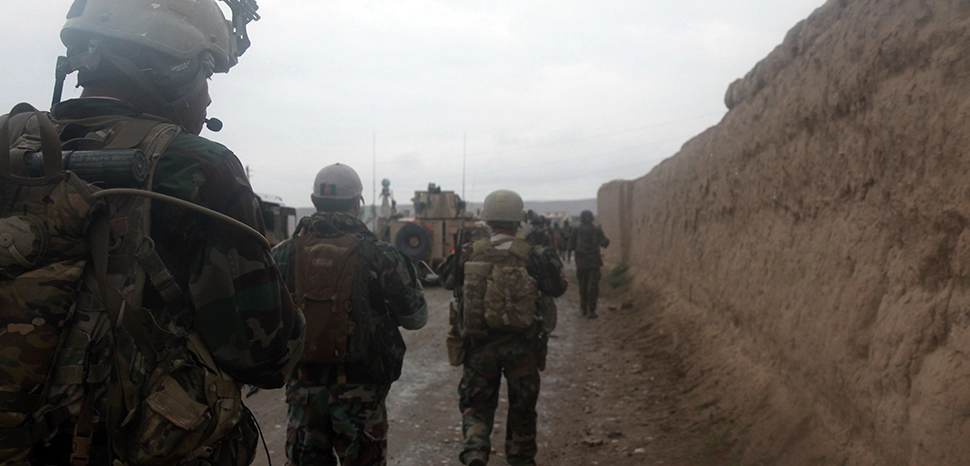
Afghan security forces in Kunduz were put to their first major test since NATO withdrew the bulk of its forces last year.
They failed.
Early in the morning of September 28, Taliban forces attacked Kunduz in northern Afghanistan, and by the time the sun had set they achieved what had eluded them for nearly 14 years: the fall of a provincial capital. The attack bore many of the hallmarks of similar operations launched by Islamic State (ISIS) in Mosul and Ramadi: it came suddenly, without warning, and from three different directions to achieve maximum disarray among the defending forces. The strategy worked, and government troops have now pulled out of Kunduz and allowed the Taliban to take over the city’s downtown area, including the provincial government compound, and a jail holding hundreds of Taliban prisoners. The latest reports put Taliban troops approaching the airport, which has become a refuge for government reinforcements and civilians fleeing the attack.
That the attack finally came is not surprising – nor is the timing, which was meant to coincide with the one year anniversary of the national unity government of President Ghani and CEO Abdullah. Taliban militants have been laying siege to the city for months, a period that saw a lesser attack on the city in April and a slow and steady exodus of residents fearing a Taliban push. What is surprising is the stunning failure of the government forces to put up any real resistance in the face of the attack. This is a failure reminiscent of Iraq, and it’s one that will ripple through the morale of the Afghan security forces, undercutting confidence during future Taliban operations against government-held cities, attacks that are now all but guaranteed given the group’s stunning success in Kunduz.
There are two other important factors to consider here. One, the fall of Kunduz is a victory for Mullah Mansour in his ongoing struggle to consolidate power within the Taliban after the death of Mullah Omar was made public. Two, it is an obvious blow to efforts for a negotiated peace, which were already floundering due to weak leaders on both sides of the negotiating table. Kunduz is a coup for the Taliban, a dose of much-needed leverage that recasts the group as a potential player in an Afghan civil war, not a failed ideology on the wane.