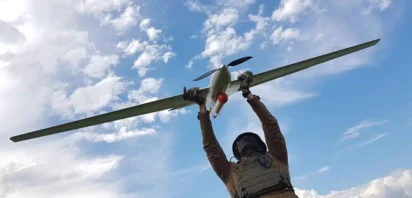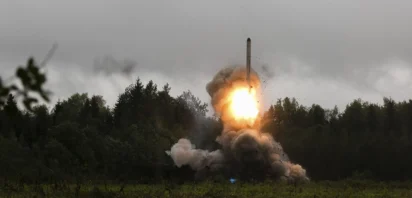
Since the outbreak of the war, Ukraine has assembled the most combat-tested air defense network in the world, drawing important lessons for the West. Kyiv has managed to reduce the cost asymmetry produced by drone warfare and can now shoot down targets at scale and at low cost, with an overall interception rate of over 91%. However, two vulnerabilities persist, the first being a weakness against faster ballistic missiles, where interception rates are significantly lower, and the second is dependence on Western-made interceptors.
Air Defense through the Ukraine War
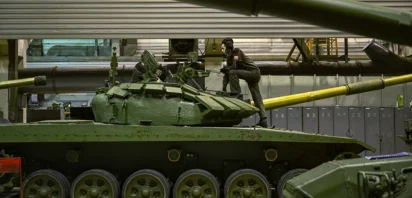
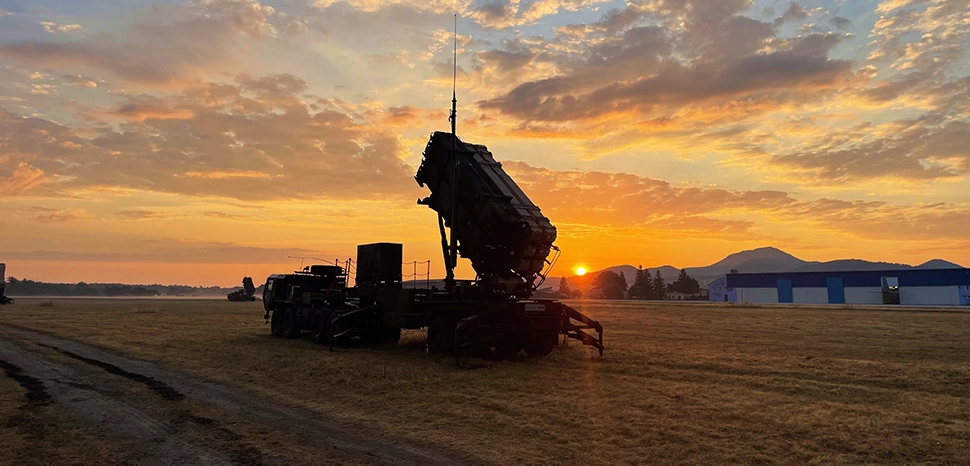
Ukraine entered the war with the largest ground-based air defense arsenal in Europe outside Russia. It was Soviet-built and layered, fielding systems such as the long-range S-300, the medium-range Buk-M1, and shorter-range Tor, Osa, and Igla MANPADS. Through shoot-and-scoot tactics, firing and then moving before the counter-battery fire arrived, Ukrainian crews denied Russian aircraft air freedom. The S-300 alone kept Russian pilots flying low and cautious, and Ukrainian crews later used Patriots to down aircraft deep behind the front.
In the first period of the war, Ukraine faced a major supply problem, as it could not manufacture the interceptors these systems fired, and could not replace launchers lost to Russian strikes. By early 2023, US assessments projected that Buk and S-300 missile stocks would run dry within weeks, which would have reopened Ukrainian airspace to the Russian air force. The systems were reporting a roughly 80% interception rate against cruise missiles at the time.
Western Systems
Western systems arrived piecemeal through late 2022 and 2023, and Ukraine stitched them into a single-layered architecture, with each filling a band of altitude and speed.