As a signatory to the NPT (Nuclear Non-Proliferation Treaty), Warsaw still relies on NATO for deterrence and, to a limited extent, its conventional forces. However, new opportunities are opening up. Emmanuel Macron’s first visit to Poland since 2020 culminated in a joint press conference in Gdansk outlining a much more profound bilateral partnership, including the widening of France’s nuclear umbrella. “We’ve decided to join a group of countries invited by France to cooperate,” said Polish Prime Minister Donald Tusk. “An exclusive group made up of countries who understand the need for European sovereignty. We live in a world in which we need nuclear dissuasion capacities.”
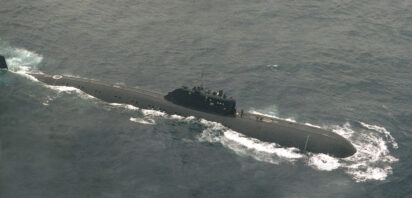
Back on March 2, French President Macron delivered his vision for a distinctly European concept of “forward deterrence” in front of Le Téméraire, a French ballistic missile submarine. Several European countries have expressed strong interest in a complementary approach to NATO. As reported by Le Monde, the idea of a French nuclear umbrella is now increasingly discussed among allies, reflecting broader concerns about the reliability of US guarantees in the long term.
Indeed, this development comes at an opportune time for the central European power. Poland’s strategic posture is shaped by geography as much as by politics. Bordering Belarus, a vassal-state of Russia, and located on NATO’s eastern flank, the country has long framed itself as the first line of defense of Europe as Russian aggression continues. Mariusz Błaszczak, head of the Polish Ministry of National Defence, makes this posture explicit, stating: “Our goal is to build up the Polish Armed Forces so strong that Poland will not be attacked by the Russians, to deter Russia.”
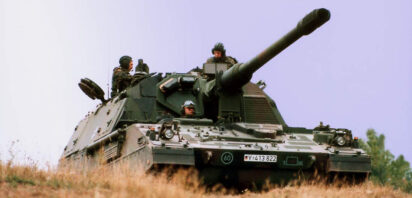
This ambition has translated into massive investments in conventional capabilities. Poland has ordered hundreds of tanks, artillery systems and aircraft, many of them from South Korea and the United States. Yet deterrence is not simply a question of combat force capability, however numerous and well-equipped they may be. It also depends on the ability to deliver decisive blows deep within enemy territory, either nuclear or conventional. The reinforcement of relations with France is designed to address this gap, at least in part. At Gdańsk, Tusk added that the new “cooperation, whether in the nuclear domain or in joint exercises … is a cooperation that knows no bounds.”
Poland has been actively engaging in these conversations, with PM Donald Tusk admitting before Macro’s visit that the country was in discussions with France, while clearly reflecting Warsaw’s long-term ambitions: “We will cooperate with our allies… as our capabilities increase, we will try to prepare Poland for autonomous action in this matter.”
However, the shift will take time. And until it is realized, Poland must rely on conventional deterrence, especially long-range strike capabilities, an area where gaps remain significant.
The Limits of Current Conventional Solutions
“Long-range missile capability is undoubtedly relevant to the strength of the Polish Armed Forces. Hence our efforts related precisely to increasing these capabilities within the Polish Army,” noted Deputy Prime Minister M. Blaszczak in 2023, after first HIMARS deliveries from the United States.
Since then, Poland has further strengthened its high-end capabilities, notably with a large order of US-made JASSM-ER air-launched cruise missiles in 2024, though its repeated requests for Tomahawk systems go unanswered.
Dependency on external suppliers carries risks (especially with such an unstable ally as the current US administration) of uncertain delivery times or cancellations, and these risks cannot be afforded at a time when Europe remains under serious threat from Russia. As early as 2025, Donald Tusk was raising related questions before Parliament: “We are seeing a deep correction in US policy with regard to Ukraine, but we can’t turn our backs to it only because we don’t like it. We must be precise and honest in assessing what it means and what serves our interest and what doesn’t.”
Despite a sense of uncertainty that has only deepened since Donald Tusk’s remarks, Poland’s domestic efforts remain embryonic. The “Lanca” cruise missile program, for instance, is still in early development stages. More broadly, a significant share of Poland’s defense industrial output relies on licensed production or the adaptation of foreign systems. While this approach enables rapid capability acquisition, it raises structural questions about sovereignty. In a high-intensity conflict scenario, dependence on non-European suppliers could translate into operational constraints. This challenge is not unique to Poland, but it is particularly acute given the country’s strategic position and ambition. Deterrence and counterstrike require not only credible capabilities but also control over their availability and use. A rapprochement with European allies would therefore seem an astute way forward.
European Strategic Alliance
Although rhetoric from European states has generally involved grand declarations about sovereignty, more concrete programs have been slow to come into existence. Initiatives like ELSA, of which Warsaw is a member, have sought to be proactive in the development of deep strike capabilities across allied European nations, but have been sluggish getting going. There has been a much broader push for coordinated capability development on air defense systems, but deep strike cooperation remains lagging behind.
At the bilateral level, France and Poland are getting closer. In 2025, as the Treaty of Nancy was establishing a strategic partnership between the two capitals, a Letter of Intent signed in July pointed toward the possible development of a ground-launched cruise missile, further solidifying future cooperation. The Gdansk summit concretized this partnership. But while the Polish press had identified deep precision strike (DPS) and ELSA as a potential or likely topics of discussion, it appears that the topic was not directly addressed during the summit, at least not publicly, despite the fact that post-summit statements continue to refer to DPS as an important issue.
DPS capabilities represent a potential area of industrial cooperation, one that builds on existing technologies such as MBDA’s Land Cruise Missile (LCM). This potential alternative to the Tomahawk is derived from the naval MdCN (1,400 km range), which has already attracted interest from Polish stakeholders, and could result in common developments and potential transfer of technology. From an industrial perspective, such a program would not start from scratch, but could leverage the advanced industrial cooperation already existing between MBDA and PGZ. In the longer term (towards the end of the 2030s), and from a strategic deterrence perspective, Polish participation in a 2,500–3,000 km ballistic missile initiative led by France—potentially alongside Germany and the UK—could also be of strategic interest.
In any case, the scale of ongoing procurement programs, combined with the potential fragility of distant supply and maintenance chains underscores the urgency of striking a balance between non-European suppliers and the continent’s partners. While a nuclear option, despite recent signals, remains off the table, the logic of deterrence suggests that time is a critical factor, particularly for counter-strike capabilities, which would send a credible signal to any potential adversary and provide an essential means of action in future conflicts.