Sheikh Maqsoud and Ashrafiyeh are two adjoining neighborhoods in Aleppo that have, for years, functioned as a predominantly Kurdish enclave in northern Aleppo. Their significance derives less from their size than from their geography and symbolism: they are an urban ‘contact zone’ where Kurdish-led institutions and Damascus-linked institutions are forced into daily proximity, bargaining, and confrontation over the same roads, checkpoints, and basic services.
Because these neighborhoods sit within a major state-held city rather than along a distant frontline, every security incident quickly becomes a political test case. Each event tests whether coexistence and negotiated integration are possible, or whether Aleppo will remain a permanently fractured space governed by parallel authorities.
Ethnic Diversity and Civilian Risk
Although Sheikh Maqsoud and Ashrafiyeh are often described as Kurdish-majority, the neighborhoods are ethnically diverse. They include Arabs and other communities, alongside residents who arrived through successive waves of displacement.
This diversity matters because each escalation is experienced not only as a military incident but also as a shock to a densely populated civilian environment. Identity, memory of displacement, and fear of reprisals can rapidly shape public sentiment, mobilization, and the willingness of armed actors to escalate.
In practical terms, the high population density and interwoven civilian geography make the costs of even ‘limited’ fighting disproportionately high. Recent operations have already prompted thousands of residents to evacuate Aleppo, reflecting both fear of violence and the fragility of enclave security. Moreover, there are reports that some armed actors have used civilians as human shields, exacerbating the humanitarian risk and complicating the ability of Kurdish and state forces to operate without harming non-combatants.
Local Kurdish Governance and Security
Authority on the Kurdish side typically flows from the Syrian Democratic Forces’ (SDF) national leadership down to local structures that historically managed these districts as a protected enclave. Day-to-day security and policing functions have been associated with the Asayish, the internal security forces aligned with the Autonomous Administration. Meanwhile, neighborhood-level civil bodies act as the political voice for the districts in negotiations and crisis communication.
In this chain, the key operational levers are not only armed personnel and weapons, but also the capacity to regulate entry points, impose curfews, exercise arrest powers, and maintain a degree of administrative continuity under pressure.
State Security and Military Presence
On the Damascus side, formal authority is divided between the Ministry of Defence and the Ministry of the Interior. This distinction matters because the neighborhoods are not only a battlefield but also a policing challenge.
The Ministry of the Interior’s internal security apparatus typically provides the state’s most visible presence at checkpoints, road controls, and detention facilities. Defense-aligned forces offer a heavier military posture, enabling escalation from policing into sustained urban combat if necessary.
Aleppo’s security reality is further shaped by allied factions and local armed formations, whose loyalties and discipline can vary. This complicates accountability when incidents occur and makes escalation more likely when command and control is contested or ambiguous.
Partial Integration and Grey Zones
A central complication is a local arrangement designed to regulate security in Sheikh Maqsoud and Ashrafiyeh as part of a broader integration process. The idea, in simplified form, was to transform a wartime enclave into a structured security space. Kurdish internal security elements would retain a role within the neighborhoods while the Syrian state expanded its formal authority around them.
Partial implementation, however, has left a persistent grey zone. Each side can claim the other is violating the agreement, and control over roads, checkpoints, and access corridors becomes leverage rather than a stable framework. When the arrangement is incomplete, even minor incidents—an argument at a checkpoint, an arrest, a disputed patrol route—can escalate into large-scale violence because neither side trusts the other’s restraint.
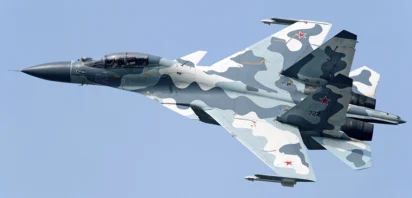
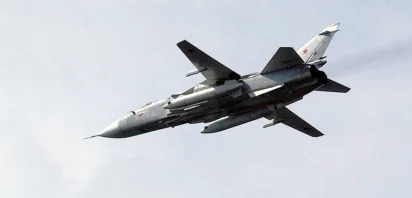
Recent escalation fits a familiar pattern. The renewed fighting did not arise in a vacuum, but from a context of contested authority, mutual suspicion, and the strategic value of displaying strength in a densely populated civilian space. The Syrian Army’s advance toward Sheikh Maqsoud and Ashrafiyeh shows how the enclave’s contested status can rapidly escalate into both military and humanitarian crises. Reports indicate the use of artillery, mechanized units, and small-arms fire in densely populated areas, resulting in civilian casualties and displacement.
The assault underscores the disproportionate costs of urban operations in ethnically mixed neighborhoods and demonstrates how tactical advances—even when framed as targeted enforcement or a response to armed provocation—can compel Kurdish-aligned forces to defend territory while simultaneously protecting civilians. Multiple armed actors operate in and around the neighborhoods, often with overlapping mandates, meaning that competing narratives about shelling, drones, and responsibility for civilian deaths are not merely rhetorical and instead shape engagement rules, justify escalation, and influence whether clashes remain contained or expand into sustained urban warfare.
The January 2026 operations also clearly demonstrates to local and regional actors that the Syrian state remains willing to assert authority incrementally. In doing so, it transforms the neighborhoods into both a practical test case for integration and a potential flashpoint for wider conflict. Even limited confrontations can have outsized political and humanitarian consequences, reinforcing the importance of monitoring civilian impacts alongside operational objectives.
Implications for Syrian Integration
Sheikh Maqsoud and Ashrafiyeh are significant nationally because they act as a proxy for Syria’s unresolved question: how, and on what terms, Kurdish-led forces and institutions might be incorporated into a unified state framework.
Failure of security governance here—inside a major city and under intense public scrutiny—undermines confidence in broader integration pathways and strengthens hardliners who argue that negotiated arrangements are unworkable. Conversely, a durable joint-security mechanism stabilizing these neighborhoods could provide a tangible model for reconciling parallel authorities elsewhere.
In this sense, the neighborhoods function both as a humanitarian flashpoint and a political barometer: they reveal in real time whether Syria is moving towards negotiated state consolidation or renewed internal fragmentation and cyclical urban violence.
Security Trajectories
Incremental Pressure Strategy
The most plausible scenario is a limited, compartmentalized security campaign focused on Sheikh Maqsoud and Ashrafiyeh rather than a city-wide offensive. These neighborhoods are geographically bounded, embedded in a predominantly state-controlled metropolis, and can be pressured through administrative and security levers that fall short of full-scale war.
However, the recent Syrian Army push demonstrates the risks inherent in this approach. While the state can frame the operation as targeted enforcement or a response to armed provocation, the use of artillery and mechanized units in densely populated districts raises the probability of civilian casualties, infrastructure damage, and forced displacement.
The assault illustrates the tension between incremental pressure and outright coercion: even when the state intends a controlled, step-by-step reduction of autonomy, intensive operations can compel Kurdish-aligned forces to defend not only territory but also civilian lives.
Cyclical Encirclement
In such a scenario, the aim would likely be incremental encirclement rather than a decisive assault. The surrounding environment allows the state and its aligned forces to gradually reduce the neighborhoods’ autonomy by controlling the arteries that matter most: entry and exit points, supply routes, movement of people, and the coercive monopoly over policing and detention.
Step by step, the enclave can be made more costly to maintain—economically, psychologically, and organizationally—until local institutions lose room to maneuver and residents face an exhausting choice between accepting new terms of governance or living under recurring disruption.
The dynamic resembles ‘pressure-and-pause’ cycles: short escalations, followed by negotiated calm, followed by renewed pressure once external attention fades.
Managing Risk and Political Messaging
This limited approach is also politically useful because it allows Damascus to pursue a broader narrative of national reunification while minimizing the risks of a wider Kurdish–state war that could draw in external actors or destabilize other fronts. It also helps manage the internal complexity of command chains and allied formations by keeping objectives narrow and geographically defined. The smaller the theatre, the easier it is to justify, coordinate, and claim success—especially if ‘success’ is defined not as total conquest but as steadily expanding state prerogatives and shrinking the space for parallel authority.
Triggers for Broader Conflict
This trajectory is not fixed. The main condition that could break the ‘limited operation’ logic is if the SDF—or Kurdish-aligned forces within Aleppo—decide that survival requires shifting the fight to wider ground. If clashes in the neighborhoods are treated not as a local security dispute but as an existential battle over the future of SDF autonomy, the incentives change.
Wider escalation could take the form of opening or intensifying pressure along other contact lines, increasing the operational tempo beyond Aleppo, or reframing the confrontation as a national struggle that demands reciprocal costs. Such a development would raise the stakes for Damascus and potentially force it to choose between accepting a negotiated equilibrium or committing to a much broader campaign with higher humanitarian and political risks.
Future Dynamics
The future hinges on a strategic interaction. If the SDF remains primarily defensive and localized, the state’s rational play is likely to remain incremental: contain, tighten, delegitimize, and absorb over time, turning the neighborhoods into a demonstration that integration happens on Damascus’s terms.
If the SDF expands the confrontation, the conflict can mutate from a controlled urban pressure campaign into a wider contest where neither side can easily manage escalation. The neighborhoods would then cease to be merely an enclave to be squeezed and instead become a spark point in a larger reordering of power in northern Syria—one that would almost certainly deepen civilian harm, displacement, and long-term instability across Aleppo and beyond.
Scott N. Romaniuk—Senior Research Fellow, Centre for Contemporary Asia Studies, Corvinus Institute for Advanced Studies (CIAS); Department of International Relations, Institute of Global Studies, Corvinus University of Budapest, Hungary.