Geopolitics Weekly analyzes emerging geopolitical trends around the world, distilling the cacophony of global events into one easy reader. It lands in the inbox of Geopolitical Monitor subscribers every week.
Americas
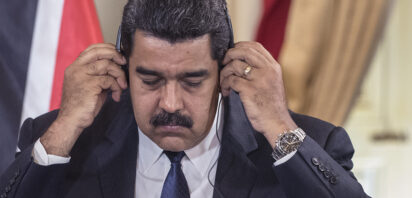
US Military Captures President Maduro in Caracas, Will Face Criminal Charges in US
What Happened
Venezuela President Nicolas Maduro and wife Cilia Flores were apprehended by the US military following a pre-dawn raid on January 3. The operation involved large-scale strikes in and around Caracas, resulting in 40 civilian and military deaths according to Venezuelan sources. There were no US casualties. Attorney General Pam Bondi has indicated that both Maduro and his wife will face ‘narco-terrorism’ charges in the United States.
Why It Matters
The capture of Maduro will ripple for years, if not decades in the geopolitics of the Americas and the wider global system:
- Dubious Jurisprudence. There is no credible debate to be had – the raid is illegal under international law, which grants acting heads of state immunity. The US administration has gone through the motions of sanitizing the operation by asserting that Maduro was not the legitimate government of Venezuela. But by this standard, any world leader is just a State Department press release away from being legitimately kidnapped by the US military. It should be noted that this has all happened before with the capture of Manuel Noriega during the 1989 US invasion of Panama. The optics were bad then and it will be telling to see how the international community responds this time, in a profoundly different and increasingly multipolar global system. So far the response is mixed, with various US allies either vaguely pontificating on the importance of international law (Canada, Denmark) or stalling for time (UK, Germany) to avoid addressing the issue directly.
- Dubious Strategy. The removal and trial of Noriega was just one piece in a larger puzzle – the occupation of Panama. Operation Just Cause involved tens of thousands of troops, years of (increased) occupation, and the bipartisan imperative of physically securing the Panama Canal. The critical difference was that there was a ground-level presence to steer events following Noriega’s departure. Now consider the removal of Maduro. Is he a leader who held power over this supposed narco-state by sheer force of intelligence and charisma, despite all US attempts to unseat him? No. He owes his position to proximity to Hugo Chavez, who anointed his protégé from beyond the grave… as a bird. Maduro can and will be replaced, with the network of paramilitaries, apparatchiks, and rent-seekers that has long operated under him largely unmolested. And whoever the successor is, they will have a useful martyr available to them. Simply put, the operation validates fears of the US imperial boogeyman without securing any solid strategic advantage outside of a personal vendetta against Maduro. Perception matters. It matters for the future politics of Venezuela where, even supposing everything goes to plan, an opposition movement will have to sell itself as being independent of the U.S. to have any hope of gaining traction (President Trump has made this even harder by openly declaring that Washington will ‘run’ Venezuela). Perception also matters in regional diplomacy when inducing other states to cooperate without having to resort to (far more costly) coercion. The risks of the Maduro operation are clear; the benefits, far less so.
- Dubious Trends. A number of trends are coming into greater relief one year into the second Trump term. For one, the center of geopolitical gravity has shifted to the Americas, with the administration explicitly pledging to enforce a ‘Trump corollary’ to the Monroe Doctrine its recent National Security Strategy. Two, this ‘corollary’ is being packaged in an entirely different strategic logic, that of countering narcotics trafficking, whether it’s fentanyl production in Canada, threatening unilateral military action against cartels in Mexico, or now the actual removal of Maduro as the head of a narco-state. And three, there’s a tendency toward high-visibility symbolic acts combined with an aversion to new substantive commitments, whether institutional or military (consider for example the transitory optics of boats exploding, dictators being brought to justice, or President Trump’s Zero Dark Thirty moment). The absence of new deployments (so far) is clearly a positive development in light of the disastrous US interventions in Iraq and Afghanistan. But there’s always a degree of externality risk, that what starts as limited surgical strikes could end up as state collapse, with Libya or Syria being cases in point.
Middle East
Anti-Regime Protests Spread throughout Iran
What Happened
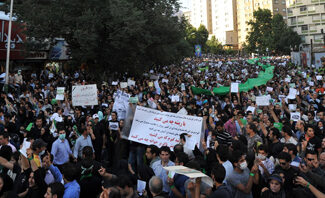
A wave of demonstrations has broken out across Iran as people take to the streets to protest increasingly dire economic conditions. The movement began in Tehran on December 28 before spreading to dozens of other cities. As of Sunday, an estimated 16 people have died in the protests.
Why It Matters
This is not the first time that protests have engulfed the Islamic Republic. There was the ‘Green Movement’ which grew out of allegations of fraud in the 2009 election; economy- and water-based protests between 2018-2021, and the Mahsa Amini wave of 2022-23. But these broad categories gloss over the fact that civil disobedience has been ongoing for decades in Iran, ebbing and flowing, often beyond the notice of global headlines.
The key question is: Will this time be any different? There are a few reasons why it could be:
- Domestic Polycrisis. It could be argued that the regime faces an unprecedented and multi-dimensional crisis this time around. For one, the Islamic Republic’s ideological foundation has been shaken by regional developments of the past few years: the breakdown of nuclear rapprochement with the West, the hobbling of the ‘Axis of Resistance’ in Lebanon, Syria, and Gaza, and defeat in the 12-day war with Israel – all of which have eroded the ideological legitimacy of the regime. The advanced age of Supreme Leader Ali Khamenei and questions over his succession could be added to this. Two, there’s ecological pressures onset from Iran’s water crisis, which alone has fueled years of protest movements and lacks any easy solution. Finally, there’s the economic angle that has been the primary frame of the protests so far. This is not new as economic issues have plagued the Republic for decades. However, economic pressures, specifically rampant inflation and a sanctions-throttled energy industry, are now far outpacing the regime’s ability to insulate its population, thus expanding the pool of (primarily young) Iranians who feel they have nothing left to lose.
- The Trump Factor. President Obama famously did not get behind the protest movement that swept Iran in 2009 for fear of hurting the prospects for a nuclear deal (a decision he later regretted). The current administration may not be so sangfroid. President Trump has already declared that the United States would ‘come to the rescue’ of protestors if they were targeted by the regime. While it’s a mystery as to what form this support could take – especially given the aversion of Trump’s base to foreign interventions – the messaging is still being welcomed by protestors.
- Regime Exhaustion. Political change can resemble Hemmingway’s bankruptcy: it comes gradually, then suddenly. The failure of past movements does not predetermine the outcome of this wave. On the contrary, there can be a cumulative effect of disenchantment among the population that inches toward a sudden tipping point. These protests are conspicuous in their intensity out-of-the gates, the swiftness with which they spread, and their uncompromising tone. Protestors are calling openly for regime change, some even advocating for a return for the hated Shah. There have been a number of protestor deaths as well as at least one member of the security forces.
- The Elite Gatekeepers. Research illustrates how popular movements alone are generally not enough to trigger transitions from authoritarian to democratic rule. A split in the political and/or military elites is necessary to effect change. Or put another way, someone in the regime itself needs to open the door and let the protestors in. Whether this happens remains to be seen, but given the sprawling economic interests intertwined in Iran’s ‘military-bonyad complex,’ it might take some serious convincing before elites start to jump ship.
Incidentally, this elite dynamic is also relevant in the case of Venezuela, specifically how the constellation of military and economic interests that decades of PSUV rule spawned will react to US attempts at advancing post-Maduro regime change. If history is any indication, they won’t go down without a fight.
One final caveat in the both cases is what ‘success’ will look like. Whether Venezuela or Iran, it won’t necessarily involve a clean break where one regime is replaced with another, borders and state institutions intact. Elite splits and the parallel economic and military structures invite considerable geopolitical risk. Civil war is a distinct possibility, with the RSF-SAF conflict in Sudan serving as a recent template. So too is state fracture along the lines of Syria, where regions achieve de facto autonomy against a weakened central authority. Remember that Iran in particular is a plural state with large Azerbaijani, Kurdish, Arab, and Baloch minorities that in many cases have an ethnic patron on the other side of the border that may be willing to get involved in a hypothetical conflict.
Saudi-UAE Tensions Boil Over in Yemen?
What Happened
Forces aligned with the Saudi-backed Presidential Leadership Council (PLC) have taken control of a major military base in eastern Yemen, driving out the UAE-backed Southern Transitional Council (STC). As of Sunday, several other cities in the South have fallen to government forces. This comes just days after Saudi strikes on Mukalla port brought the Saudi-UAE rift on Yemen’s future into the open, ultimately prompting the withdrawal of Abu Dhabi’s forces from southern Yemen.