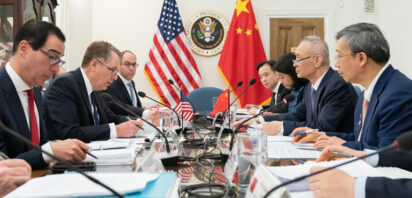
The Busan framework agreement between the United States and China, announced after their summit in South Korea, marks a temporary pause in their long and often tense trade and economic conflict. It eases immediate financial and political pressures on both sides by lowering tariffs and suspending some export restrictions. Yet the deal does not address the deeper sources of tension that have fueled years of confrontation between the world’s two largest economies.
In effect, the framework offers a breathing space rather than a solution. China benefits by regaining flexibility and preserving control over key strategic resources, while the United States gains short-term political relief and modest economic stability as it approaches the 2026 midterm elections. Both sides keep the ability to interpret and enforce the agreement as they see fit, which almost guarantees that new disputes will arise.
The next year is likely to be defined by “managed instability.” The two countries will cooperate just enough to avoid a breakdown but will continue to view one another as strategic competitors. Businesses and global markets will see temporary calm but remain wary of another escalation. The deeper technological, political, and strategic rivalries that shape US–China relations remain fully intact.
What Happened
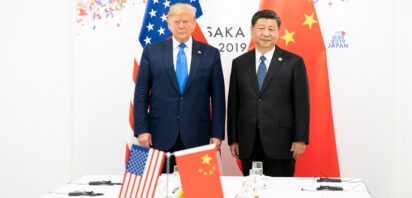
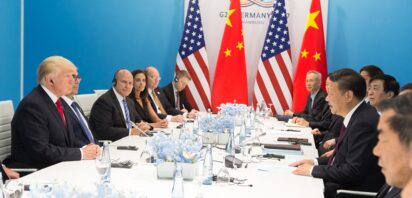
On October 30, 2025, President Donald Trump and President Xi Jinping met in Busan, South Korea, to halt a renewed spiral of tariffs and trade barriers that had built up throughout the year. Both leaders faced strong domestic pressure to avoid another economic shock—Trump from US farmers and manufacturers frustrated by high tariffs, and Xi from a slowing Chinese economy affected by weakened exports and tight US trade controls.
The resulting “Busan framework” is a one-year agreement aimed at easing tensions:
- The United States agreed to reduce its 20% tariff on Chinese imports linked to fentanyl concerns to 10% and to suspend a threatened 100% tariff increase on Chinese goods. Washington also paused an investigation into Chinese shipping practices and suspended certain restrictions on Chinese-owned firms that had been placed on the US Entity List for one year.
- China, in turn, promised to resume purchases of US soybeans and other agricultural products, to temporarily lift new rare earth export restrictions for one year, and to work with the United States on controlling exports of fentanyl precursors. It also agreed to reopen discussions about TikTok’s forced divestment from US ownership and to hold talks on purchasing US energy products, though these energy commitments remain vague.
The deal effectively extended an earlier temporary suspension of reciprocal tariffs that had been due to expire in November. Both sides also announced plans for reciprocal state visits in 2026, presenting the agreement as a diplomatic success. However, the arrangement came after months of tit-for-tat escalation: new US tariffs imposed in February, China’s rare earth restrictions in April and October, and additional US export controls through the summer. The Busan meeting stopped this cycle from worsening but did not resolve its underlying causes.
Background
The Busan agreement fits into a longer history of recurring tensions and fragile truces between the United States and China. The modern phase of this rivalry began in 2018 when the Trump administration first imposed large tariffs on Chinese goods, accusing Beijing of unfair trade practices and forced technology transfers. China retaliated with its own tariffs, targeting politically important US industries like agriculture. Over the years, both sides expanded their conflict beyond tariffs to include export controls, investment bans, and limits on technology cooperation.
Several earlier attempts to stabilize relations provided only temporary relief. Each time, the underlying disagreements about technology, industrial policy, and global influence resurfaced, triggering new rounds of retaliation. This cycle of escalation and pause has become the defining pattern of the US–China relationship.
Domestic politics have consistently shaped this pattern. In Washington, policymakers use trade measures both to confront China and to demonstrate toughness to US voters, particularly during election cycles. Trump’s approach to the Busan talks reflected this dual purpose: to ease pressure on key domestic industries while keeping the option open for renewed confrontation if politically useful. In Beijing, meanwhile, the leadership has focused on maintaining economic stability and presenting itself as the steady actor in an unpredictable international environment. By offering limited and reversible concessions, China can claim diplomatic restraint while still preserving leverage.
The Busan framework therefore reflects a shared but narrow interest: both sides wanted to avoid immediate economic damage. But neither was prepared to address the core structural issues that have made their economic relationship increasingly adversarial.
Key Issues
Several underlying forces will shape how the Busan framework unfolds over the coming year:
- Domestic Political Pressure. For Trump, maintaining a balance between appearing strong on China and preventing economic harm to US voters is crucial ahead of the 2026 midterm elections. Any sign that China is not fulfilling its promises could trigger renewed tariffs for political effect. For Xi, the priority is to keep China’s economy stable while showing that Beijing can manage US pressure without making fundamental concessions.
- Technological Rivalry. The United States continues to limit China’s access to advanced technologies such as semiconductors, artificial intelligence, and sensitive software. These restrictions are designed to slow China’s progress in high-tech industries that Washington views as strategic. Beijing, for its part, has responded by trying to build domestic alternatives and by using export controls on rare earths and other critical minerals as leverage. This competition in technology and resources forms the backbone of the broader confrontation.
- China’s Control of Key Supply Chains, particularly rare earth elements, which are essential for electronics, renewable energy, and defense systems. The Busan agreement only pauses—not ends—China’s export controls. Beijing retains the power to tighten supply again if relations worsen, a fact that underscores its enduring leverage.
- Global Supply Chain Realignment. Companies have begun shifting parts of their production out of China to other countries such as Vietnam, India, and Mexico to reduce geopolitical risk. However, these supply chains remain deeply intertwined with both the US and Chinese economies. The Busan framework may slow, but will not reverse, the trend toward diversification.
- Enforcement Ambiguity. There are no clear mechanisms to verify or penalize noncompliance. This gives both sides political flexibility, allowing them to accuse the other of violations when convenient or to claim success when politically advantageous.
Looking Ahead
Baseline Scenario: Managed Instability
The most likely outcome is a year of relative calm punctuated by smaller disputes. The Busan framework stays in place, and both sides make enough progress to avoid collapse. China resumes agricultural purchases and maintains partial rare earth exports, while the U.S. holds off on major new tariffs. Rhetoric intensifies at times, especially as the US elections approach, but economic interests and mutual fatigue keep escalation contained. Businesses regain some confidence but remain wary of sudden changes.
Escalation Scenario: Renewed Trade Confrontation
In this scenario, the agreement breaks down. If the U.S. accuses China of failing to control fentanyl exports or of not meeting its energy or agricultural commitments, Washington could restore high tariffs or expand export restrictions. Beijing would likely retaliate with new rare earth limits and tighter controls on other strategic minerals. Markets would react sharply, and companies would accelerate efforts to move supply chains away from both countries. The result would be renewed inflationary pressure, strained diplomatic relations, and a more divided international trade system.
Cooperation Scenario: Gradual Stabilization
A less likely but still possible outcome involves cautious cooperation. Both governments could extend the agreement beyond 2026, creating regular communication channels on technology and energy issues. If mutual compliance is maintained and domestic politics allow, this might lead to limited normalization of trade. Still, the rivalry over technology and security would continue beneath the surface, and the sense of strategic distrust would remain strong.
Risk Factors
The baseline path of managed instability means that uncertainty will continue to shape international trade. Businesses will face ongoing risks from shifting tariffs, export rules, and regulatory changes. Many will continue to diversify supply chains and build regional redundancy to avoid being caught in future disputes. Financial markets will see periodic optimism when talks progress, followed by renewed anxiety during setbacks.
If the escalation scenario unfolds, the consequences would be severe. Higher tariffs would push up prices in the United States, fuel inflation, and hurt export-dependent industries in both countries. China’s restrictions on rare earths and other key materials could disrupt entire sectors, from defense manufacturing to green energy. Third countries, particularly in Asia, would be forced to navigate an increasingly polarized economic environment. Over time, this could entrench a global divide between a US-aligned trade bloc and one centered on China, weakening international cooperation.
Even under the limited cooperation scenario, the U.S. and China are unlikely to return to the deep economic interdependence that existed before 2018. Both countries are now investing heavily in self-sufficiency, especially in strategic sectors such as semiconductors, electric vehicles, and artificial intelligence. This decoupling process will continue even under conditions of temporary peace.
Ultimately, the Busan framework illustrates a new phase in US–China relations: one defined not by resolution or reconciliation, but by management of rivalry. Instead of achieving lasting stability, both sides are learning to operate within a state of controlled tension—trading limited concessions for time, while preparing for the next round of competition. The world economy, caught between these two powers, must now adapt to a future in which volatility is not an exception, but the rule.