The last time when Washington pursued an equilibrium with its Asian allies amid a grinding land war, a reemerging China, and domestic political fatigue was during the Nixon presidency. The turbulent period that was marked by the Vietnam War, Okinawa reversion, and opening to China left deep scars when it comes to US-Japan and US-ROK relations. Today, the U.S., Japan, and South Korea are faced with North Korea’s accelerated missile program, China’s coercive power projections, and an official Russia-China-North Korea alignment. The Nixon era not only offers ambiguous “lessons,” but practical guideposts for strengthening trilateral security cooperation while the probability of a dual contingency increases in the region.
Nixon’s Balancing Act and Its Costs
By the late 1960s, the United States’ over-intervention in Vietnam forced Nixon to readjust; the Guam Doctrine proclaimed that Asian alliances should bear more defense burdens and that the U.S. would provide nuclear deterrence and limited support. In the case of South Korea, such doctrine was materialized in withdrawing 20,000 USFK by 1971 – a development that sent shockwaves to President Park Chung-hee, who feared abandonment despite South Korea’s bloody commitment in Vietnam.
Meanwhile, Japan faced its unique challenge with the Okinawa reversion. Although such reversion restored Japan’s sovereignty, a secret agreement guaranteed US military privileges, including the right to transfer nuclear weapons to Japan in emergencies. While Tokyo accepted such arrangements, the deal underscored the necessity of careful diplomacy to harmonize sovereignty with deterrence.
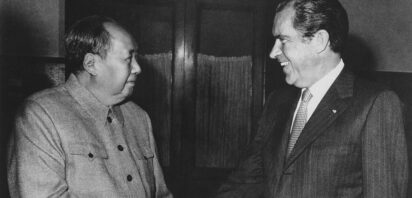
Nixon’s dramatic opening to China kindled another concern. Tokyo and Seoul were anxious that the Washington-Beijing rapprochement would weaken the US security commitment in the region. For South Korea, such concerns were further compounded by Nixon’s personal dislike toward President Park and Washington’s attempt to link security with irrelevant issues, including economic disputes regarding textile quotas. The lessons are clear: without pre-arranged agreement and meaningful compensation, an abrupt policy shift would deepen distrust and drive hedging behaviors.
Today’s Strategic Echo
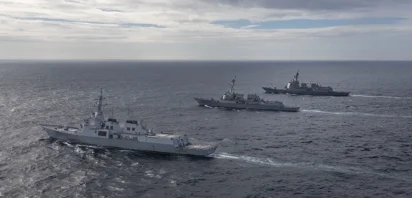
Now half a century later, trilateral cooperation faces an equally daunting stress test. By deploying solid-fuel ICBMs with potential Multiple Independently-targetable Reentry Vehicle (MIRV) capability, North Korea is shortening the timeframe for early warning and complicating missile defense. China is expanding its military presence in both the East China Sea and the South China Sea while intensifying pressure against Taiwan. Russia has signed a security agreement with North Korea, with Pyongyang supplying artillery shells to Moscow and Moscow pledging advanced technology in return.
At the same time, US domestic politics has resurfaced the discussion of approaching alliance affairs in a transactional manner. By designating defense cost-sharing as the litmus test for alliance value, President Trump raised doubts in Tokyo and Seoul about whether the US commitment to the region is rock solid.
Under such circumstances, the dual contingency — a simultaneous crisis erupting both in the Taiwan Strait and on the Korean Peninsula — has become a planning assumption in major war games. Such simulations consistently show that unless the alliances conduct pre-negotiated roles and responsibilities, US ammunition reserves, logistics, and missile defense would be stretched beyond capacity.
Five Lessons of the Nixon Era
The first lesson is that strategic change should be conducted together with tangible compensation. Nixon’s decision to withdraw USFK impaired the credibility of US commitment due to the lack of meaningful compensation. If today’s U.S. prefers to pursue more burden-sharing among its allies, Tokyo and Seoul should be credited for concrete contributions that directly reduce US operational risk. A realistic way is to sign a five-year trilateral capability accord. Under such an accord, South Korea could co-produce PAC-3MSE and SM-6 interceptors and supply them to US-Japan stockpiles; Japan could legally guarantee the United States’ preemptive use of such weapons during crises while financially funding and hosting forward-deployed US munition depots. Furthermore, the accord could enable the three countries to structure a common logistics pool for critical spares and fuel dispersed across Guam, Kyushu, and South Korea. Such an accord could transform the burden-sharing issue from a political dispute into operationally meaningful cooperation.
The second lesson is that the consultation mechanism should be institutionalized rather than left to ad hoc communication. Nixon’s abrupt opening to China blindsided allies, and a repetition of such shocks would destabilize basic trust. Therefore, Washington, Tokyo, and Seoul should adopt a Trilateral Prior Consultation Protocol modeled on the US-Japan system. Such a protocol should be automatically activated in three scenarios: relocation of USFK in case of a Taiwan contingency; requests for using Japanese territory or airspace in a Korean contingency; and rapid deployment of Japanese or South Korean military assets to support the U.S. during a Taiwan contingency. Such a protocol should be codified into a permanent directive and continuously consulted by a Trilateral Crisis Cell co-located with US Indo-Pacific Command in Hawaii.
The third lesson is to disperse and harden bases and create a cross-access agreement. Although the Okinawa reversion showcased that sovereignty and deterrence could be harmonized, today’s focus is survivability under missile attack. The allied countries should disperse US and Japanese aircraft stationed at Okinawa to bases across Kyushu and other islands in the Nansei chain, pairing them with hardened shelters and pre-positioned runway repair kits. In addition, by signing a Japan-ROK emergency access agreement, it should allow Japanese aircraft to temporarily operate from South Korean air bases and vice versa in case Okinawa is saturated by missile attack. Joint investment in ground fuel storage and energy resilience projects would reduce dependence on vulnerable ground fuel tanks.
The fourth lesson is that the division of roles regarding dual contingency should be pre-planned and rehearsed; it is insufficient to rely on mere joint declarations. The roles should be clearly codified; for instance, the U.S. could focus on long-range precision targeting, underwater warfare, and joint fire orchestration; Japan could mainly be in charge of archipelago defense, anti-submarine warfare (ASW) in the first island chain, protection of fleet bases, and minesweeping major sea lines of communication (SLOCs); South Korea could center its focus on defense of the Korean Peninsula, maritime convoy protection, cyber defense of allied hubs, and maritime ISR operations. To ensure such arrangements, the allied countries should conduct annual trilateral dual-contingency exercises designed to stress-test logistics networks and command and communication.
The last lesson is that missile defense should be integrated not symbolically, but operationally. The current compartmentalized structure remains the trilateral’s Achilles’ heel. The allies should establish a trilateral missile defense fusion cell that connects US space-based sensors, Japan’s Aegis ballistic missile defense system, and South Korea’s Korea Air and Missile Defense (KAMD) radar. Such linkage would enable coordinated engagement and shared rules of engagement against North Korea’s surprise missile launches. To make such a mechanism reliable in a crisis situation, it should be verified not only through simulations but also through live-fire exercises.
Toward a More Durable Trilateral
The Nixon period demonstrated the risk of unilateral measures and the durability of alliances when clarity is coupled with compensation. While Nixon’s decision to disregard Park Chung-hee’s concerns impaired trust, the cautiously managed Okinawa reversion proved that sovereignty issues can be harmonized with strategic demands.
Today, although the US-Japan-ROK structure has been partially institutionalized after the 2023 Camp David Summit, it is still fragile. To make it more sustainable, the allies should take a step forward. In that context, an annual trilateral ministerial-level meeting should be codified by domestic law, Trilateral Defense Planning Guidance — which is equivalent to NATO’s Defense Planning Process (NDPP) — should be adopted, and a Joint Industrial Base Board that could coordinate production surges and export control should be established. Such measures would protect against leadership changes in Washington, Tokyo, and Seoul.
Eventually, the Nixon period offers operational lessons, not simple historical echoes. If specific measures like joint munition stockpiling, base dispersion, dual-contingency rehearsals, and missile defense integration are applied, US-Japan-ROK trilateral cooperation could become more than political rhetoric. In an era of simultaneous dual-contingency crises, the allies do not have the leeway to repeat the shocks and misunderstandings of the 1970s.